

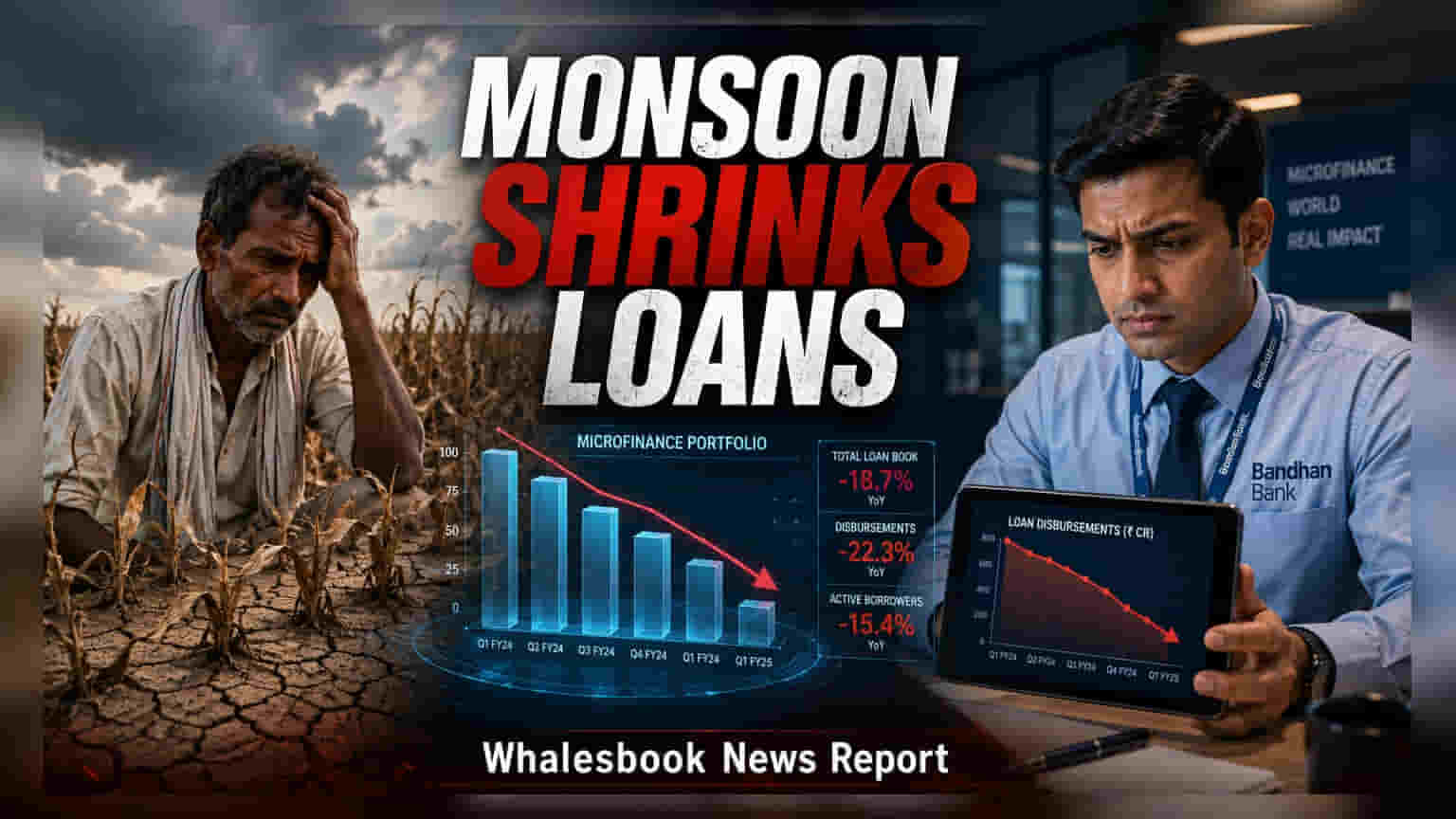
India's microfinance loan portfolio fell 4% to ₹3.26 lakh crore by the end of June 2026, marking a reversal in growth. The decline is largely due to an uneven monsoon season, which has slowed rural economic activity and raised concerns about borrower repayment ability. Lenders have adopted a cautious approach, tightening their focus on new loan disbursements amid these uncertainties.
The Indian microfinance sector reported a 4% contraction in its total loan portfolio, falling to ₹3.26 lakh crore by the end of the first fiscal quarter in June 2026. This decline comes as a setback for the sector, which had recorded its first growth in seven quarters during the previous period. The current downturn reflects mounting pressure on rural economies, primarily driven by erratic weather patterns and concerns over the health of the rural consumer.
The uneven progress of the southwest monsoon has been a major hurdle. With cumulative rainfall running 16% below the long-term average as of late July, the pace of kharif crop sowing has remained sluggish. Because a large portion of microfinance borrowers rely on agriculture or farm-related income, any delay or shortage in rainfall directly impacts their ability to repay loans. Industry participants are closely monitoring these trends, as inconsistent agricultural output can quickly translate into repayment stress.
Different segments of the industry have felt this impact in varied ways. Private banks recorded the sharpest decline, with their microfinance portfolios dropping to ₹79,023 crore from ₹89,548 crore. Small Finance Banks also saw a reduction, with their loan books decreasing to ₹48,759 crore from ₹50,725 crore. Meanwhile, NBFC-Microfinance Institutions (NBFC-MFIs) reported a contraction to ₹1,40,203 crore from ₹1,41,704 crore. In contrast, the 'Other NBFCs' segment showed slight resilience, with portfolios growing marginally to ₹46,887 crore from ₹46,158 crore.
In response to these uncertainties, many lenders have shifted toward a more conservative lending strategy. Bandhan Bank, a prominent player, has indicated a cautious stance regarding its emerging entrepreneurs business. The bank’s micro-loan portfolio saw a decline, as the management prioritizes risk management over aggressive growth. Similarly, IDFC First Bank has emphasized the need for prudence, noting that while rainfall has improved in some areas, the overall risk to the credit cycle remains elevated.
Beyond rainfall, lenders are grappling with higher operational costs. Increased fuel prices have made the process of loan collection more expensive, as field staff frequently use two-wheelers to reach borrowers in remote locations. When combined with potential inflation and suppressed farm incomes, this creates a challenging environment for lenders to maintain their margins and portfolio quality.
The future performance of the sector will largely depend on the recovery of the monsoon and the resulting impact on the harvest. Investors may watch for updates on borrower repayment rates and any shifts in the credit standards adopted by banks and NBFCs over the coming months.