 Whalesbook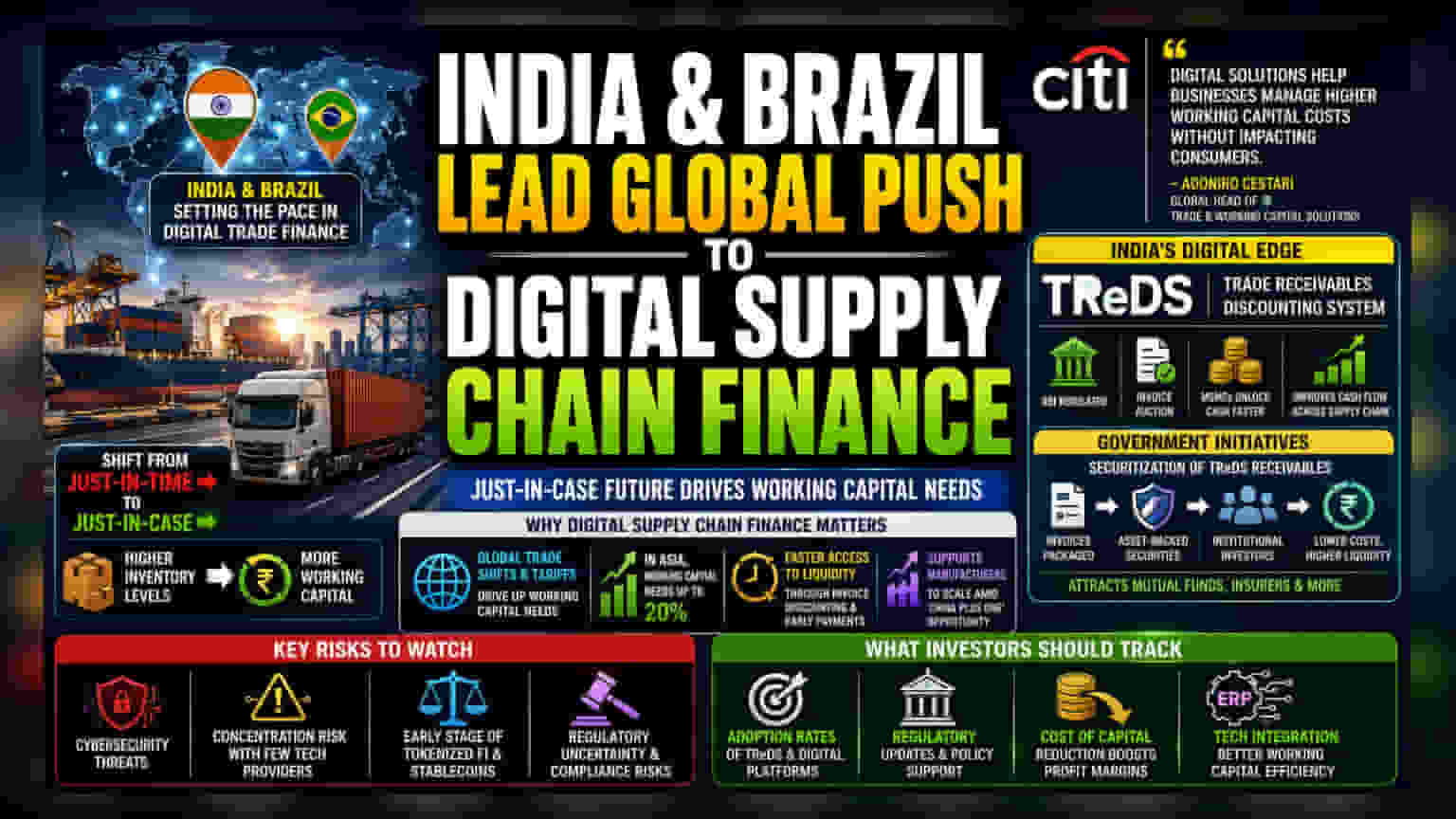


Citi has identified India and Brazil as leaders in digitalizing supply chain finance. This shift helps Indian manufacturers manage higher working capital needs as companies adopt 'China Plus One' strategies and prioritize supply chain resilience.
What Happened
Citi, the global financial services firm, has highlighted that India and Brazil are leading the global push to digitalize supply chain finance. According to Adoniro Cestari, Citi’s Global Head of Trade and Working Capital Solutions, companies are moving away from traditional 'just-in-time' inventory models—where firms hold minimal stock—to more resilient 'just-in-case' systems. This strategic shift requires firms to hold larger inventories to protect against disruptions, which in turn increases the need for working capital. To manage these higher costs without passing them on to consumers, businesses are increasingly adopting digital platforms to streamline trade finance.
The Working Capital Challenge
Supply chain finance (SCF) has evolved from a back-office task to a strategic focus for treasurers. Global trade shifts, including geopolitical tensions and trade barriers, have driven up working capital consumption. In Asia, this increase is notably steep, with some clients facing up to a 20% rise in working capital needs.
For Indian companies, this pressure is real. Managing inventory and ensuring timely payments to suppliers is critical for operational stability. Digital tools are helping bridge this gap by allowing faster access to liquidity, often through invoice discounting or early payment programs, which are essential for manufacturers looking to scale their operations amidst the global 'China Plus One' shift.
India’s Digital Infrastructure Advantage
India’s leadership in this space is supported by robust digital infrastructure, most notably the Trade Receivables Discounting System (TReDS). Regulated by the Reserve Bank of India (RBI), TReDS has been a game-changer by allowing Micro, Small, and Medium Enterprises (MSMEs) to auction their receivables to banks and NBFCs, unlocking cash stuck in unpaid invoices.
Looking ahead, the government has proposed initiatives to further deepen this market, including the securitization of TReDS receivables. By packaging these invoices into asset-backed securities, the system aims to attract a broader range of institutional investors—such as mutual funds and insurance companies—which could significantly lower funding costs and increase liquidity for the entire supply chain.
The Risk Factors
While digitalization offers clear benefits, it also brings specific risks that investors should monitor. As financial processes become increasingly digital, firms face greater exposure to cybersecurity threats. The reliance on a small number of large technology providers for these platforms can also create 'concentration risk,' where a technical outage at a single provider could halt operations across multiple companies.
Furthermore, the shift toward advanced instruments like tokenized deposits or stablecoins remains in the early stages. The pace of adoption for these innovations will depend heavily on regulatory frameworks, which are currently cautious to ensure systemic stability. Companies that rush into untested digital financing models without robust governance may face operational or regulatory hurdles.
What Investors Should Track Next
Investors should monitor how quickly Indian corporates adopt these integrated digital financing solutions. Key monitorables include:
- Adoption Rates: Increased usage of TReDS and other digital platforms by large corporate buyers and their MSME suppliers indicates operational efficiency gains.
- Regulatory Updates: Any further policy support for invoice securitization or digital trade frameworks from the RBI will be a major trigger for sector liquidity.
- Cost of Capital: Watch for companies that successfully reduce their interest costs through digital SCF, as this directly benefits profit margins in capital-intensive sectors.
- Tech Integration: Companies that integrate finance directly into their Enterprise Resource Planning (ERP) systems are likely to see better working capital management compared to those relying on manual, paper-based processes.