 Whalesbook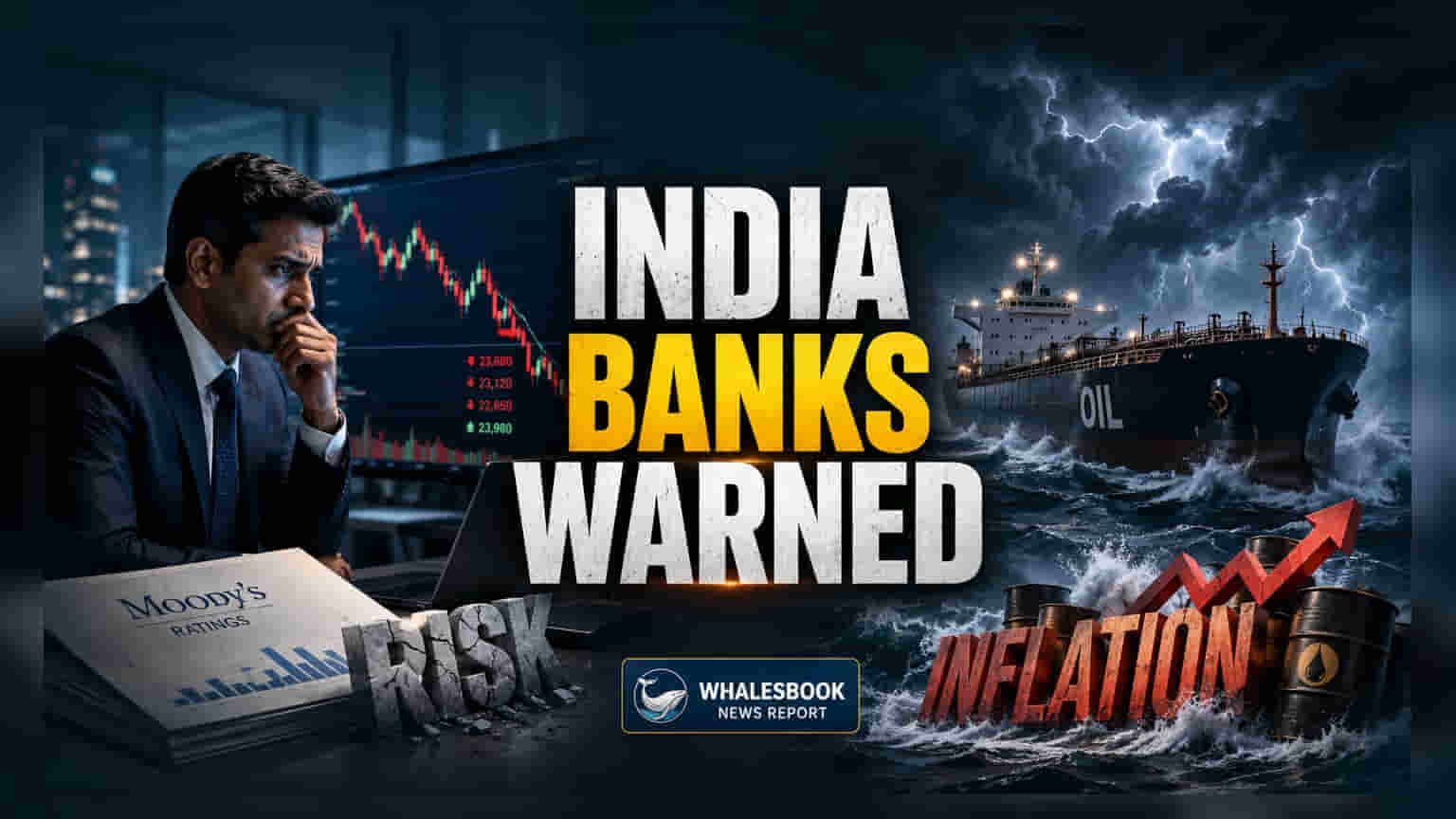


Geopolitical Impact on Indian Banks
The ongoing instability in West Asia has become a major economic threat to Indian banks, moving beyond just supply chain issues. Since India imports nearly 90% of its crude oil, disruptions near the Strait of Hormuz effectively act as a tax on the economy. Moody's expects oil prices to stay between $90 and $110 per barrel through the third quarter of 2026. This means high energy costs, which were initially absorbed by inventories, will start impacting consumers' spending power and borrowers' ability to repay loans.
Bank Capitalization and Strength
Despite concerns about global economic volatility, Indian financial institutions are in a strong position. As of late 2025, commercial banks maintained high capital adequacy ratios of about 17%, well above regulatory minimums. The Reserve Bank of India recently made it easier to include quarterly profits in Common Equity Tier 1 capital calculations. This regulatory change helps banks strengthen their balance sheets and manage potential credit losses more effectively.
Key Vulnerabilities in Lending
However, strong capitalization doesn't hide underlying risks that could lead to a quick decline in loan quality. Non-bank financial companies (NBFCs) and the unsecured retail lending sector are the most exposed. Almost half of all unsecured retail borrowers have multiple loans, meaning a default on one loan could signal broader financial trouble for that borrower. While banks have reduced bad loans to historic lows, the rapid growth in unsecured lending, driven by digital platforms, is a significant concern. If the Reserve Bank of India raises interest rates to protect the rupee or control inflation, these borrowers' debt payments could soar, potentially reversing recent improvements in credit quality.
Monetary Policy's Role
The future for Indian banks depends heavily on how the Reserve Bank of India responds to rising imported inflation. Consumer price inflation is sensitive to fuel costs, making the central bank's monetary policy decisions crucial. Some analysts believe that persistently high crude prices might force the RBI to adopt a hawkish stance on interest rates later in the fiscal year. Higher interest rates would increase banks' funding costs, further squeeze their profit margins, and make it harder to grow loans in a more cautious economic climate.