

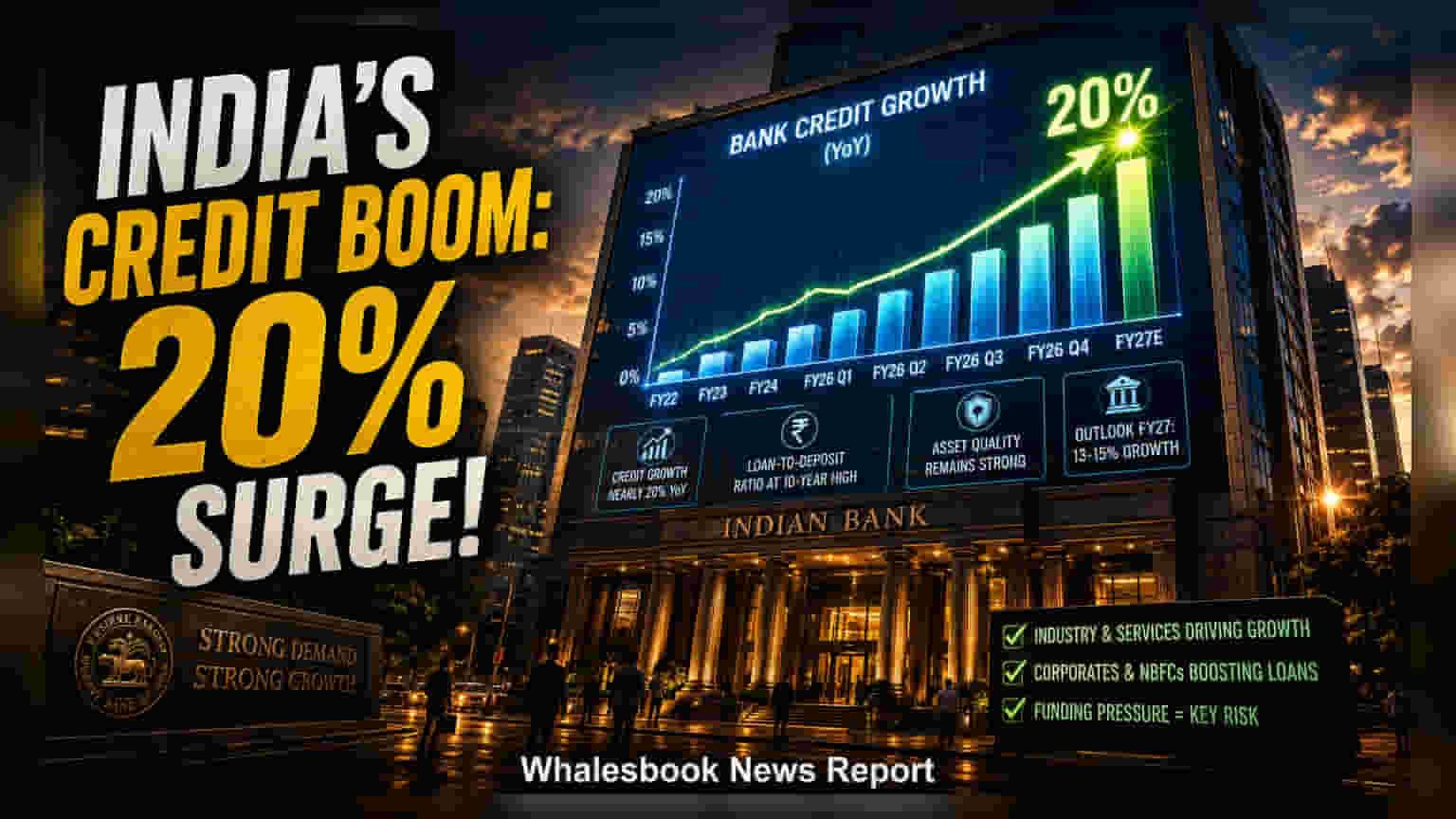
India’s bank credit grew by 20% in the June 2026 quarter, a four-year high. However, deposit growth has failed to keep pace, pushing the loan-to-deposit ratio to decade-high levels. Investors should monitor whether banks can maintain profit margins as funding costs potentially rise.
The Indian banking system experienced a sharp rise in activity during the June 2026 quarter, with bank credit growth climbing to nearly 20% year-on-year. When adjusted for recent reporting changes, this growth stands at a robust 18%, marking the fastest expansion in over four years. While this trend highlights strong economic demand, it has also brought a significant funding challenge to the forefront for the banking sector.
Credit Drivers and Market Dynamics
The surge in lending is broad-based, with significant contributions from the industrial and services sectors. Large corporations have been aggressive borrowers, and non-banking financial companies (NBFCs) have also increased their reliance on bank loans rather than the bond market. This heightened demand from large businesses—which account for nearly 70% of industrial loans—has been a primary engine for the recent credit expansion.
The Loan-to-Deposit Ratio Challenge
While loans are growing rapidly, the money flowing into banks as customer deposits is not keeping pace. This imbalance has pushed the system-wide loan-to-deposit ratio (LDR) to its highest level in a decade. The LDR is a critical metric because it shows how much of a bank's lending is funded by stable customer deposits. When this ratio hits a record high, it implies that banks are increasingly reliant on more expensive or short-term funding sources to support their loan books. If deposit mobilization remains slow, banks may face pressure to increase interest rates on savings to attract funds, which could eventually squeeze their profit margins.
Profitability and Asset Quality
Despite the funding pressure, bank profitability remains resilient for now. Most institutions have reported stable profit margins, aided by the stabilization of fresh lending rates and term-deposit rates. Furthermore, asset quality in the banking system remains healthy, with the majority of banks reporting net non-performing assets (NPAs) below 1% for the June quarter. This indicates that despite the aggressive credit growth, banks have so far been able to maintain strict lending standards and keep bad loans in check.
Outlook and Investor Monitorables
Looking ahead to fiscal year 2027, the growth trajectory for the sector is expected to remain healthy, with forecasts suggesting 13% to 15% loan growth. However, this outlook comes with caveats. Potential policy tightening by regulators later in the year could moderate the pace of expansion. Additionally, geopolitical uncertainties, such as conflicts in West Asia, continue to pose risks to global trade and domestic inflation, which could impact credit cycles.
For investors, the most important updates to track will be the efforts banks make to mobilize deposits. Any move to hike interest rates to attract funds will be a key signal of margin pressure. Additionally, updates on net interest margins (NIMs) in upcoming quarterly results will reveal whether banks are successfully passing on costs or if profitability is beginning to show strain from the current deposit crunch.