

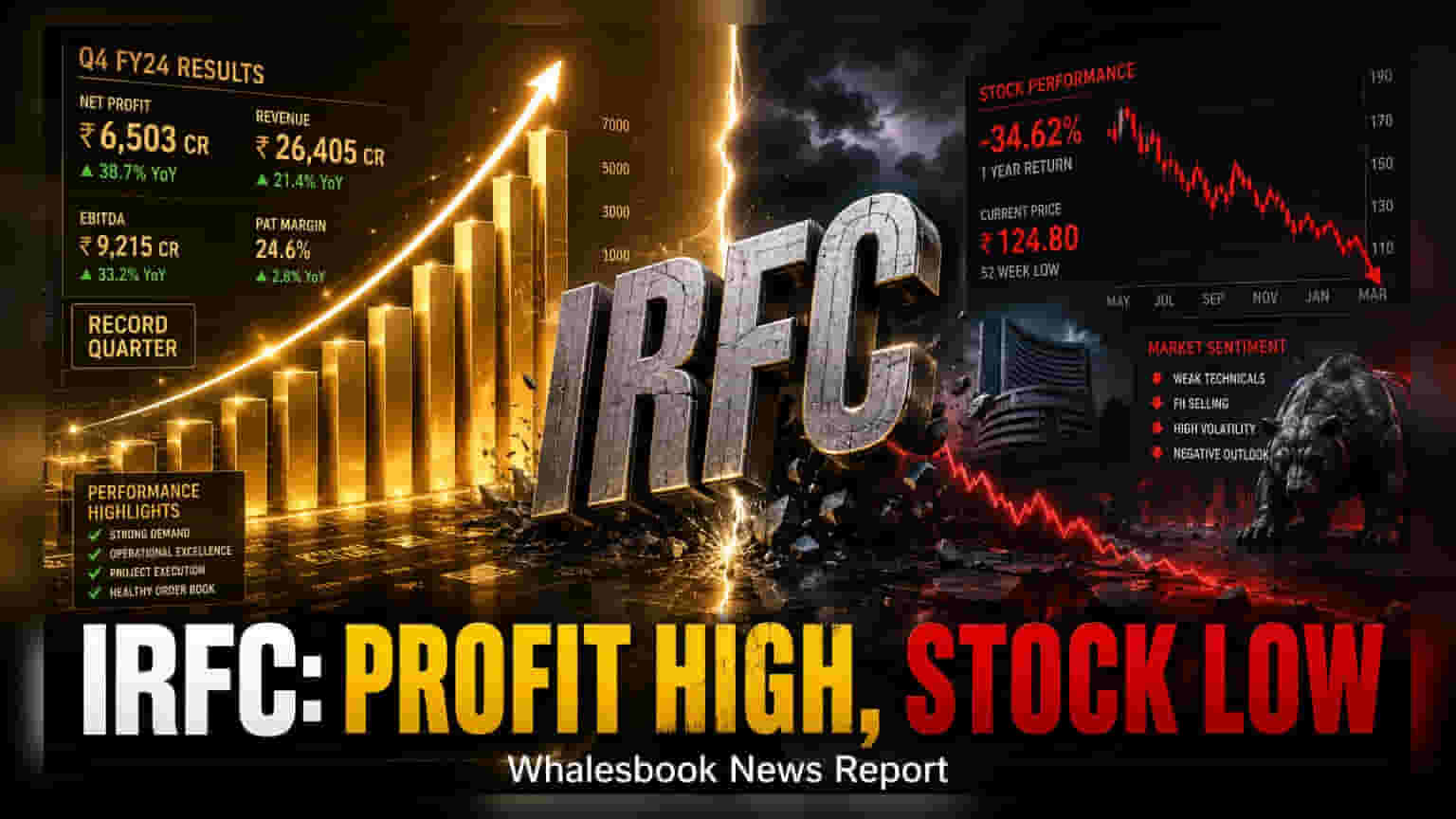
Indian Railway Finance Corporation (IRFC) shares hit a 52-week low of ₹86.02 on August 7, 2026, despite reporting record-high profits in the June 2026 quarter. While financial results remain strong, investors are concerned about the shrinking loan book, tightening profit margins, and the ongoing supply pressure from government stake sales.
Indian Railway Finance Corporation (IRFC) is currently experiencing a disconnect between its financial health and its stock market performance. While the state-owned lender reported its highest-ever quarterly net profit of ₹1,927.21 crore and record total income of ₹8,391.34 crore for the quarter ending June 30, 2026, the market response has been weak. The company's share price touched a 52-week low of ₹86.02 on August 7, 2026, marking a significant correction from its recent peaks.
This stock price movement suggests that investors are looking beyond the record earnings and focusing on structural challenges in the business. A primary concern for shareholders is the contraction in the company's Assets Under Management (AUM), which dipped to ₹4.79 trillion from ₹4.85 trillion as of March 2026. For a company whose revenue depends entirely on the size of its loan book, a shrinking portfolio limits future earning potential.
Profitability is also facing pressure. The annualised net interest margin, which shows the profit the company makes on its lending, tightened to 1.48% in the June quarter, compared to 1.53% in the same period last year. In a business model that relies on thin spreads, even minor margin compression can have a noticeable impact on bottom-line growth. Investors are observing these numbers closely, as the ability to maintain or expand margins is vital for long-term stability.
Another major headwind is the persistent supply of shares in the market. The government, which holds nearly 85% of the company, conducted an offer for sale in June 2026 to increase public float. Market participants are cautious about the possibility of further divestments as the government works to meet minimum public shareholding requirements. This constant threat of new share supply tends to cap the upside for the stock, as large-scale selling pressure often outweighs buying interest in the short term.
Valuation also remains a point of debate among market observers. Even after the recent stock price decline, IRFC continues to trade at a higher valuation multiple compared to other state-owned lenders like Power Finance Corporation and REC. Some analysts have pointed out that the current P/E and P/B ratios look premium when compared to these peers, especially when factoring in the slower growth of the loan book and lower dividend yields.
Management has described the current fiscal year as a period of consolidation. The company is now focusing on diversifying its lending portfolio into allied railway sectors to jumpstart AUM growth and improve margins. The success of these diversification efforts, alongside the company’s ability to stabilize its loan book, will be the key monitorables for investors in the coming quarters.