

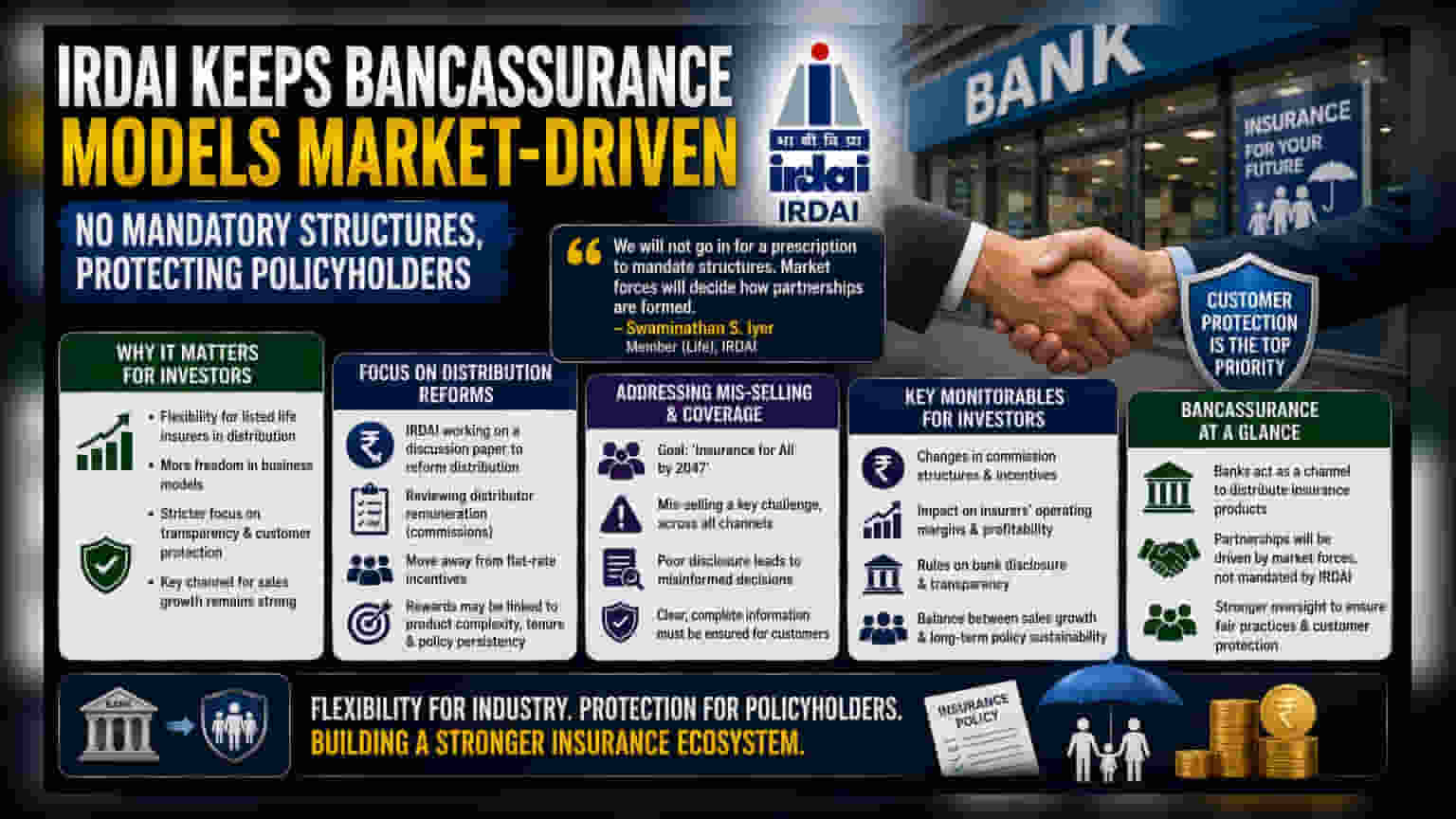
The insurance regulator, IRDAI, will not impose rigid structures on bancassurance, allowing market forces to guide business strategies. The regulator is developing new distribution reforms to boost insurance coverage and tighten transparency. This shift is important for life insurance companies that rely on bank partnerships to sell policies.
What Happened
The Insurance Regulatory and Development Authority of India (IRDAI) has decided not to mandate specific structures for bancassurance partnerships. Bancassurance is a business model where insurance companies use bank branches as a channel to sell policies to customers. In an official update, Swaminathan S. Iyer, Member (Life) at IRDAI, confirmed the regulator will let market forces drive how these partnerships are formed. The regulator's main focus is to build an environment that supports industry growth while ensuring strong protection for policyholders.
Why It Matters For Investors
Many large listed life insurance companies in India rely significantly on bancassurance to distribute their products. By choosing to let the market decide rather than imposing strict, prescriptive rules, the regulator is providing flexibility to these companies. However, this flexibility comes with a clear mandate: protecting the customer. Investors should note that while companies have more freedom in their business models, they will likely face stricter oversight regarding transparency and how products are explained to buyers.
The Focus On Distribution Reforms
IRDAI is currently working on a discussion paper aimed at reforming insurance distribution. The regulator intends to look closely at distributor remuneration, which includes the commissions paid to banks and other intermediaries. The goal is to move away from uniform, flat-rate incentive models. Future structures may link rewards to factors like product complexity, policy tenure, and most importantly, policy persistency, which measures how long a customer keeps their policy active.
Addressing Mis-selling And Coverage
Under its 'Insurance for All by 2047' initiative, the regulator is trying to expand the reach of insurance to a larger part of the population. A key challenge the regulator identified is mis-selling, where customers may purchase products without fully understanding the risks or benefits. The regulator noted that this is not limited to any single channel and is often caused by poor disclosure of product information. The regulator expects companies to ensure that customers have clear and complete information to make informed decisions.
What Investors Should Track
As the regulator moves forward with its distribution reforms, the key monitorables will be the specific changes to commission structures and the impact on operating margins for insurance companies. Investors may look for details on how these rules affect the balance between aggressive sales growth and the long-term sustainability of policies. Furthermore, any new guidelines on how banks disclose product information to customers could influence the cost of doing business and the overall profitability of the bancassurance channel.