

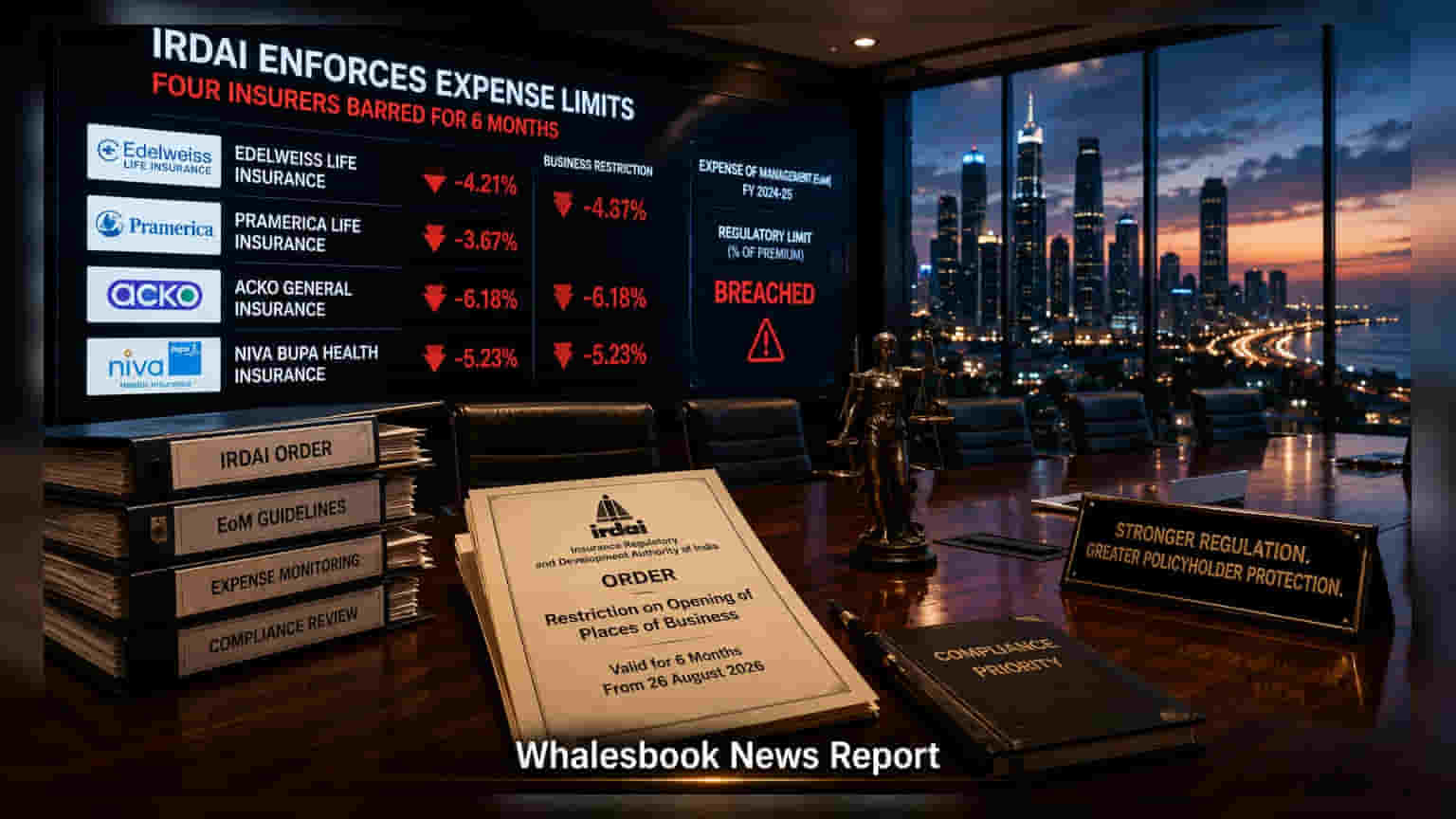
The Insurance Regulatory and Development Authority of India (IRDAI) has barred four insurers from opening new offices for six months due to violations of expense limits in fiscal year 2025. This move by Chairman Ajay Seth marks a shift toward stricter, punitive enforcement to curb high operational costs. For investors, this signals that compliance failures can now directly restrict a company’s ability to scale its business and physical footprint.
The insurance sector is entering a new era of strict oversight as the Insurance Regulatory and Development Authority of India (IRDAI) transitions from a supportive role to a more aggressive enforcer. In a recent move aimed at curbing excessive spending, the regulator has barred four insurance companies—Edelweiss Life Insurance, Pramerica Life Insurance, ACKO General Insurance, and Niva Bupa Health Insurance—from opening new places of business for a period of six months.
This decision, led by Chairman Ajay Seth, stems from these companies exceeding the regulatory limits on the Expense of Management (EoM) during the 2024-25 fiscal year. For context, these limits determine how much money an insurance company is allowed to spend on acquiring new business, including commissions, marketing, and operational expenses, relative to its total premium collected. By capping these expenses, the regulator aims to ensure that companies do not overspend to drive growth at the cost of long-term stability or policyholder value.
Impact on Business Growth
This regulatory pivot is significant for investors because it changes the nature of penalties. Historically, regulatory action in the insurance space often meant monetary fines, which large companies could easily absorb as a standard cost of doing business. However, restricting a company from opening new offices is an operational penalty. It directly limits the company’s ability to expand its physical reach, reach new customers, and grow its premium income.
This approach mirrors the tactics frequently used by the Reserve Bank of India (RBI) to discipline banks. By aligning insurance oversight with these tougher banking-style standards, the IRDAI is signaling that it is no longer satisfied with mere fines. Any insurer that repeatedly fails to maintain its expense levels may now face tangible hurdles to its expansion strategy, which can impact future revenue growth and market share.
Focus on Consumer and Compliance
The move is also a response to the rising number of consumer complaints across the industry. With policyholder grievances regarding claim settlements and sales tactics climbing, the regulator has begun to scrutinize how insurers sell products. Chairman Seth has publicly criticized aggressive digital sales tactics, including the use of dark patterns, where insurers make it difficult for customers to access information without sharing contact details first.
As the regulator keeps a closer watch on distribution costs and how much commission is paid out, companies that rely heavily on expensive bancassurance or aggressive marketing to grow may face increased margin pressure. While the impacted insurers have indicated they are currently in compliance with regulations for the ongoing fiscal year, this event highlights the heightened risk associated with regulatory non-compliance.
Moving forward, investors and stakeholders should keep a close watch on future exchange filings and quarterly results for any mention of regulatory constraints or changes in distribution costs. The key monitorable will be whether companies can maintain their growth targets while strictly adhering to these expense limits, as any further breach could lead to extended restrictions.