

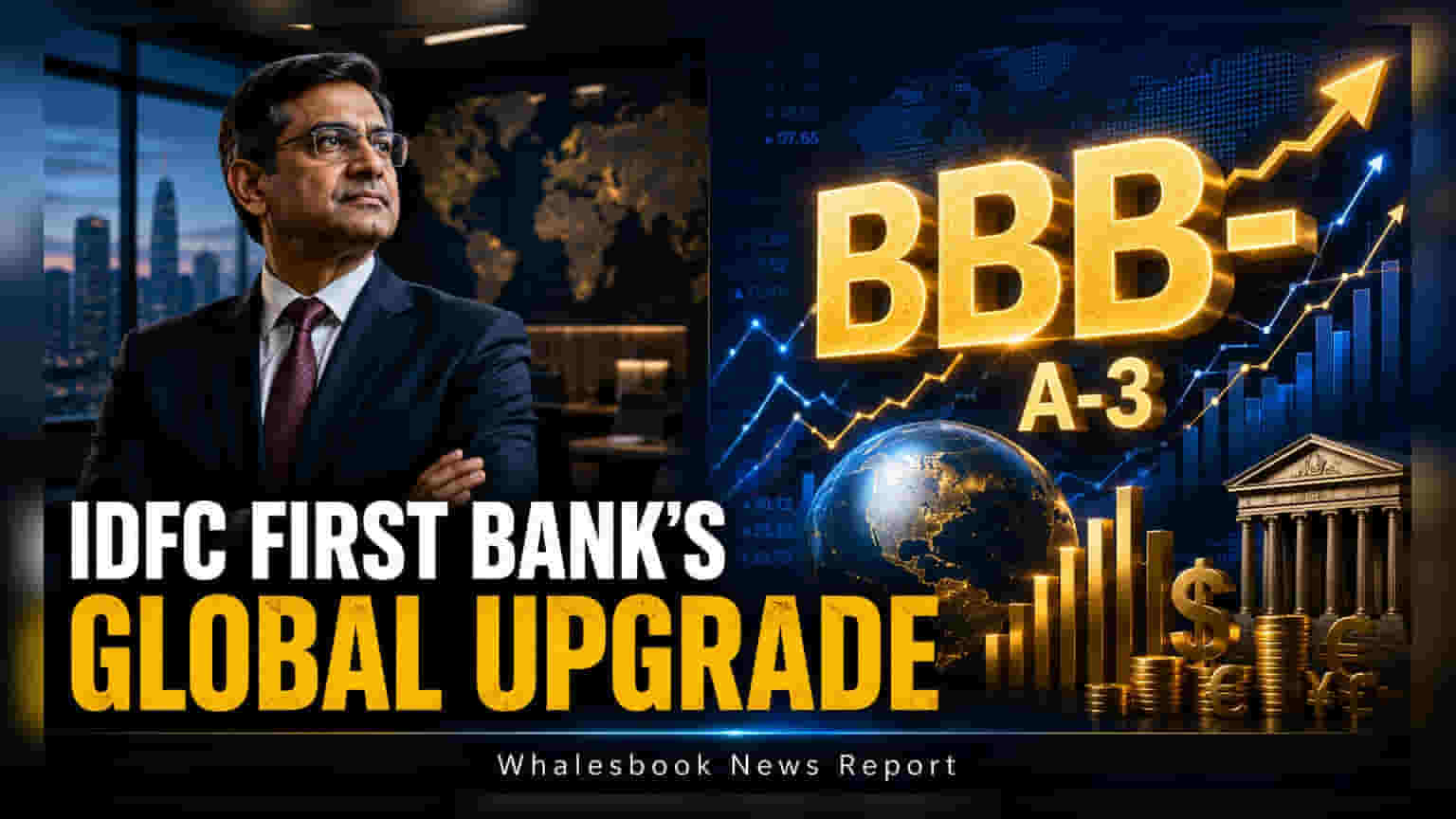
IDFC First Bank has secured its inaugural international investment-grade rating of 'BBB-' from S&P Global Ratings with a stable outlook. This milestone allows the bank to access international funding markets more easily and supports its foreign currency operations. Investors will now watch the bank's plan to raise ₹75 billion in capital to support its 20% annual loan growth target.
IDFC First Bank has achieved a significant milestone by receiving its first-ever international investment-grade rating from S&P Global Ratings. The global agency assigned a 'BBB-' long-term and 'A-3' short-term issuer credit rating to the bank, both carrying a stable outlook. This development is an important step for the bank as it seeks to strengthen its position with international financial institutions and global investors.
Accessing Global Funding Markets
The primary benefit of this international rating is the potential to lower the cost of borrowing and improve access to foreign currency funding. For a private sector bank, having an investment-grade rating from a global agency makes it easier to engage in international trade finance and cross-border transactions. Specifically, this should support the operations of the bank's International Banking Unit at GIFT City. It also helps in mobilizing foreign currency deposits, such as FCNR(B) accounts, which are an important source of stable, long-term liquidity for Indian banks.
Capital Plans and Growth Strategy
S&P Global Ratings noted that the bank is expected to maintain a robust safety cushion, with its Risk-Adjusted Capital (RAC) ratio projected to stay between 10.0% and 10.5% over the next 18 to 24 months. This capital buffer is essential, as the bank aims to continue growing its loan book at an annual rate of 20%, which is faster than the current pace of the broader Indian banking industry.
To support this ambitious growth, the bank is planning to raise up to ₹75 billion in equity capital during the 2027 fiscal year. The ability to raise this capital will be a key factor in maintaining the bank's financial strength while funding its credit expansion initiatives. S&P highlighted that the bank has a history of successfully accessing equity markets since 2021, which provides a level of confidence in its capital-raising ability.
Operational Efficiency and Market Risks
While the outlook is stable, the bank faces challenges typical of mid-sized private lenders. Historically, the bank’s cost-to-income ratio has been relatively high, reaching 75% in the 2026 fiscal year. S&P expects this to improve, projecting a shift to 65%-70% over the next two years as the bank gains economies of scale.
Investors should also be aware of the competitive environment. Rapid profit growth in the banking sector can sometimes be influenced by lower provisioning—the money set aside for potential loan losses. If credit conditions in the economy worsen, these provisions might need to increase, which could impact profitability. Additionally, like all private banks, IDFC First Bank remains sensitive to macroeconomic shifts, such as interest rate changes and evolving regulatory policies, which can affect both the demand for loans and the quality of existing assets.