 Whalesbook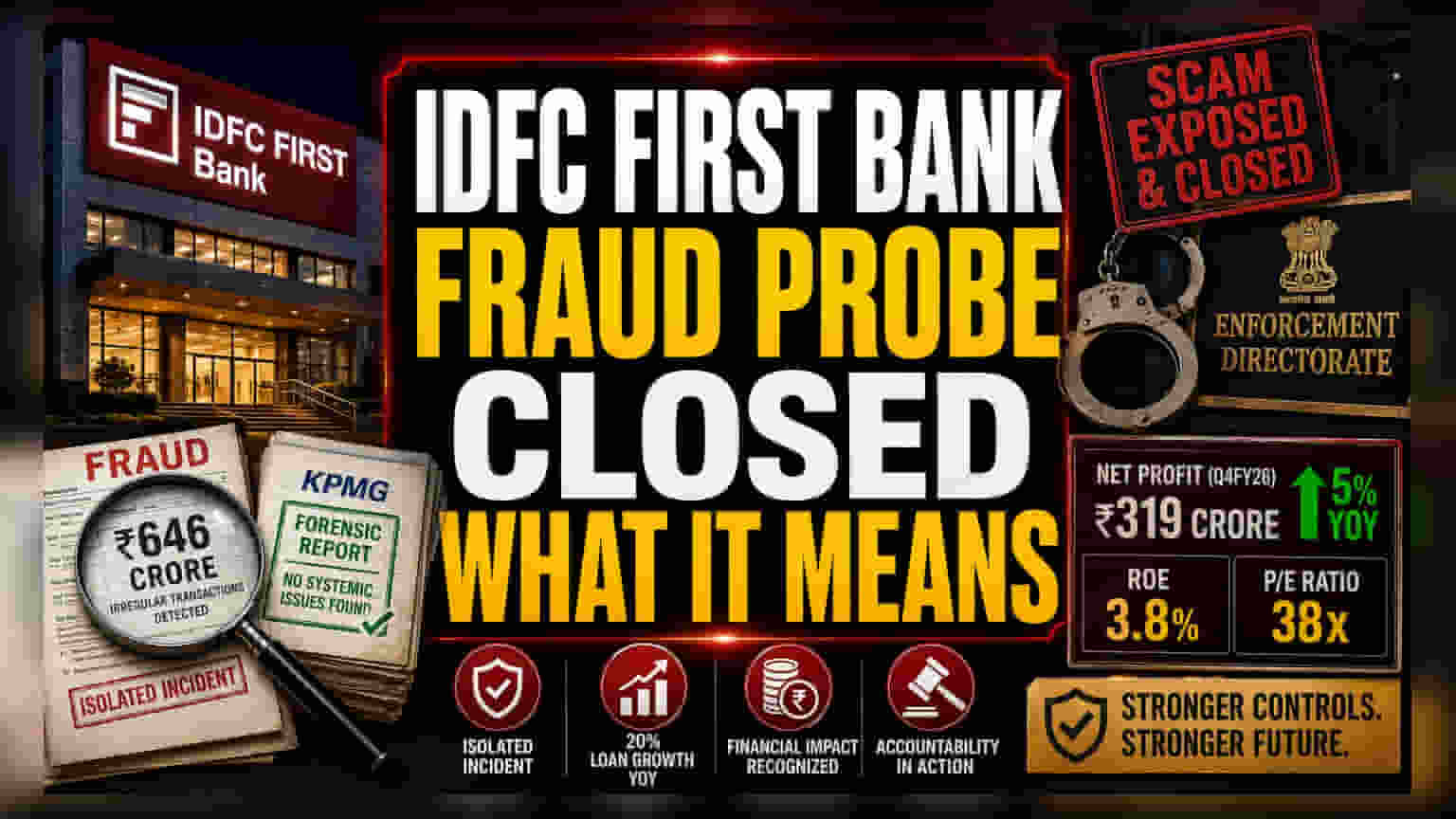


The Resolution of a Financial Breach
Following months of intense scrutiny, IDFC First Bank has received a clean bill of health from KPMG’s forensic investigation regarding the Rs 646-crore irregularity at its Chandigarh Sector-32 branch. The findings, presented to the board this week, confirm that the embezzlement was a localized act of collusion involving former employees, government officials, and third-party entities. By classifying this as an isolated event, the bank has sought to decouple its operational integrity from the criminal activities of a specific branch cohort.
Impact and Capital Recovery
The financial burden of the fraud, totaling Rs 645.59 crore in principal plus interest, was recognized during the fourth quarter of the 2026 fiscal year. While this one-off charge dampened quarterly net profits—which rose only 5% year-on-year to Rs 319 crore—the bank's underlying business momentum appears resilient. With loan growth maintaining a healthy 20% year-on-year trajectory, the bank has demonstrated an ability to navigate localized shocks without stalling its broader expansion plans. The Enforcement Directorate’s recent arrest of former managers linked to the scheme further emphasizes that the accountability trail is well-defined, potentially limiting future legal tailwinds.
The Forensic Bear Case
Despite the bank’s efforts to isolate the incident, risk-averse investors continue to scrutinize the control environment. The fraud revealed that manual branch-level authorizations were bypassed, raising questions about whether similar procedural gaps exist elsewhere. KPMG itself noted that its forensic procedures, while robust, may not identify all latent process risks or non-compliance issues within a massive, geographically dispersed network. Furthermore, the bank’s relatively low return on equity (ROE) of roughly 3.8% and its current Price-to-Earnings (P/E) ratio of approximately 38x suggest that the market is pricing in significant growth that must now be delivered without the distraction of further internal lapses. Unlike its more established private sector peers, IDFC First Bank faces the uphill task of proving that its rapid growth strategy does not come at the expense of rigorous risk management.
Future Outlook
Management has committed to a centralized oversight model, removing the ability for individual branches to authorize significant transactions independently. With the fraudulent entities and involved employees identified and under investigation, the bank’s leadership is pivoting back to core profitability. Analysts will be monitoring the next few quarters to see if credit costs remain at the targeted 2% level, ensuring that the Chandigarh episode remains a historical footnote rather than a harbinger of systemic, branch-level vulnerability.