

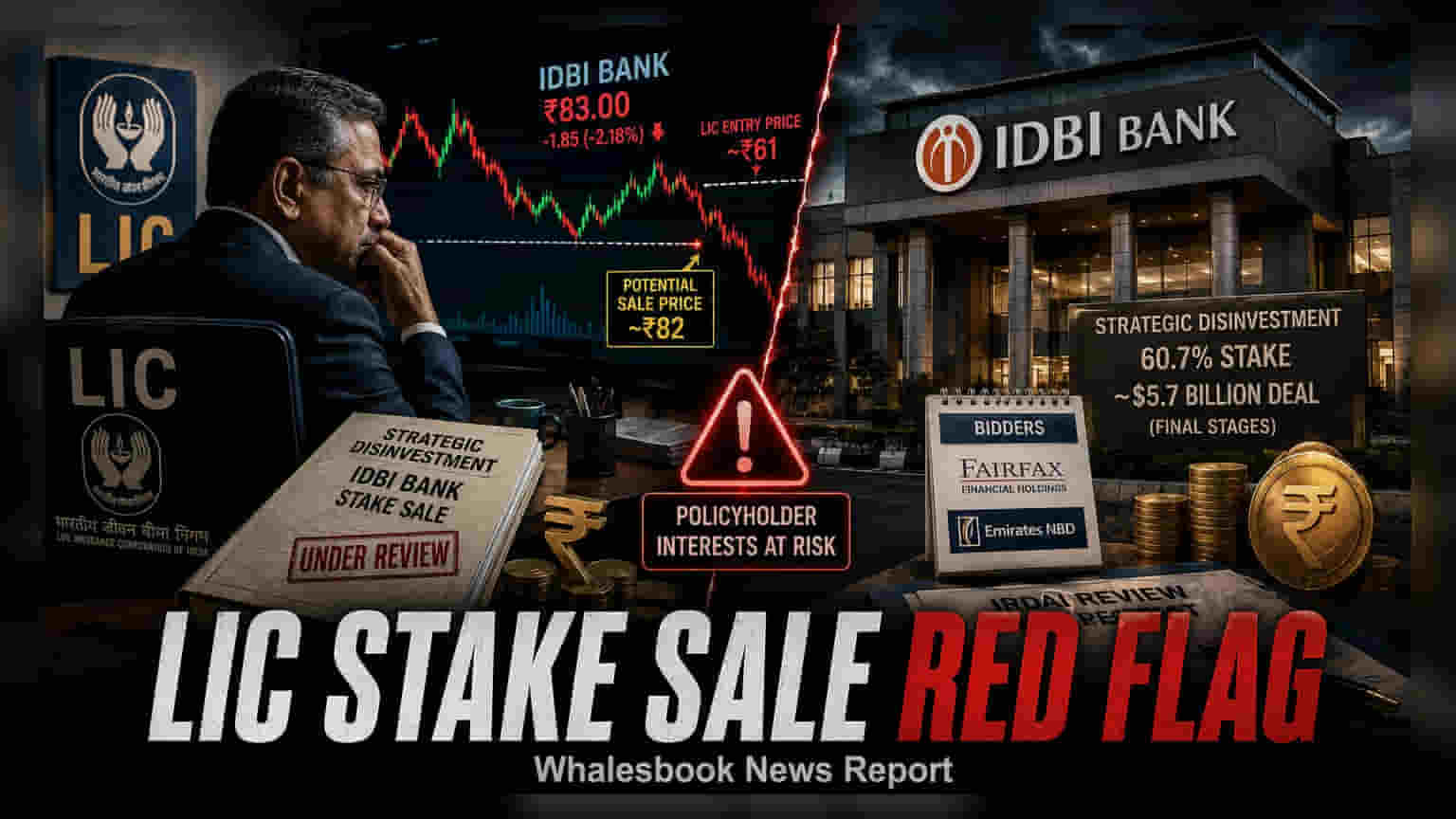
The All-India Bank Officers' Association has formally requested the IRDAI to intervene in the proposed sale of LIC’s stake in IDBI Bank, citing valuation concerns. With the government evaluating final bids for the $5.7 billion transaction, investors are watching for regulatory clearances and the final bid selection as the privatization nears a conclusion.
The All-India Bank Officers' Association (AIBOA) has formally petitioned the Insurance Regulatory and Development Authority of India (IRDAI) to review the ongoing strategic disinvestment of IDBI Bank. The association’s primary concern centers on the valuation of the stake currently held by the Life Insurance Corporation of India (LIC), arguing that the proposed sale price must align with long-term investment expectations to protect the interests of policyholders.
LIC originally acquired a 51% controlling stake in IDBI Bank in 2018 at approximately ₹61 per share. With recent reports suggesting a potential sale price of around ₹82 per share, AIBOA contends that this valuation may not fully reflect the value generated over the nearly eight-year holding period. The association fears that a sale at an inadequate price could negatively impact the returns on LIC’s overall investment portfolio, which in turn could affect future bonuses for policyholders.
The privatization process is currently in its final stages, with the Government of India and LIC actively evaluating revised financial bids from international contenders, including Fairfax Financial Holdings and Emirates NBD. This combined sale of a 60.7% stake is valued at approximately $5.7 billion. As of August 24, 2026, IDBI Bank shares are trading at approximately ₹83, reflecting investor focus on the impending deal.
While the government aims to finalize the disinvestment process within the next month, the transaction remains subject to complex regulatory scrutiny. Potential acquirers like Fairfax Financial Holdings may need to navigate RBI regulations regarding their existing stakes in other financial institutions, such as CSB Bank, which could involve mergers or divestments to ensure compliance. These regulatory requirements, combined with the transition from public-sector management to private ownership, remain key variables for the deal’s execution.
For investors, the AIBOA’s intervention highlights the sensitivities surrounding large-scale privatization, particularly concerning valuation transparency and the safeguarding of public-sector interests. The upcoming weeks will be crucial as the government moves toward selecting the successful bidder and securing the necessary regulatory approvals. Market participants will be monitoring the final offer price, the chosen buyer, and any conditions set by regulators like the RBI and IRDAI to ensure the transition proceeds as planned.