

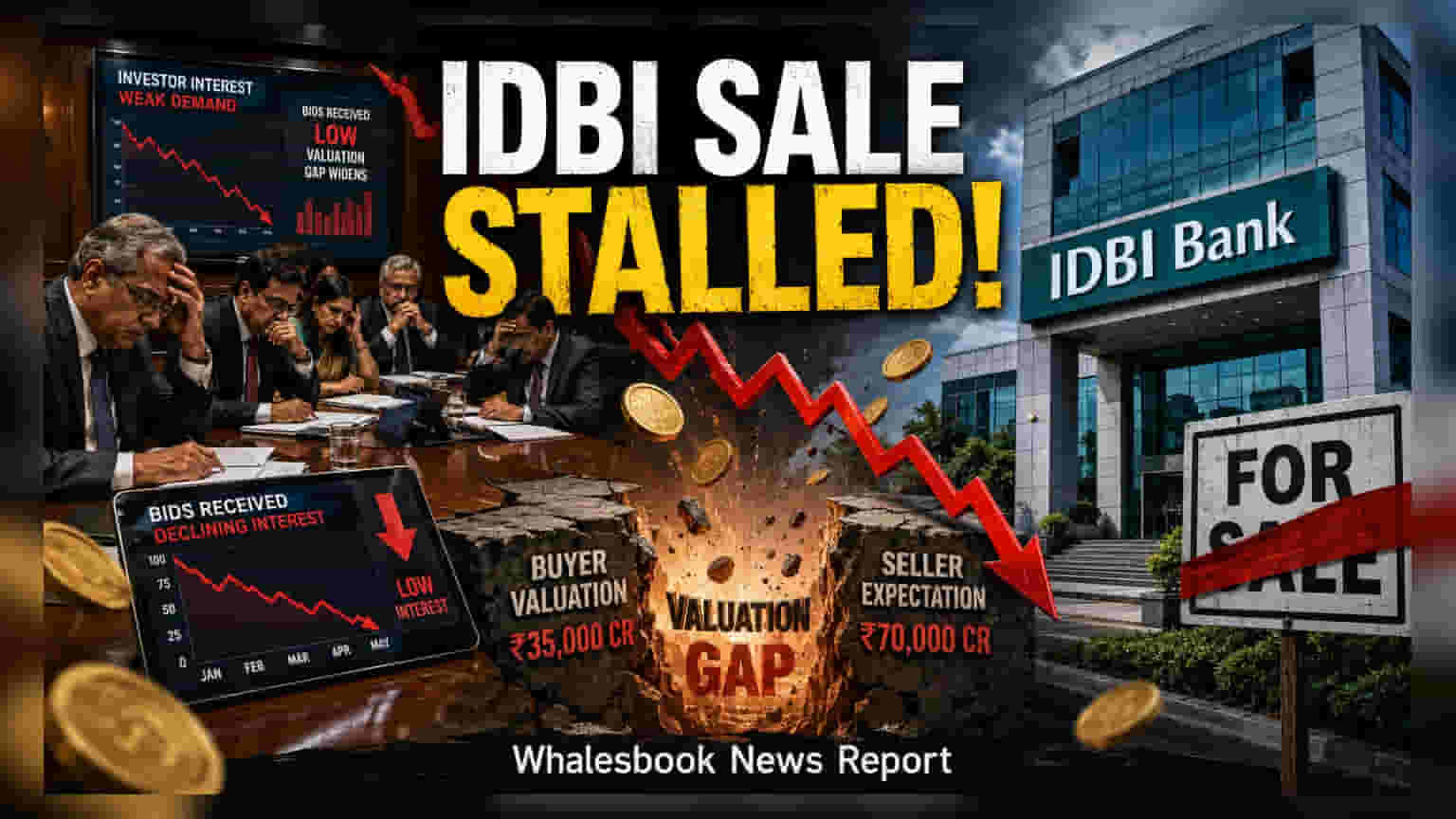
The divestment of IDBI Bank has hit a hurdle after investor bids fell short of the government's minimum price expectations. Despite the bank's improved financial health and reduced bad loans, negotiations have stalled due to valuation gaps. The government and LIC, which hold a combined 60% stake, are currently reviewing their pricing strategy while continuing with the sale process.
The long-planned privatisation of IDBI Bank has faced a new challenge as potential investors submitted bids that failed to meet the government's internal reserve price. This gap between the valuation sought by the state and the price offered by bidders has created uncertainty regarding the timeline of the stake sale. The government and the Life Insurance Corporation of India (LIC) are looking to offload a combined stake of approximately 60% to 61% in the lender.
Improved Financial Metrics Contrast with Sale Delay
It is notable that the delay in the privatisation process has coincided with a significant recovery in IDBI Bank’s balance sheet. Over the past few years, the bank has managed to bring down its gross bad loans, or non-performing assets, significantly. From levels near 20% in mid-2022, gross bad loans have dropped to between 2.5% and 3% as of early 2025. Additionally, the bank’s capital adequacy, which measures its ability to cover risks, has increased to over 25%, indicating a more stable financial position. This recovery was intended to make the bank a more appealing proposition for potential buyers, yet the current valuation expectations remain a sticking point.
Challenges in Finalizing the Deal
Recent bidding rounds in early 2026 did not yield offers at the levels the government expected. While market conditions and global geopolitical pressures have often been cited as reasons for cautious investor behavior, the primary issue remains the disagreement over the bank's valuation. While the government is accounting for the bank's turnaround in its pricing, bidders appear to be more conservative. Furthermore, the divestment process has faced consistent opposition from various employee unions, which adds a layer of operational and social friction to the transition.
Status of the Divestment Process
Despite the current impasse, the Department of Investment and Public Asset Management (DIPAM) has clarified that the sale process remains active. The government has signaled its commitment to the divestment plan, and reports suggest that officials are currently working on a potential recalibration of pricing to bridge the gap.
Investors looking at this space should monitor the next steps from the government, specifically any updates regarding a revised reserve price or a new timeline for the bidding process. The ability of the bank to maintain its current levels of profitability and asset quality will be a key factor in how negotiations with prospective buyers proceed in the coming months.