

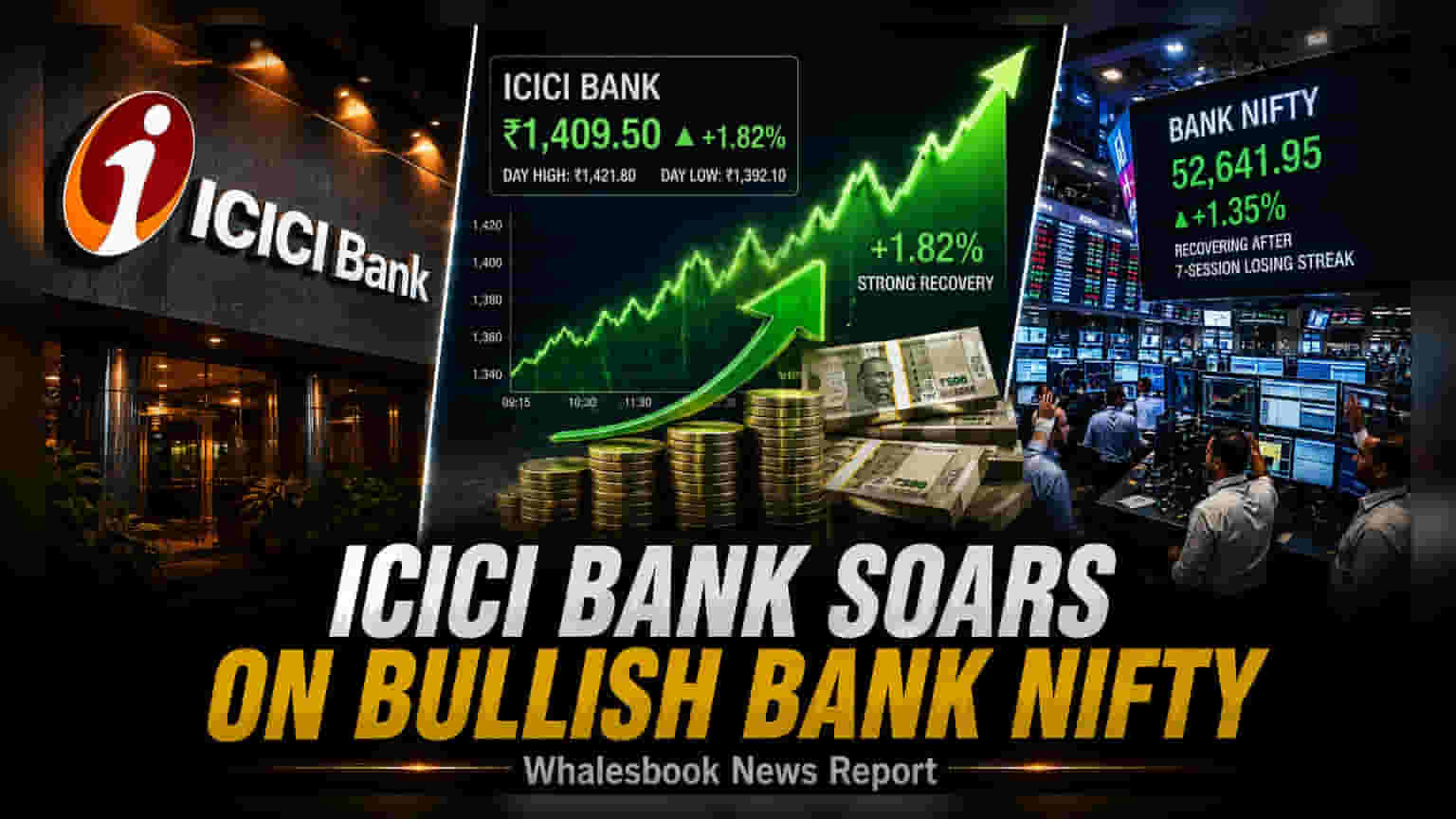
ICICI Bank shares traded near ₹1,409.50 on August 20, 2026, as the banking sector saw a modest recovery from recent market weakness. The bank, which recently reported a 15.9% year-on-year profit growth in Q1 FY27, is currently managing sector-wide challenges such as rising deposit costs.
ICICI Bank shares saw a modest rise on Thursday, trading around ₹1,409.50, as the Bank Nifty index sought to stabilize following a seven-session losing streak in the broader market. This recovery in the banking index provided much-needed support for the stock, which has remained relatively resilient despite recent bearish pressure on the Nifty 50.
Financial Performance and Asset Quality
The bank’s financial health remains a key point of focus for investors, following its Q1 FY27 results. The company reported a 15.9% year-on-year growth in standalone profit after tax, reaching ₹14,805 crore. A vital metric for any bank is its net interest margin, which measures the difference between interest earned on loans and interest paid on deposits. For the June 2026 quarter, the bank maintained a stable net interest margin of 4.36%. Additionally, the bank reported a net non-performing asset ratio of 0.35%, indicating that the quality of its loan book remains stable despite broader economic uncertainty.
Strategic Funding and Sector Risks
To support its ongoing growth and funding requirements, the bank has been active in capital markets, recently raising over $2 billion in dollar-denominated debt. This move is aimed at ensuring the bank has enough liquidity to support its expansion plans. However, investors are paying close attention to sector-wide pressures. Banks across India are currently facing the challenge of rising deposit costs. As interest rates remain dynamic, maintaining profit margins while competing to attract deposits is becoming more difficult. This environment of rising costs remains a key headwind that could affect future profitability if not managed carefully.
What Investors Should Monitor
Moving forward, the primary monitorables for the stock include how the bank manages its net interest margins against the backdrop of rising funding costs. Investors will also look for management commentary in future earnings calls regarding deposit growth trends and their strategy for maintaining high asset quality. While the stock has shown strength in its long-term performance, market participants will likely track whether the current banking sector recovery can sustain its momentum or if broader macroeconomic volatility continues to influence price action.