

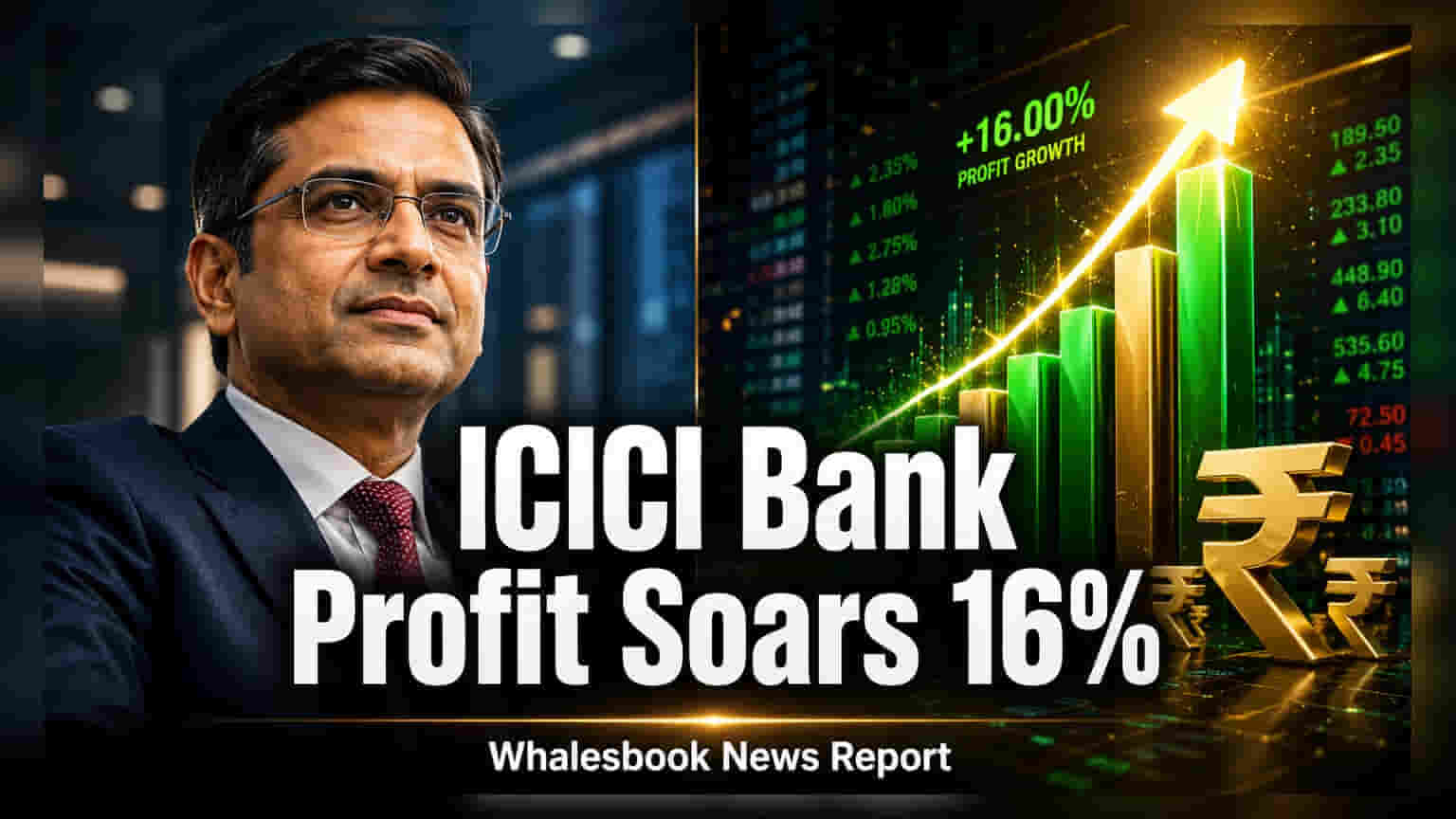
ICICI Bank reported a 15.95% year-on-year rise in net profit to Rs 14,804.5 crore for the quarter ending June 30, 2026. The lender's core banking income also exceeded analyst expectations. This performance comes as the bank continues to outperform the broader Nifty 50 index this year.
ICICI Bank Ltd. has reported a strong start to the new fiscal year, with standalone net profit reaching Rs 14,804.5 crore for the first quarter of FY27, which ended on June 30, 2026. This marks a 15.95% increase compared to the same period last year, reflecting steady growth in the bank's core business activities.
Core Income Growth Exceeds Analyst Estimates
A key driver of this performance was the bank's Net Interest Income, or the difference between interest earned on loans and interest paid on deposits. This figure stood at Rs 24,384.35 crore for the quarter. This result was notably higher than the consensus analyst expectation of Rs 23,689 crore. By consistently maintaining its net interest margins, the bank has managed to generate higher income despite the ongoing shifts in interest rate cycles.
Market performance for the stock has remained resilient. Shares of ICICI Bank closed at Rs 1,444.3 on Friday, registering a single-day gain of 1.84%. This move stands in contrast to the broader market, as the Nifty 50 index has experienced a decline of 6.9% so far this year. With an 8.7% appreciation year-to-date, the stock continues to show strength compared to the wider benchmark index.
Operational Context and Investor Monitorables
The bank's ability to beat profit estimates of Rs 13,616 crore suggests that its operational efficiency—the cost of running the bank relative to the income it generates—is being managed effectively. For investors, the next steps will involve monitoring how the bank maintains these margins as the competitive landscape for deposits intensifies across the private banking sector.
While these results reflect a positive start to the year, future performance will likely depend on the bank’s ability to manage loan quality, especially in the unsecured retail segment, and whether it can continue to attract low-cost deposits at a rate that supports its current interest income levels. Investors may look for further details regarding asset quality and deposit growth rates in the upcoming management commentary and full investor presentation.