

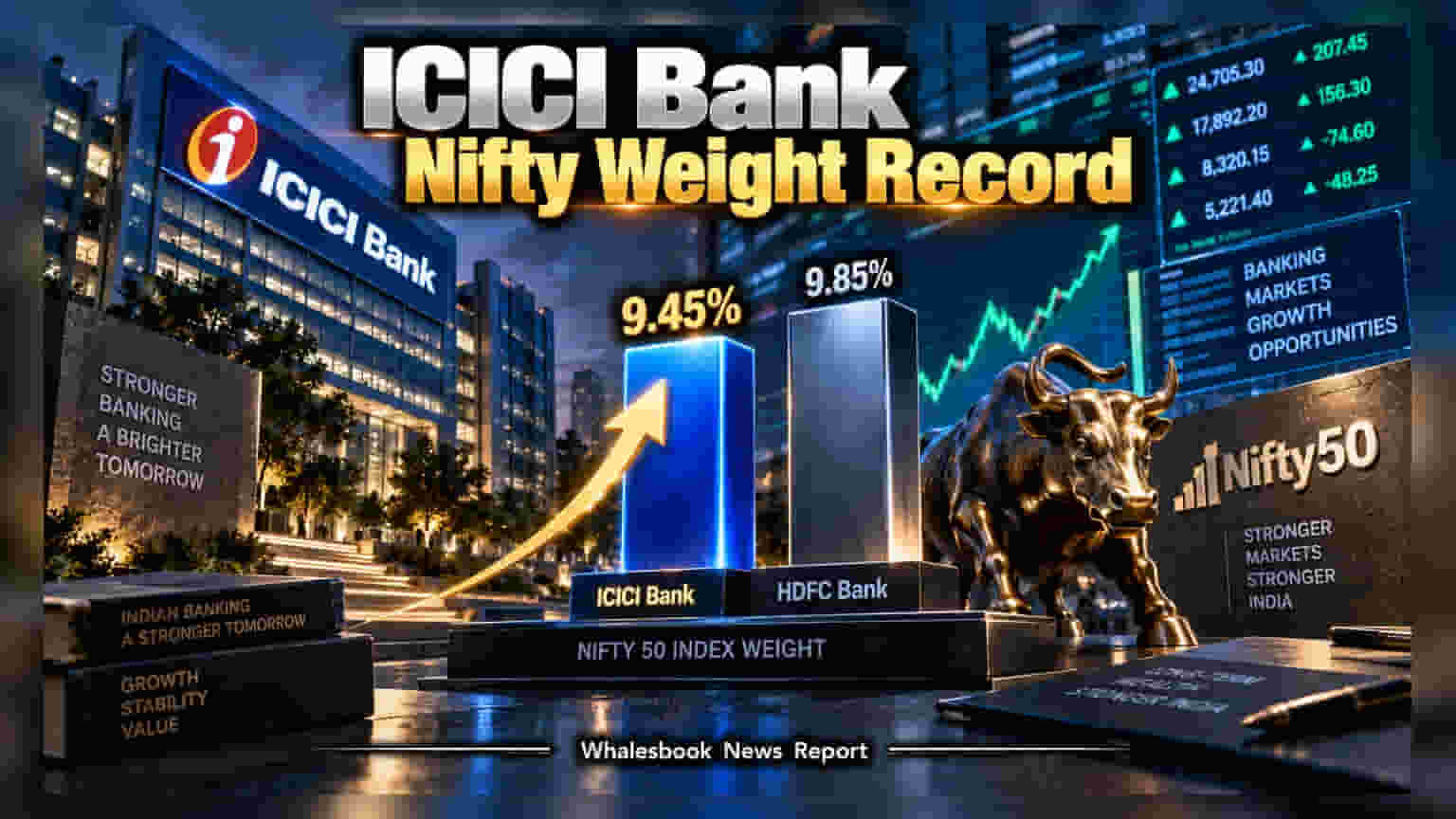
ICICI Bank has reached an all-time high weight of 9.45% in the Nifty 50, now trailing HDFC Bank by just 40 basis points. The record index share comes as HDFC Bank shares have fallen nearly 29% in 2026, driven by concerns over leadership succession and governance. Investors are closely tracking how this shifts the balance of power in India’s most important banking index.
ICICI Bank has achieved a major milestone, seeing its weighting in the Nifty 50 index rise to a record 9.45% as of early September 2026. This increase brings the bank within striking distance of HDFC Bank, which currently holds an index weight of approximately 9.85%. The narrowing gap, now at roughly 40 basis points, represents a significant shift in the landscape of India's private banking sector, where HDFC Bank has traditionally held a commanding lead.
The rise in ICICI Bank’s index weight is not just a reflection of its own growth but also the result of contrasting fortunes for the two lenders. In 2026, HDFC Bank’s stock has faced pressure, declining by approximately 28% to 29%. This underperformance has been largely attributed by market analysts to uncertainties surrounding the bank's future leadership as the current CEO's term nears its conclusion in October 2026, alongside broader governance concerns. As a result, the market capitalization gap between the two major lenders has shrunk to an 11-year low, reaching approximately ₹49,167 crore by late August.
For investors, this index shift carries mechanical implications. As ICICI Bank’s weight in the Nifty 50 grows, it automatically receives a larger share of capital from passive investment products, such as index funds and exchange-traded funds (ETFs) that track the Nifty 50. This structural buying acts as a liquidity cushion for the stock, as passive funds must adjust their holdings to match the index composition. This consistent demand has historically helped the bank maintain valuation stability even when market conditions have been volatile.
While the index rebalancing highlights a strengthening position for ICICI Bank, the banking sector continues to face wider challenges. Financials remain the largest component of the Nifty 50, accounting for over 36% of its total weight. This makes the entire index sensitive to any sharp movements or shifts in sentiment toward major lenders. The current environment remains highly sensitive to interest rate fluctuations and macroeconomic data, which can impact profitability and loan growth across the sector.
The most important event for market participants to watch in the coming weeks is the leadership transition at HDFC Bank. Investors are looking for clarity on the succession plan, which could be a deciding factor in whether the current valuation gap continues to narrow or begins to stabilize. For ICICI Bank, the key monitorable will be its ability to maintain its retail loan growth and margin stability, which have been the foundation of its steady performance over the past few years, as it aims to sustain its position as a core compounder in the benchmark index.