

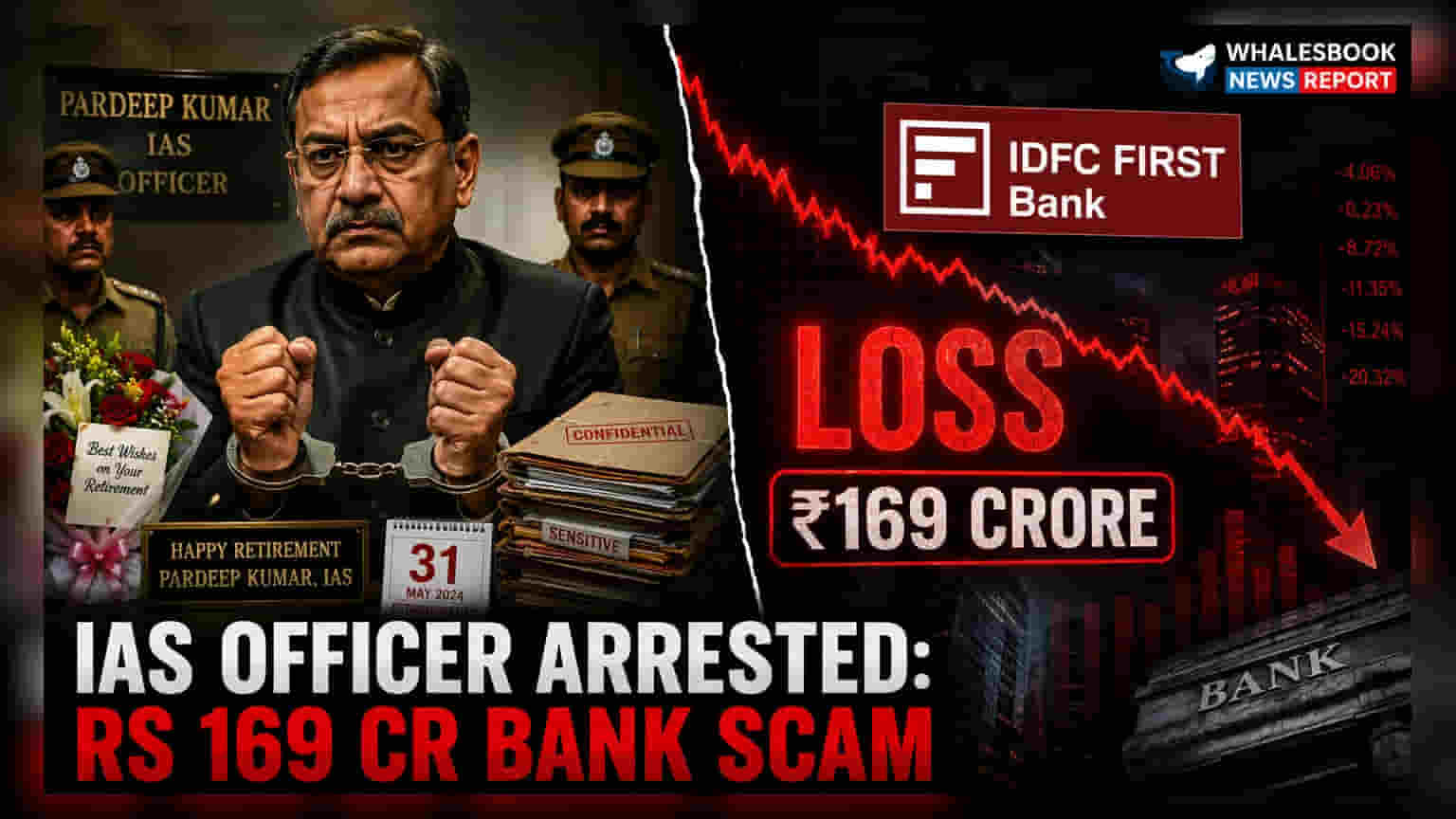
CBI has arrested a senior IAS officer and two former bank executives over an alleged Rs 169 crore fund embezzlement involving Haryana government accounts. The case, linked to a broader Rs 504 crore banking fraud, raises questions about internal compliance and governance at the banks involved. Investors are monitoring the impact on regulatory scrutiny and potential governance risks.
What Happened
The Central Bureau of Investigation (CBI) arrested a senior Indian Administrative Service (IAS) officer, Pardeep Kumar, on his final day of service. The arrest is part of an ongoing investigation into the alleged misappropriation of Rs 169 crore in government funds belonging to the Haryana State Pollution Control Board (HSPCB). This incident is linked to a wider banking fraud involving approximately Rs 504 crore across several Haryana government departments, where funds were allegedly diverted through unauthorized accounts and fraudulent transactions at specific bank branches.
The Bank Compliance Question
Beyond the administrative involvement, the investigation highlights significant compliance risks for the banking institutions named. The CBI has also arrested two former bank executives—Shamim Dar, former Area Head of IDFC First Bank, and Charanjeet Singh Randhawa, former Branch Manager of AU Small Finance Bank. The agency alleges these individuals abused their positions to facilitate the opening of unauthorized government department accounts and processed fraudulent debit transactions. These accounts were reportedly used to route public funds to various shell companies, bypassing standard banking protocols and internal controls.
Why It Matters For Investors
For shareholders, the primary concern revolves around internal control failures. When government or public funds are siphoned through unauthorized accounts at a bank, it suggests potential gaps in the bank's Know Your Customer (KYC) processes, account opening procedures, and transaction monitoring systems. Regulatory bodies and the banking sector often view such lapses as serious governance risks. With the CBI having already filed chargesheets against 17 individuals—including six bank officials—the investigation focuses on the systemic oversight, or lack thereof, within the branches involved.
Governance And Risk Context
This is not a standalone incident but part of a larger, ongoing probe into banking fraud spanning multiple departments. The involvement of multiple senior government officials and bank employees indicates a complex pattern of irregularities. For investors, the risk is not just the immediate financial loss, which is often provisioned for, but the reputational damage and the potential for increased regulatory scrutiny or penalties. When banks are found to have facilitated shell entities or processed transactions in violation of finance department guidelines, regulators may tighten oversight or impose operational restrictions, which can affect business velocity.
What Investors Should Track Next
Investors may monitor official statements or exchange filings from the affected banks regarding internal probes or regulatory updates. The key monitorables include the scope of the CBI investigation, potential penalties or fines imposed by banking regulators, and any changes in internal compliance frameworks that the banks might implement to prevent such occurrences. Additionally, any further findings from the investigation regarding the extent of the bank's liability in the broader Rs 504 crore fraud will be crucial for understanding the potential long-term impact on the banks' governance standing.