

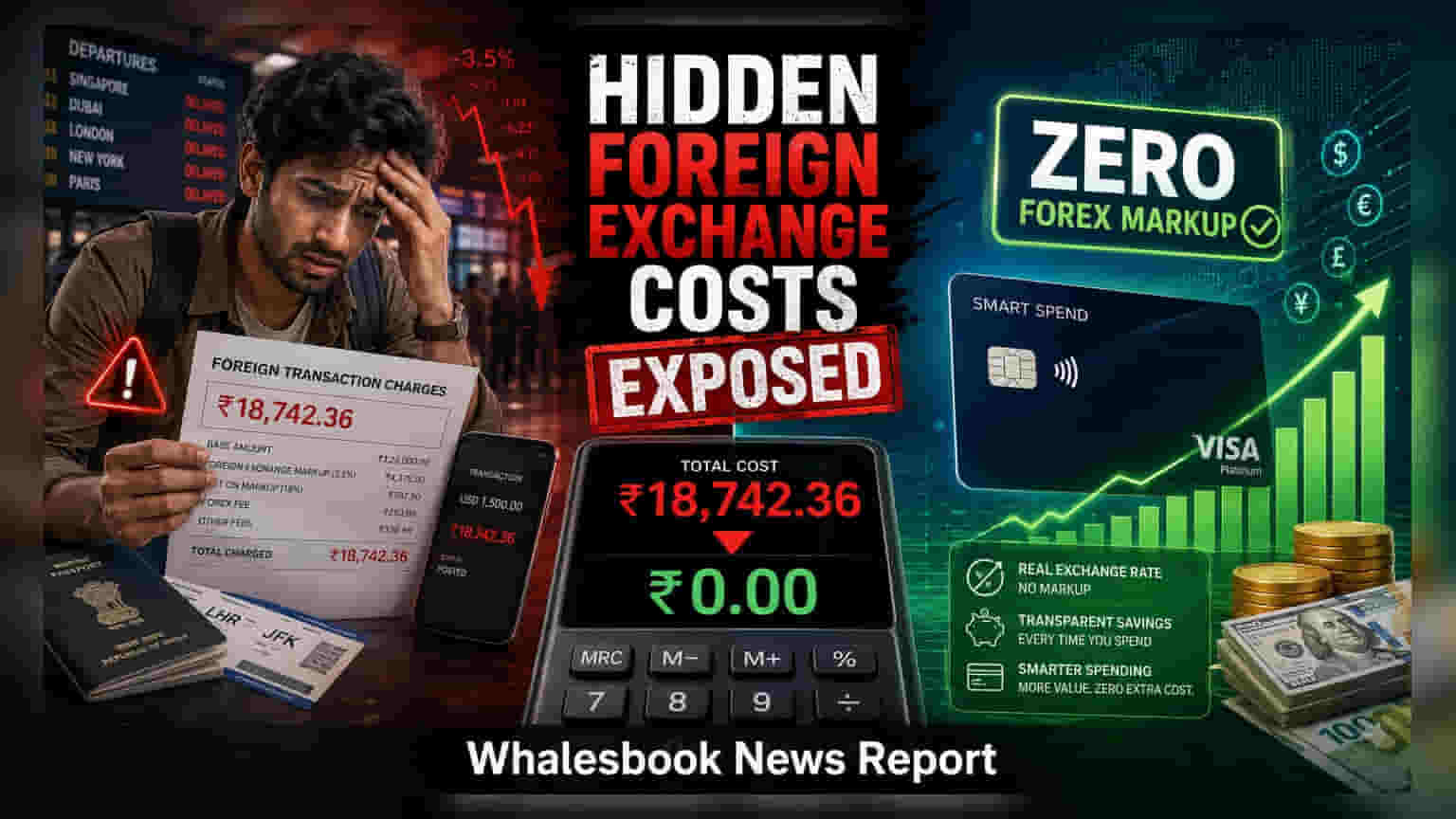
With Indian outbound travel hitting new highs, hidden credit card foreign exchange mark-ups of up to 3.5% are eroding holiday budgets. While recent government budget changes have eased some tax burdens, many travelers are now switching to 'zero-forex' cards to avoid these cumulative transaction fees.
Indian travelers heading abroad are increasingly facing the challenge of hidden costs beyond airfare and accommodation. As international travel becomes a primary spending category for many, the foreign exchange (forex) mark-up fees levied on credit cards are significantly inflating total trip expenses. With leisure travel now accounting for 57% of total forex demand according to the India Forex Report 2026, the financial impact of these transaction fees is becoming a major point of consideration for consumers.
The Mechanics of Hidden Forex Fees
Most standard Indian credit cards impose a foreign exchange mark-up fee typically ranging from 2% to 3.5% on international transactions. Furthermore, this fee is subject to an additional 18% Goods and Services Tax (GST). For a traveler spending the equivalent of ₹1 lakh abroad, these charges can add several thousand rupees to the final bill, often without the user realizing the full extent of the cost until the statement arrives. This creates a significant gap between the expected and actual cost of international purchases.
A Shift Toward Zero-Forex Cards
In response to these escalating costs, there is a visible market shift toward credit cards that offer zero forex mark-ups. Financial institutions and fintech players have introduced cards like IDFC FIRST Bank's FIRST WOW!, Niyo Global, and Scapia, which market themselves as tools to eliminate this specific recurring expense. By removing the percentage-based mark-up, these products aim to provide greater transparency and cost-efficiency for frequent international travelers.
Regulatory Context and Market Risks
While private sector innovation is driving the adoption of cheaper payment options, the regulatory landscape also plays a role. The Union Budget 2026 brought some relief by reducing the Tax Collected at Source (TCS) on certain foreign remittances for education and medical purposes to 2%, a move intended to ease the liquidity burden on remitters.
However, investors and travelers should be aware of broader risks. Geopolitical tensions, such as ongoing regional conflicts, have introduced significant volatility in currency markets, which can influence exchange rates and overall travel costs. Furthermore, 'zero-forex' does not always mean 'zero-cost.' Travelers should be cautious of the underlying exchange rates provided by different card networks, as some issuers may recover costs by applying a wider spread—the difference between the buy and sell price of a currency—to the exchange rate itself.
As the industry moves toward digital-first payment solutions, the key monitorable for travelers remains the total cost of ownership. Before choosing a payment method, it is essential to compare not just the advertised mark-up fees, but also the actual conversion rates offered by the card network at the time of the transaction.