 Whalesbook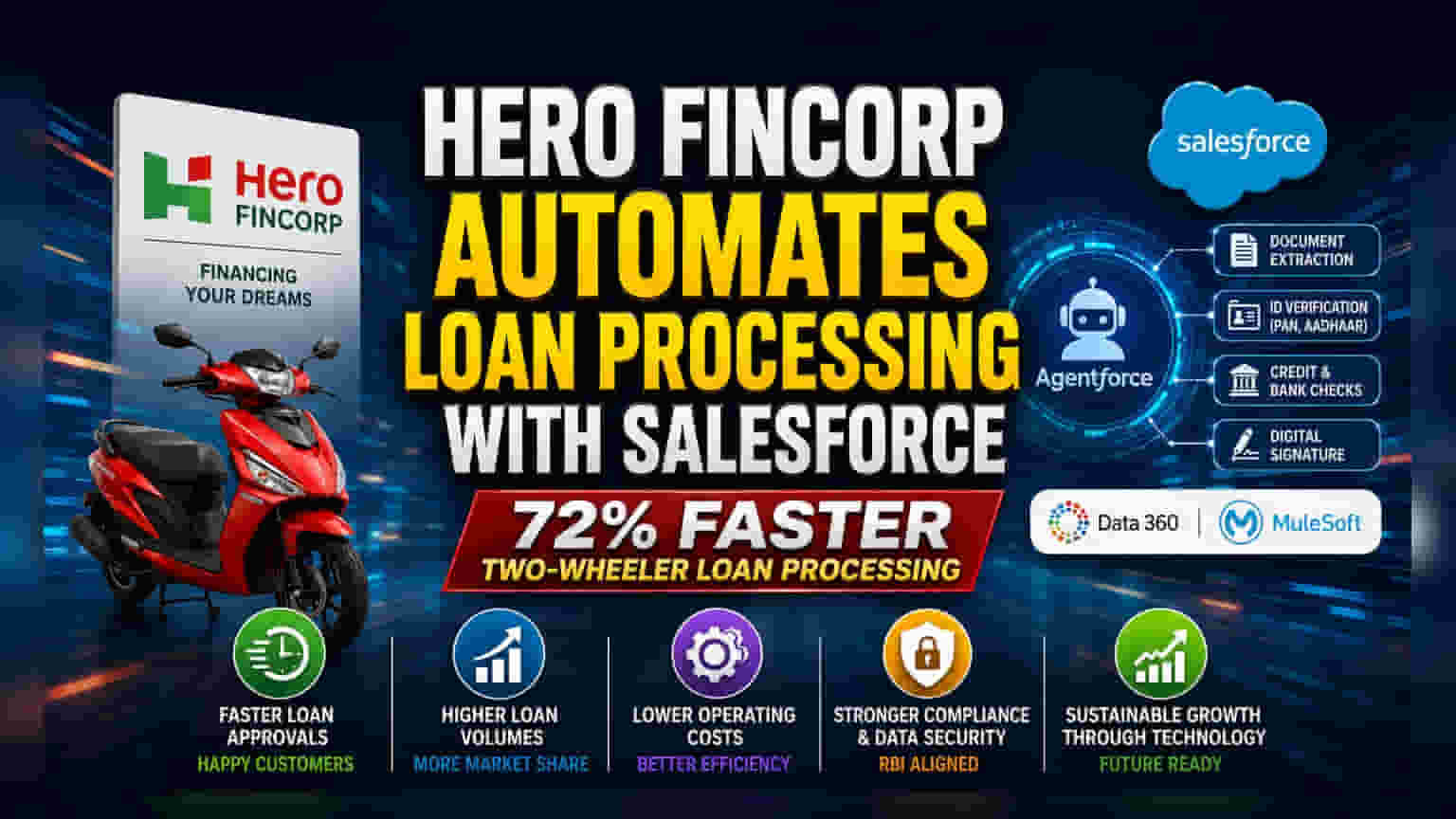


Hero FinCorp has adopted Salesforce’s Agentforce platform to automate loan approvals. By streamlining document verification and credit checks, the NBFC has achieved a 72% reduction in processing time for two-wheeler loans, a key competitive metric in the lending sector.
What Happened
Hero FinCorp has announced a major update to its lending infrastructure by partnering with Salesforce. The company is using Salesforce’s "Agentforce" platform, alongside other tools like Data 360 and MuleSoft, to automate its loan processing workflow. This technology is now handling critical parts of the loan journey, such as extracting and validating documents, verifying government IDs like PAN and Aadhaar, conducting credit and bank checks, and initiating digital signatures.
According to the company, this shift has already led to a 72% improvement in the time taken to process two-wheeler loans. The goal is to move from manual, paper-heavy processes to a faster, digital-first approach for new loan applicants and existing dealer networks.
Why Efficiency Matters in Lending
For an NBFC like Hero FinCorp, especially in the two-wheeler financing space, speed is a significant competitive advantage. The two-wheeler loan market is high-volume and price-sensitive. When a customer walks into a dealership, the ability to approve a loan quickly often determines whether the sale goes to the company or a competitor. By cutting down the time it takes to sanction a loan, the company aims to improve customer satisfaction and increase the volume of loans it can process with its existing workforce.
Efficiency gains like this can also help lower operational costs over time. Instead of employees spending hours on manual document verification, the AI-driven system handles these repetitive tasks. This allows the company to potentially scale its loan book without needing to increase its headcount at the same rate.
The Technology and Regulatory Context
While this digital upgrade offers operational benefits, it also brings specific risks that investors should understand. The integration involves deep reliance on third-party technology platforms. Any system downtime or technical failure in the API integrations could temporarily halt loan disbursals, which would impact business volume.
Furthermore, the financial sector in India is subject to strict guidelines from the Reserve Bank of India regarding data privacy, digital lending, and IT security. As the company moves more of its sensitive customer data and verification processes onto AI-powered platforms, it must ensure robust cybersecurity measures. Any data leak or failure to comply with evolving digital lending regulations could lead to regulatory scrutiny or reputational damage.
Peer and Sector Trends
Hero FinCorp is not alone in this push. The broader non-banking financial company (NBFC) sector has been aggressively investing in technology to bridge the gap between traditional lending and digital convenience. Competitors are also using similar automation tools to reduce processing time and offer 'instant' or 'same-day' loan approvals. For investors, the success of these investments is usually reflected in the company's cost-to-income ratio. A falling ratio, or a stable one despite higher business volume, often indicates that technology investments are paying off.
What Investors Should Track
Investors may want to watch how these technological improvements translate into financial results in upcoming quarters. Key monitorables include whether the improvement in processing time leads to a measurable increase in loan market share and if there is a reduction in operational expenses per loan. Additionally, management commentary on the long-term cost benefits and any potential regulatory updates regarding the use of AI in lending will be important to follow.