 Whalesbook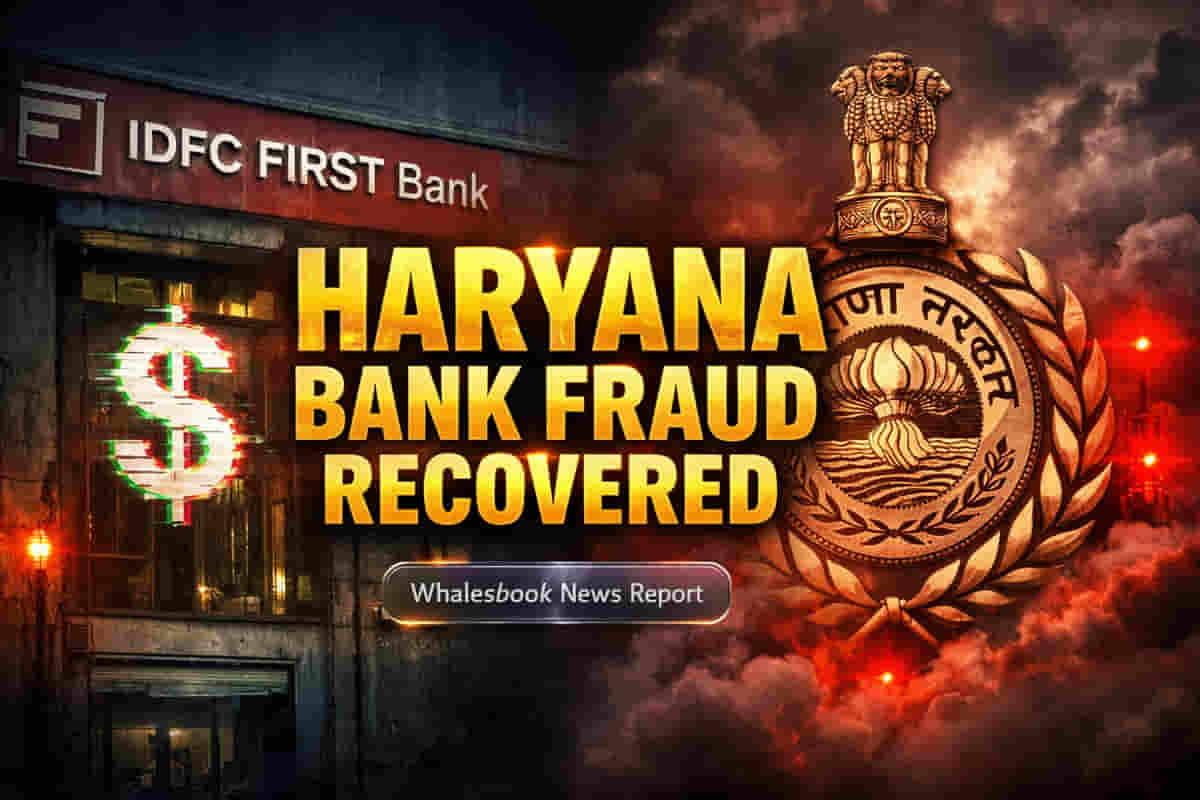
THE SEAMLESS LINK
The findings of this committee could reshape how government funds are managed across Indian states, moving beyond the immediate relief of recovered capital to address the root causes of financial malfeasance. The investigation into IDFC First Bank and AU Small Finance Bank is set to scrutinize their operational frameworks and compliance protocols, offering a critical lens on institutional governance.
The Catalyst: Unraveling Fund Transfer Irregularities
The government of Haryana's formation of a multi-agency committee signals a deliberate move to reinforce financial safeguards. This body, comprised of senior IAS and HCS officers, is tasked with a comprehensive review of the circumstances leading to the alleged unauthorized transfer of funds. Their scope includes scrutinizing the empanelment of both IDFC First Bank and AU Small Finance Bank, alongside the decision-making processes that led to substantial government deposits in these institutions. The investigation will also address issues of non-reconciliation by government departments, pointing to potential breakdowns in inter-departmental financial oversight.
Operational Risk and Institutional Exposure
While Haryana Chief Minister Nayab Singh Saini reported that the entirety of the Rs 556 crore principal and Rs 22 crore interest was recovered within a day, the incident casts a shadow on the operational integrity of the implicated banks. IDFC First Bank disclosed a Rs 590-crore fraud executed by certain employees and external parties, primarily affecting a specific group of government-linked accounts managed through a Chandigarh branch. The bank emphasized this issue was confined and did not extend to its broader customer base. AU Small Finance Bank, named in the context, faces scrutiny regarding its role in handling these transactions, though no direct fraud by its staff was detailed by the state. For IDFC First Bank, with an approximate market capitalization of $10 billion and a P/E ratio around 25x, such incidents can test investor confidence and necessitate enhanced compliance measures. AU Small Finance Bank, valued at approximately $5 billion with a P/E of 20x, also confronts the challenge of maintaining trust in its transaction processing capabilities.
Regulatory Scrutiny and Systemic Precedents
This event amplifies existing concerns within India's banking sector regarding robust fraud detection and prevention mechanisms. The committee's mandate to review the State's Banking Policy and its enforcement is particularly significant. It suggests a potential for revised guidelines or stricter compliance requirements across state financial dealings. Historically, similar large-scale frauds have led to temporary stock market volatility for affected institutions, but sustained impact often depends on the perceived systemic risk and the effectiveness of corrective actions. The Indian banking sector, generally displaying steady credit growth, is under increasing pressure to fortify digital security and internal controls against evolving fraud tactics.
The Hedge Fund View (Risk Factors)
From a risk-averse perspective, the primary concern is the potential for increased regulatory oversight and compliance costs for both IDFC First Bank and AU Small Finance Bank. For IDFC First Bank, the reputational damage, however contained, can translate into slower customer acquisition or increased cost of capital if perceived risk rises. The investigation into potential lapses, procedural deficiencies, or systemic failures within government departments also highlights a vulnerability in public finance management that could be exploited. Unlike peers that may have more decentralized fund management, this incident points to a concentration risk or a lack of stringent internal checks in Haryana's treasury operations. The committee's identification of accountability and recommendation of preventive measures will be critical in determining the long-term efficacy of this review.
Forward Outlook
The findings and recommendations from the Haryana government's committee are anticipated to provide a clearer picture of systemic weaknesses and establish a benchmark for financial governance. Investors and analysts will monitor how IDFC First Bank and AU Small Finance Bank implement any recommended changes and whether these measures mitigate future risks. Further disclosures from the committee and the banks themselves will be crucial in assessing the enduring impact of this fraud incident on their operational strategies and market positions.