

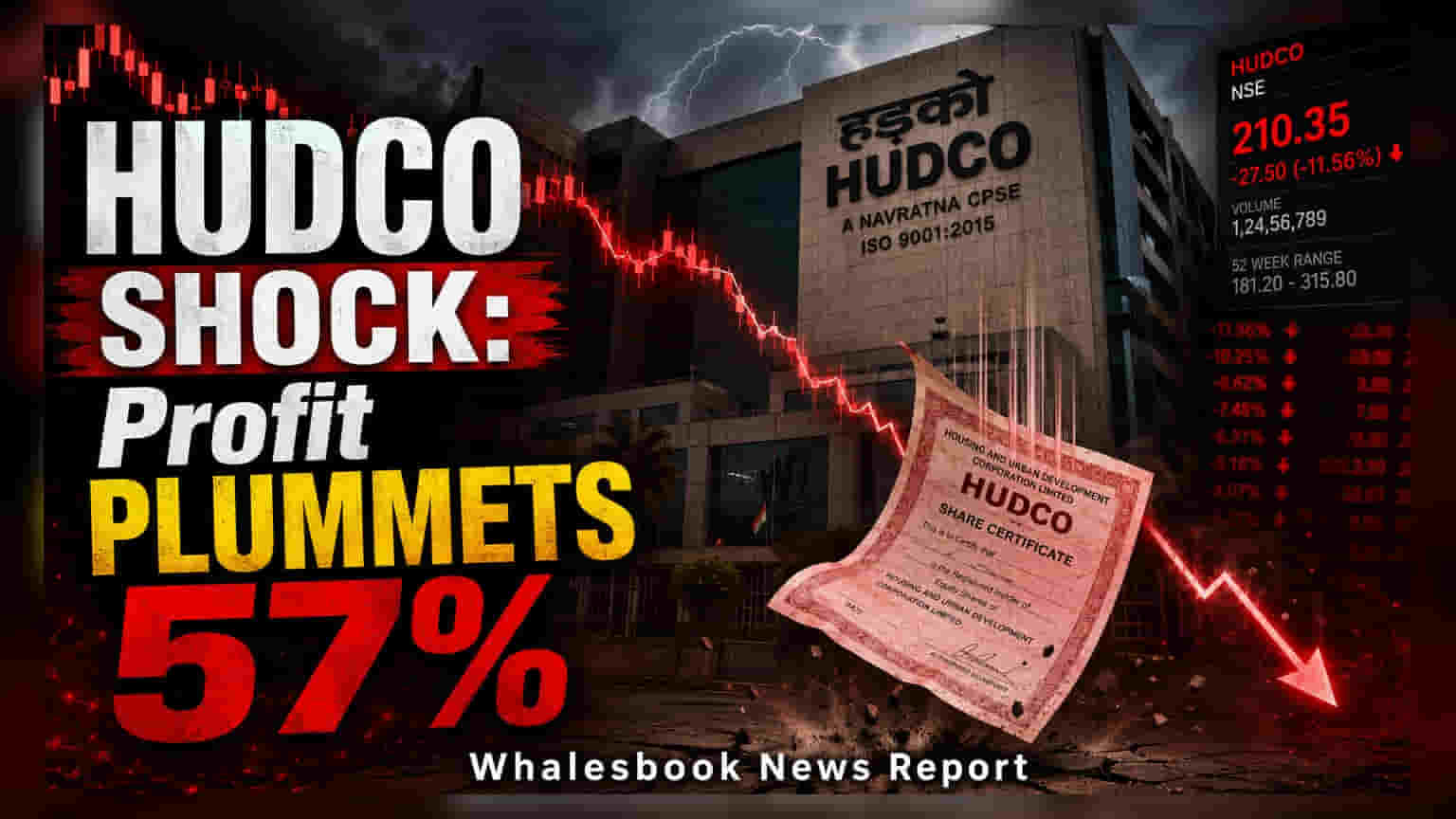
Housing and Urban Development Corporation (HUDCO) shares fell 2.31% to Rs 195.00 on August 11, 2026. Investors reacted to a 57% sequential decline in net profit for the June quarter, overshadowing revenue growth. The company also faces tighter regulatory oversight after being classified as an 'Upper Layer' NBFC by the Reserve Bank of India.
Housing and Urban Development Corporation (HUDCO) shares saw a decline on Tuesday, closing at Rs 195.00. This 2.31% drop made the stock one of the notable decliners within the Nifty Midcap 150 index. The negative price movement followed the announcement of the company’s financial results for the quarter ending June 2026.
While the company reported a year-on-year increase in performance, market attention focused on the sequential decline in profitability. For the first quarter of the 2027 fiscal year, HUDCO reported a consolidated revenue of Rs 3,717.17 crore, which was a 4.33% increase from the previous quarter. However, the net profit for the same period stood at Rs 851.11 crore, marking a 57.04% decrease compared to the record-high profit reported in the quarter ending March 2026. This steep sequential drop in profit, despite overall annual growth, influenced investor sentiment.
Adding to the cautious mood is the evolving regulatory environment. The Reserve Bank of India (RBI) recently classified HUDCO as an 'Upper Layer' Non-Banking Financial Company (NBFC). This classification brings the company under a stricter regulatory framework, requiring enhanced compliance, oversight, and risk management practices. For investors, this means the company will likely face more frequent monitoring by the regulator, which can impact its operational flexibility and capital allocation strategies.
From a balance sheet perspective, HUDCO operates with a business model heavily reliant on debt to fund its infrastructure and housing projects. The debt-to-equity ratio, which previously hovered around 6.9, highlights the company's significant reliance on borrowing to fuel its growth. While this has supported past expansion, it also makes the company sensitive to changes in interest rates and liquidity conditions in the broader real estate financing sector. The ability of the company to maintain margins in a high-leverage environment is a factor that market participants often monitor.
Despite the quarterly challenges, the company’s long-term annual trajectory has shown progress. Revenue and net profit figures for the full fiscal year ending March 2026 were strong, and the company has continued to pay dividends to shareholders, with an interim dividend of Rs 1.25 per share declared recently. However, the contrast between the strong annual performance and the recent quarterly dip has led to price volatility.
The most important monitorables for investors going forward will be the impact of the new 'Upper Layer' NBFC regulatory norms on the company’s operating costs and the stability of its profit margins. Additionally, investors will watch whether the company can maintain consistent loan growth and asset quality given the current pressures in the real estate financing sector.