

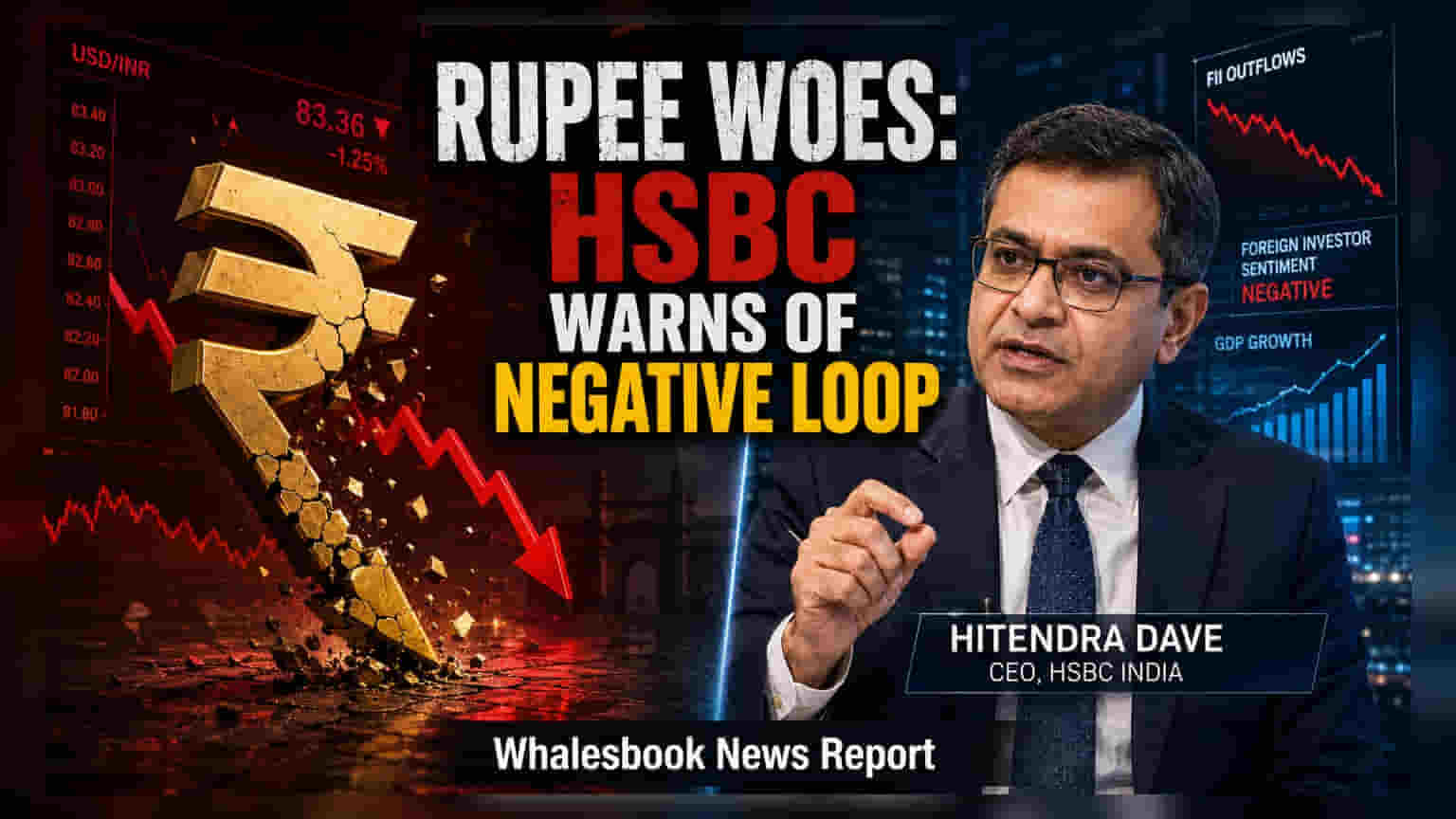
Hitendra Dave, CEO of HSBC India, has warned that persistent rupee weakness may create a negative cycle, leading foreign investors to pull back capital. While this macro risk looms, HSBC India remains resilient, reporting a $965 million pre-tax profit for the first half of 2026. Understanding how currency fluctuations affect foreign investment is essential for investors navigating the current market climate.
Hitendra Dave, the CEO of HSBC India, has shared a cautious outlook regarding the Indian rupee. He warned that if the currency continues to show weakness, it could create what he calls a "self-fulfilling negative loop." In this cycle, foreign investors may become hesitant due to the falling currency, leading them to reduce their exposure to Indian assets. This selling pressure, in turn, can place further downward pressure on the rupee, creating a difficult environment for capital inflows.
Dave noted that global investors often have many choices. Currently, large amounts of capital are being drawn toward major debt opportunities in the United States and equity markets in regions like Korea and Taiwan. When the rupee struggles, India’s attractiveness as an investment destination may face competition from these global alternatives.
HSBC India’s Performance Amid Macro Pressure
Despite the broader macro concerns shared by the bank’s leadership, HSBC India itself has maintained a strong growth trajectory. The bank recently reported a pre-tax profit of $965 million for the first half of 2026, marking a 3.65% increase compared to the same period in 2025. With a balance sheet of approximately $50 billion and a network of 46 branches, the firm remains a significant player in the foreign banking sector in India.
This performance highlights a contrast between the bank's internal execution and the external macroeconomic environment. While the bank is successfully expanding its wealth and affluent banking services, its leadership remains focused on the bigger risks that could impact the wider market.
Key Monitorables for Investors
Dave emphasized that the current mismatch between India's corporate earnings growth and equity valuations remains a point of concern. To break the negative cycle and improve market sentiment, he pointed to several potential catalysts. Investors are likely to track developments in:
Global oil prices: High energy costs remain a key risk to India’s import bill and the rupee.
Policy reforms: Progress on major land or labor reforms could help improve operational efficiency for businesses.
Foreign Direct Investment (FDI): Significant, concrete announcements regarding large-scale FDI would signal strong long-term confidence in the Indian economy.
This cautious perspective aligns with earlier views from the group, which had previously taken an underweight stance on Indian equities in April 2026, citing factors like energy dependency and currency volatility. For investors, the takeaway is the importance of monitoring how these macro factors—specifically currency stability and corporate earnings sustainability—play out in the coming quarters.