 Whalesbook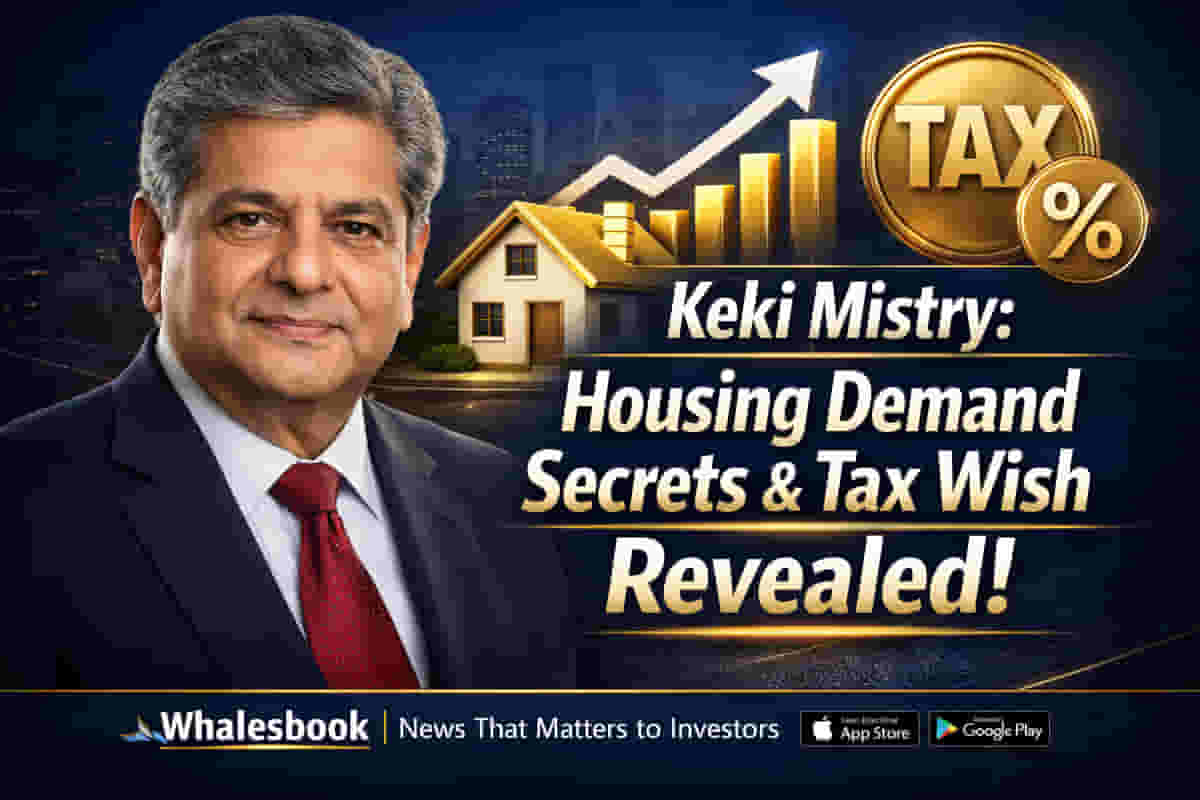


Keki Mistry on Housing, Economy, and Tax Reform
Keki Mistry, the former Vice Chairman and CEO of HDFC Limited, shared his expert views on India's economic landscape, the critical housing sector, and his aspirations for fiscal policy in a recent interview with Moneycontrol. His insights offer a unique perspective on market dynamics and potential future growth drivers.
The Unique HDFC Model
Mistry emphasized that the business model of HDFC Limited, a pioneer in housing finance, is exceptionally difficult to replicate. He attributed its strength to the deep trust and confidence customers placed in the institution. This trust, coupled with access to funding at reasonable rates from various sources, including international markets, and significantly low operational costs, allowed HDFC Limited to maintain a competitive edge.
He contrasted this with many contemporary housing finance companies, pointing out their often higher cost structures and operational expenses. Mistry suggested that scale is crucial for lenders in the housing space to manage costs effectively and remain competitive.
Housing Demand Drivers
Delving into the housing sector, Mistry clarified that demand is not solely dictated by interest rates. He stressed the paramount importance of consumer confidence and a general 'feel-good factor' in driving purchasing decisions. While acknowledging the impact of rate cuts on other loan segments like two-wheelers and consumer durables, he noted that housing finance is more complex.
Mistry observed varying demand across different regions, with large cities showing robust activity, especially in the luxury and affordable segments. He noted a relative void in the mid-market segment in some areas, although properties in the ₹10 – ₹15 crore range are seeing reasonable demand in Mumbai.
Economic Outlook for 2025
Looking ahead to 2025, Mistry expressed considerable optimism. He anticipates a favorable economic environment characterized by low interest rates, easing liquidity, and benign inflation. Strong GDP growth projections further bolster this positive outlook. He believes the current economic momentum is sustainable, partly due to factors like a strong agricultural performance and supportive government policies.
A Wishlist for Tax Policy
Mistry articulated a significant wish for 2026: a reduction in personal income tax slabs. He drew a parallel to the positive impact of lowering corporate tax rates, suggesting that bringing individual tax rates closer to corporate rates, around 25-30 percent, would incentivize significant investment and spur job creation. He believes the short-term revenue loss for the government would be more than offset by increased economic activity and employment.
AI and Future of Finance
On the subject of Artificial Intelligence (AI), Mistry expressed a cautious view regarding its immediate disruptive potential in Indian financial services. He noted that even when digital channels were available, customer adoption for digital loan applications remained very low. While acknowledging AI's future significance, he believes traditional customer engagement, including branch visits for loan applications, will persist. He warned that an over-reliance on digital appraisal without adequate checks could potentially increase non-performing assets (NPAs).
Investment Trends and Banking
Mistry also touched upon the growing trend of investment in wealth and asset management in India. He attributed this shift to factors like social media influence and positive market performance over recent years, leading to increased participation in stock markets via instruments like Systematic Investment Plans (SIPs). He debunked the notion that stock market investments deplete bank deposits, explaining that money merely circulates within the banking system.
Impact
This commentary from a seasoned industry veteran provides valuable insights into the potential trajectory of India's housing finance sector, economic policies, and investment climate. His views on tax reform and consumer confidence could influence policy discussions and investor sentiment. The discussion on the HDFC model highlights best practices for financial institutions focusing on efficiency and trust.
Impact Rating: 7/10
Difficult Terms Explained
- HDFC Limited: A former leading housing finance company in India, now merged with HDFC Bank.
- Housing Finance Companies (HFCs): Institutions that provide loans for the purchase or construction of homes.
- NBFCs (Non-Banking Financial Companies): Financial institutions that offer various banking-like services but do not hold a full banking license.
- Consumer Confidence: A measure of how optimistic consumers feel about their personal financial situation and the overall economy.
- GST (Goods and Services Tax): A broad-based indirect tax levied on the supply of goods and services in India.
- Repo Rate: The rate at which the Reserve Bank of India (RBI) lends money to commercial banks.
- GDP (Gross Domestic Product): The total monetary value of all finished goods and services produced within a country's borders in a specific time period.
- NPA (Non-Performing Asset): A loan or advance for which the principal or interest payment remained overdue for a specified period.
- AI (Artificial Intelligence): The simulation of human intelligence processes by machines, especially computer systems.
- SIP (Systematic Investment Plan): A method of investing a fixed amount of money at regular intervals in a mutual fund scheme.
- Operational Cost: Expenses incurred by a business for its day-to-day operations.
- Cost-Income Ratio: A measure of a company's efficiency, calculated by dividing operating expenses by operating income.