

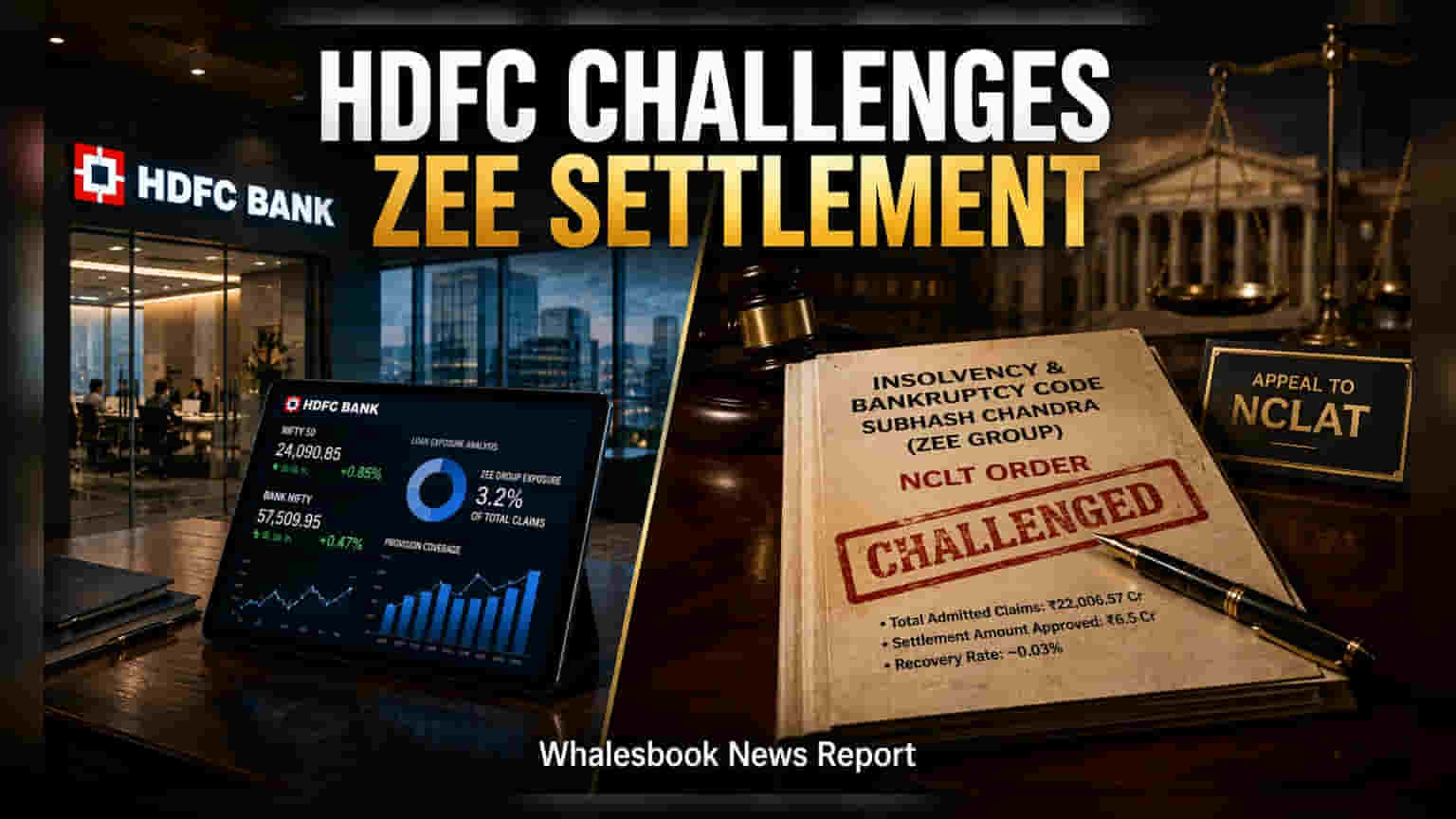
HDFC Bank is challenging a tribunal order that approved a debt settlement plan for Zee founder Subhash Chandra. The plan allows the debtor to settle ₹22,006 crore in claims with a payment of only ₹6.5 crore. The bank, joined by other lenders, is escalating the matter to the appellate tribunal, raising concerns over the voting process and the lack of forensic scrutiny into the debtor's asset decline.
HDFC Bank has decided to contest an order passed by the National Company Law Tribunal (NCLT) regarding the debt repayment plan of Subhash Chandra, the founder of the Zee group. The bank, alongside a group of other lenders including Axis Bank, Canara Bank, RBL Bank, and Union Bank of India, is preparing to file an appeal with the National Company Law Appellate Tribunal (NCLAT).
The core of the dispute involves the repayment amount approved by the tribunal. The total admitted claims against Subhash Chandra stand at approximately ₹22,006.57 crore. Under the approved settlement plan, the payment mandated is ₹6.5 crore, which implies a recovery rate of roughly 0.03% for the creditors. For the lenders, this effectively means a loss of over 99.9% of the money originally lent.
The lenders are challenging the order on several grounds. A primary concern raised by the dissenting banks is the integrity of the voting process used to approve the resolution plan. They have alleged that the process included votes from entities that qualify as related parties or associates of the debtor. Under bankruptcy regulations, such entities are generally restricted from voting on settlement plans to ensure the process remains fair to independent creditors.
Additionally, the banks have questioned the transparency regarding the debtor's financial position. Creditors noted that there was a significant drop in Subhash Chandra's reported net worth, which allegedly fell from over ₹40,000 crore in 2018 to roughly ₹31.79 crore. The objecting banks argue that the resolution process should have included a forensic audit to verify these asset changes, which they claim did not happen. The NCLT's approval of the plan came after a split verdict between two members was resolved by a third judicial member, who ruled that the plan was binding under the Insolvency and Bankruptcy Code.
For HDFC Bank, which inherited this loan facility through its merger with HDFC Limited, the exposure represents 3.2% of the total admitted claims. While the financial impact of the loan is likely already accounted for through the bank's provisioning—money set aside to cover potential losses—the legal challenge is significant because of the precedent it may set. The outcome of this appeal at the NCLAT will be important for investors to watch, as it could influence how future personal insolvency cases are handled in India. The next major monitorable will be the appellate tribunal's decision on whether to admit the plea and if it will stay the NCLT's order while the case is reviewed.