 Whalesbook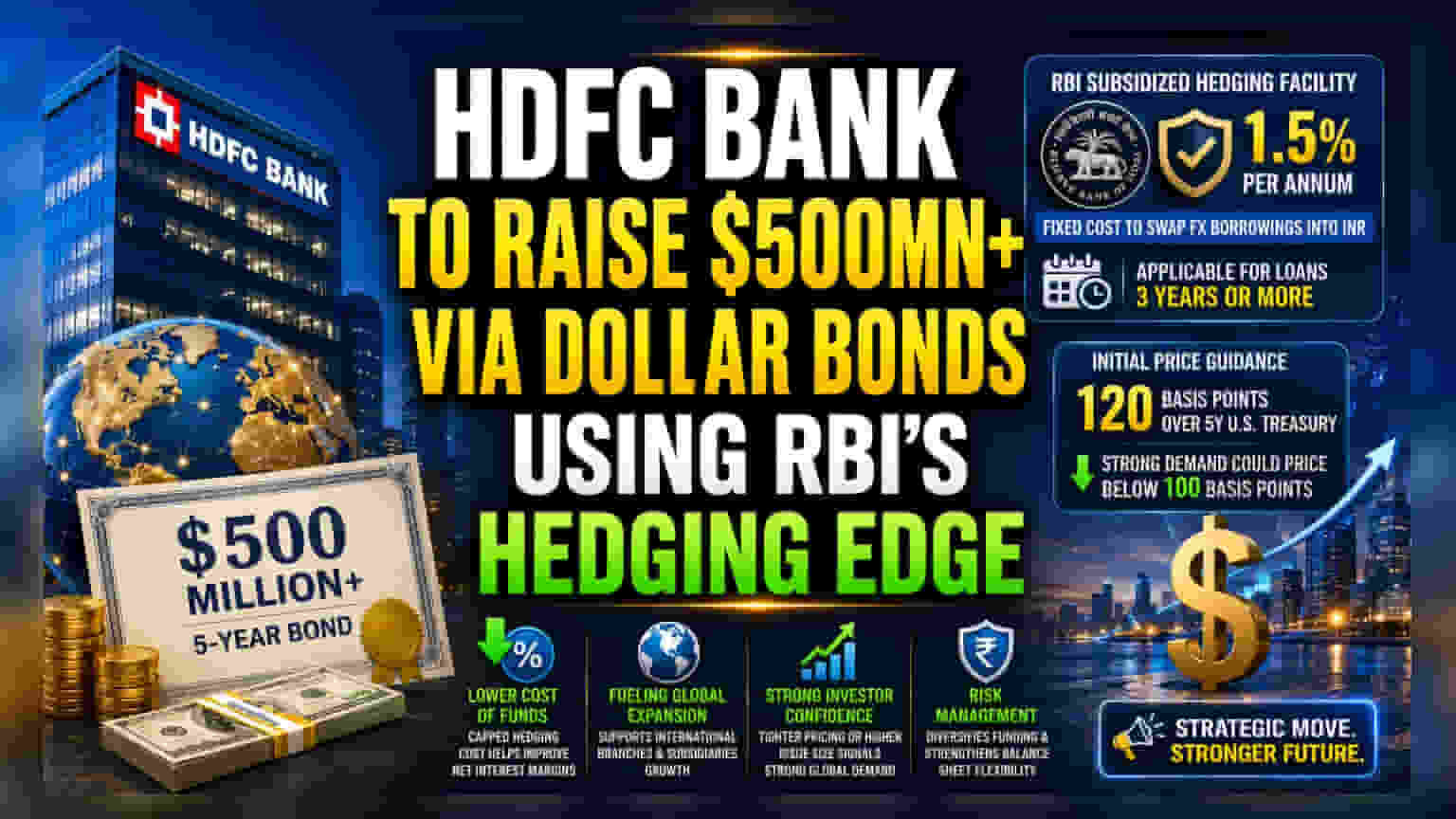


HDFC Bank is set to raise at least $500 million via dollar bonds, using a new RBI subsidized hedging facility to cut borrowing costs. This move aims to fund international operations and diversify capital sources. Investors are watching the final pricing, which could benefit from strong global demand.
What Happened
HDFC Bank is preparing to enter the international debt market this week to raise at least $500 million through dollar-denominated bonds. The key highlight of this issuance is the bank's use of the Reserve Bank of India’s (RBI) new subsidized hedging facility. This facility, introduced recently, allows Indian banks to swap foreign currency borrowings into rupees at a fixed cost of 1.5% per annum for loans with a maturity of three years or more. Initial price guidance for this five-year bond is set at 120 basis points over the 5-year U.S. Treasury yield, though merchant bankers suggest strong demand could push the final pricing below 100 basis points.
Why This Matters For Investors
For a bank, the cost of funds is a critical metric that impacts profit margins. Traditionally, Indian banks raising money in foreign currencies (like dollars) faced a significant challenge: the cost of hedging against a potential drop in the rupee's value often wiped out the interest rate benefits of borrowing in dollars. By providing a hedging facility at a fixed 1.5% rate, the RBI is effectively capping this cost, making dollar borrowing much more attractive. This helps HDFC Bank secure funds at a lower overall cost compared to raising the same amount in the domestic market, which can support net interest margins.
Strategic Business Context
The funds raised are not just for general operations but are specifically earmarked to support the bank's international branches and subsidiaries. As HDFC Bank continues to expand its global footprint, it requires consistent capital to fuel business growth in foreign markets. By diversifying its funding sources beyond the Indian rupee, the bank gains better flexibility in managing its balance sheet and liquidity. This strategy is part of a broader trend, with other major Indian lenders like the State Bank of India and Bank of Baroda also exploring similar routes under the RBI’s initiative.
How Investors May Read This
Investors often view such bond issuances as a signal of a bank’s confidence in its growth plans and its ability to access global capital at competitive rates. The focus will be on the final pricing (the "cutoff yield"). If the final pricing settles tighter than the initial guidance of 120 basis points, it indicates strong confidence from international investors in the bank's credit profile. Furthermore, the bank has the option to increase the issue size if demand exceeds expectations, which could further boost its liquidity position.
What Could Go Wrong
While the scheme lowers hedging costs, the underlying interest rate risk remains. The total cost of this borrowing depends on U.S. Treasury yields, which are influenced by the U.S. Federal Reserve’s monetary policy. If global interest rates stay higher for longer, the base cost of borrowing could be elevated. Additionally, although the RBI facility provides a hedge, the bank must manage the execution of these trades and ensure the maturity of the bonds matches the intended deployment of funds to avoid any mismatch.
What Investors Should Track
Investors should monitor the final pricing and total size of the issuance, as these provide immediate clues about global investor sentiment toward the bank. In the coming quarters, the key monitorable will be how effectively the bank deploys these funds to improve the profitability of its international operations. Additionally, management commentary in upcoming earnings reports regarding the overall cost of capital and foreign exchange management will be important for evaluating the long-term impact of this bond sale.