
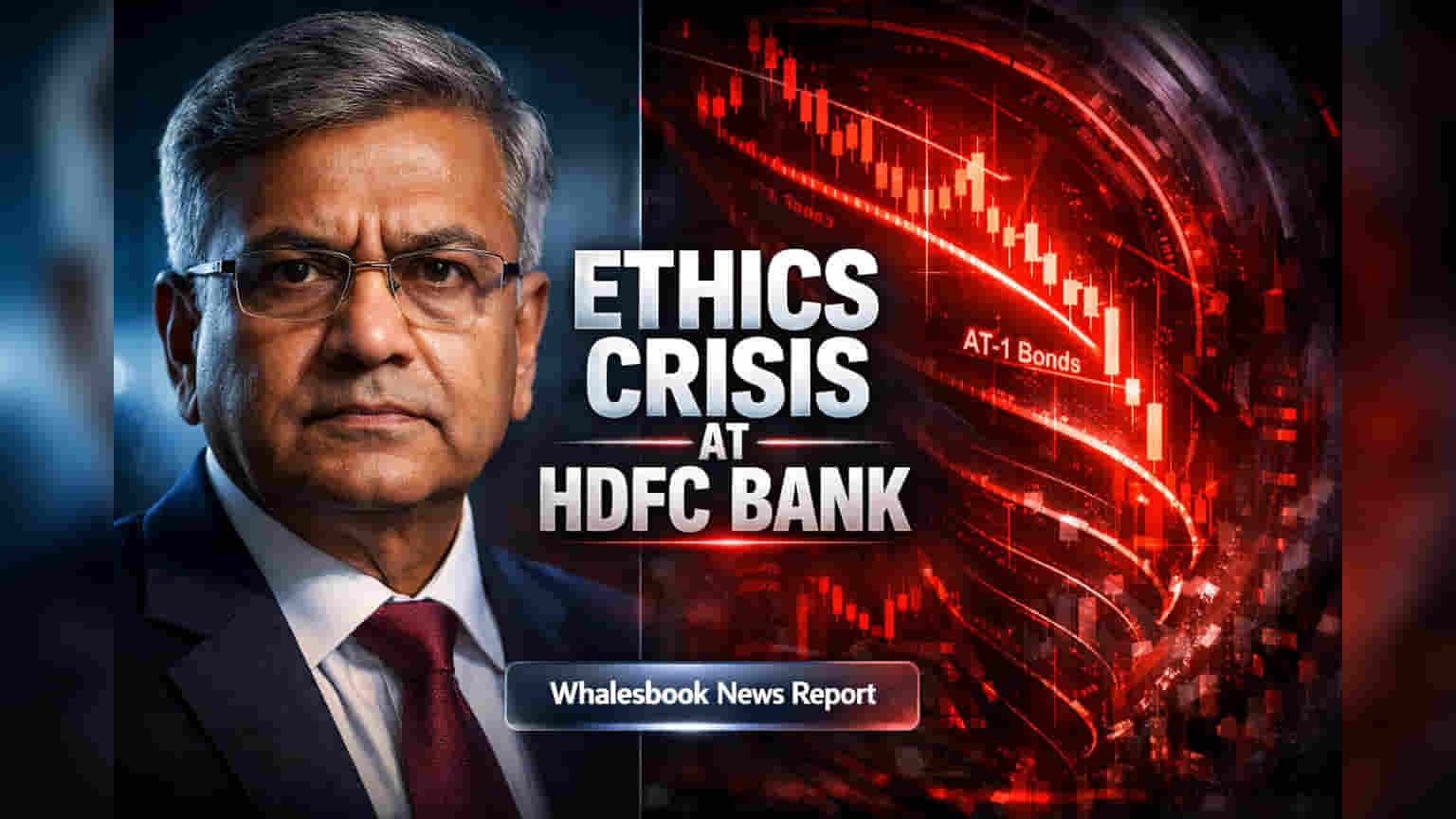
Chairman Resigns Amid Bond Mis-selling Scandal
HDFC Bank's reputation is being closely watched after a turbulent period that included the sudden departure of Chairman Atanu Chakraborty and revelations of long-standing issues with client mis-selling cases. Chakraborty resigned, citing differences in "values and ethics" and pointing to an eight-year delay in fixing serious operational problems, which has raised concerns about the bank's governance. His exit followed the bank's decision in March 2026 to fire three senior executives. These executives were reportedly involved in the alleged mis-selling of Credit Suisse Additional Tier-1 (AT-1) bonds to Non-Resident Indian (NRI) clients via its Dubai and Bahrain branches.
Delayed Action Fueled Market Concern
Chairman Atanu Chakraborty's resignation on March 18, 2026, citing "happenings and practices" not in line with his personal ethics, was a key event. This followed a September 2025 restriction placed on HDFC Bank's Dubai branch by the Dubai Financial Services Authority (DFSA), which stopped the branch from taking on new clients due to problems with how clients were onboarded. An internal review later led to the dismissal of three senior executives in March 2026. They were accused of presenting high-risk AT-1 bonds as safe investments to NRI clients. Chakraborty noted that action on these matters had been delayed for eight years, initially seen as a documentation issue, highlighting a major gap in identifying and managing risks. On March 30, 2026, HDFC Bank's stock showed this concern, closing down over 3% at INR 731.80. As of March 27, 2026, the bank's market value was about INR 11.64 lakh crore ($139.7 billion USD).
Market Reaction and Peer Comparison
HDFC Bank's current Price-to-Earnings (P/E) ratio of about 15.66 (TTM) is higher than its main Indian banking rivals. For comparison, State Bank of India (SBI) has a TTM P/E of around 10.72, and Indian Bank's P/E is near 10.05-10.38. The overall banking sector P/E is 9.50. HDFC Bank has typically commanded a higher valuation due to its perceived stronger governance and growth, but recent events question this. HDFC Bank remains the largest bank by market value, with ICICI Bank valued around $109.52 billion and SBI at approximately $108.5 billion USD as of March 30, 2026. The Indian banking sector faced pressure on March 30, 2026, as the private banking segment dropped 2.95% and the Sensex fell 2.12%. HDFC Bank's shares saw a similar drop, influenced by broader market trends and its specific issues. Analysts at Jefferies and Macquarie have reportedly taken the bank off their buy lists, suggesting a reassessment of its governance advantage.
Governance Concerns and Leadership Friction
The eight-year delay in addressing the AT-1 bond mis-selling is a major concern. Chakraborty's resignation letter stated that "certain happenings and practices" were not in line with his values, suggesting deeper issues than just individual wrongdoing. Reports indicate a possible power struggle between Chakraborty and CEO Sashidhar Jagdishan regarding accountability and strategy, especially concerning the CEO's reappointment. Although the bank states it has strong governance, the sequence of events – regulator warnings, internal probes, executive firings, and the chairman's notable exit – suggests possible failures in oversight and ethical conduct. Terminating three senior executives appears to be an attempt to limit the damage, but the long delay in taking action is a serious worry for investor confidence and regulators. Unlike rivals like SBI or ICICI Bank, which have presented more stable operational histories, HDFC Bank is now under greater scrutiny regarding its internal controls and how effectively the board supervises operations.
Outlook: Restoring Confidence
Despite the recent problems, analysts generally hold a positive long-term view, with a consensus "Outperform" rating and an average target price indicating potential for growth. However, the bank's immediate future depends on its ability to clearly strengthen its governance, explain the full extent of past ethical issues, and rebuild investor trust. The Reserve Bank of India (RBI) might increase its oversight of bank boards following these events, which could affect HDFC Bank and its competitors. How well the bank manages its client relationships without interruption and its strategic execution under current leadership will be key factors watched in the coming months.