

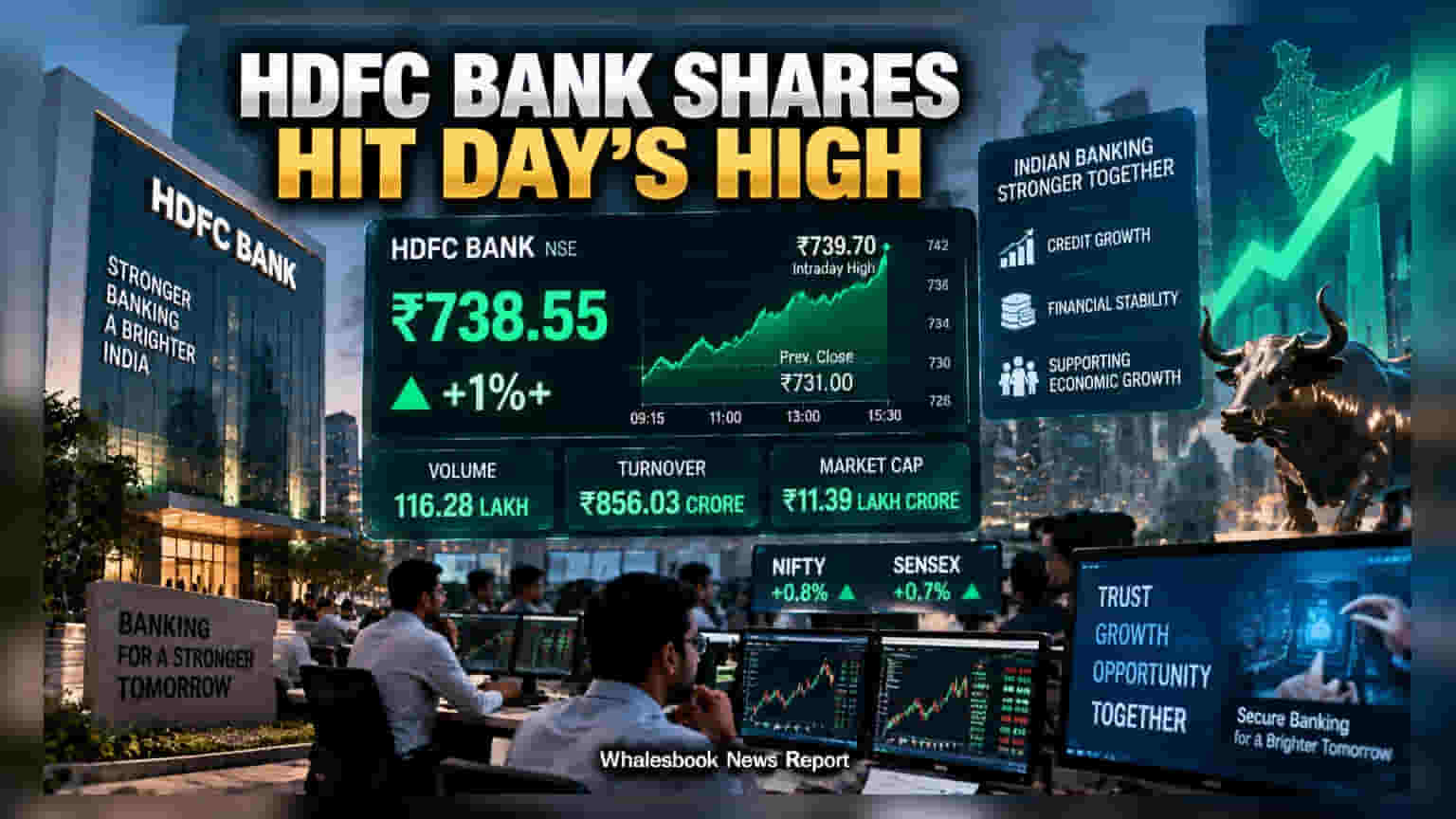
HDFC Bank shares gained over 1% to touch an intraday high of ₹739.70 on September 21. As a major heavyweight on Indian indices, the bank's stock movement often influences broader financial sector sentiment and index direction.
HDFC Bank shares traded more than 1% higher on Monday, reaching an intraday peak of ₹739.70 on the National Stock Exchange (NSE). The stock opened following a previous close of ₹731, showing positive movement in line with the broader equity market.
Trading activity was significant during the session, with approximately 116.28 lakh shares changing hands. This volume resulted in a total turnover of ₹856.03 crore, underscoring the high liquidity typically seen in one of India's largest private lenders. With a market capitalization estimated at around ₹11.39 lakh crore, HDFC Bank remains a cornerstone of the Indian banking sector. Its size means that even minor fluctuations in its share price can have a measurable impact on major benchmark indices like the Nifty and Sensex.
Impact on Broader Indices
For many market participants, the movement in HDFC Bank is a key indicator of the health of the financial services sector. As one of the largest constituents of the benchmark indices, its performance often influences the overall direction of the market. When large-cap financial stocks show strength, it can support broader sentiment, especially when other sectors are seeing mixed or stagnant trends.
At the time of trading, the bank's price-to-earnings (P/E) ratio stood at approximately 14.06. This ratio provides a snapshot of how the market is valuing the bank relative to its earnings, which is a common metric investors use to assess whether a stock is trading at a fair value compared to its historical performance or its peers in the banking industry.
Market Dynamics and Outlook
While the stock saw buying interest, market data indicated a higher volume of sell orders compared to buy orders during the day. It is important for investors to note that order book data can fluctuate rapidly throughout the trading session and may not always predict the final closing price or future direction.
Because this move occurred during a generally positive session for the Indian market, it suggests that the stock is moving in correlation with overall market trends rather than due to a specific company-level announcement. Investors usually monitor the intraday high as a technical reference level. Sustained trading above this price could signal continued interest, while a dip back toward the previous close might indicate a cooling of momentum. Moving forward, the most important factor for shareholders to track will be the broader banking sector's performance and any upcoming guidance or economic data that could affect credit growth and net interest margins for large private banks.