

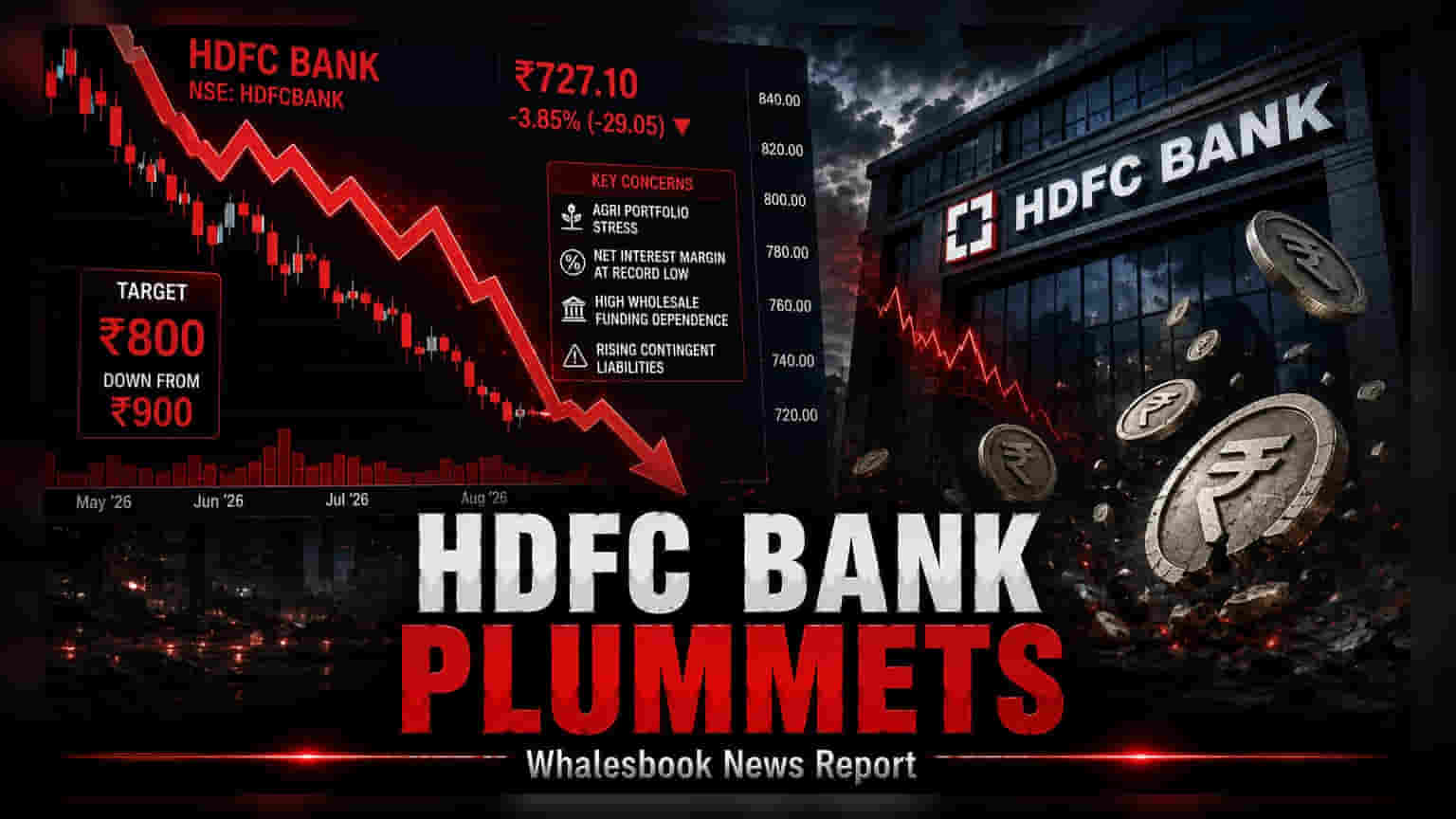
HDFC Bank shares faced selling pressure on Tuesday, trading near ₹727 after a brokerage lowered its target price. Analysts pointed to emerging stress in the bank's agriculture portfolio, even as other segments show improvement. Investors are also monitoring the bank's broader challenges, including profit margins and deposit growth.
HDFC Bank shares traded lower on the National Stock Exchange on Tuesday, hovering around the ₹727 mark. This movement followed a report from JM Financial, which lowered its price target for the bank’s stock to ₹800 from the previous ₹900. The revision reflects a mix of caution regarding specific asset quality and broader balance sheet risks.
The brokerage’s analysis highlighted a split in the bank's loan book performance. On the positive side, retail and services portfolios continue to show improvement. However, the agriculture sector has emerged as a distinct pocket of stress, which analysts are watching closely. This sector-specific issue is particularly relevant as the banking industry prepares for new accounting standards related to credit loss, which require banks to set aside capital based on expected future defaults.
The broader financial picture for HDFC Bank has remained complex throughout 2026. One of the central points for investors is the bank's net interest margin—the difference between the interest it earns on loans and the interest it pays to depositors. In the first quarter of fiscal year 2027, this margin touched 3.26%, a record low that highlights the pressure on profitability. This squeeze is primarily driven by the rising cost of funds, as the bank works to stabilize its deposit mix following its large-scale merger.
Analysts have also pointed to other balance sheet risks, including a growing reliance on wholesale funding and a rise in contingent liabilities, which increased by approximately 29% year-on-year. While the bank has made progress in reducing legacy borrowings, the need to maintain a strong liquidity coverage ratio—which currently stands at 114%—remains a key operational priority. The bank has also faced volatility throughout the year due to ongoing leadership transitions and internal governance discussions, which have impacted institutional sentiment.
For investors, the primary monitorable in the coming months will be the bank's ability to boost its low-cost retail deposits. Because the bank has had to depend more on expensive wholesale funding to meet its liquidity needs, improving its deposit share is essential for protecting profit margins. The market will continue to look for evidence that the bank can manage the stress in its agri-portfolio while successfully transitioning its balance sheet to a more stable footing.