 Whalesbook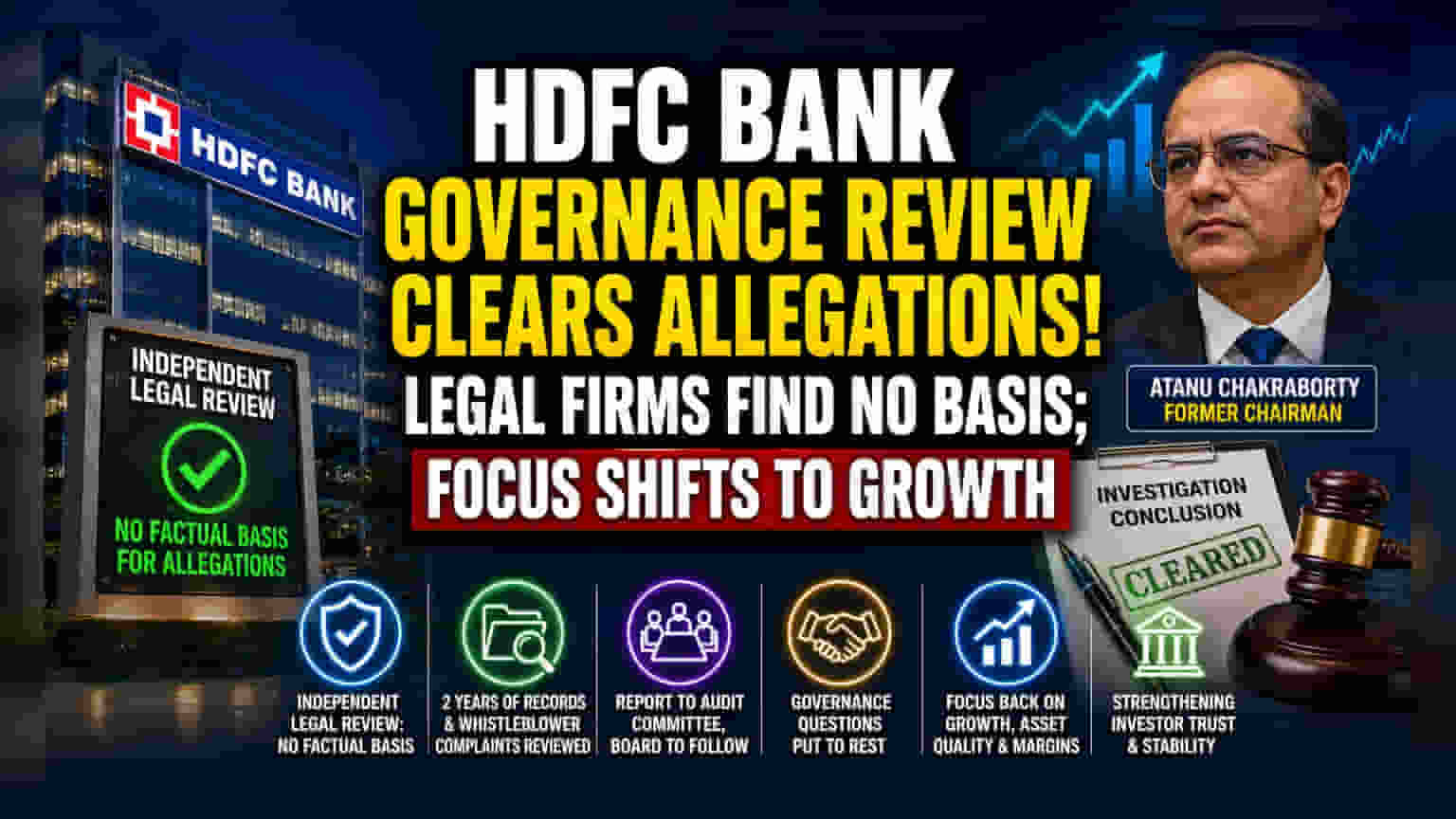


An independent legal review has found no evidence to support concerns raised by former HDFC Bank Chairman Atanu Chakraborty. The investigation, which scrutinized board proceedings and complaints, is a significant step toward resolving the management uncertainty that followed his resignation in March.
What Happened
External legal counsel appointed by HDFC Bank have concluded a detailed review into the allegations raised by former Chairman Atanu Chakraborty in his resignation letter. The review, conducted by Wadia Ghandy, Trilegal, and U.S.-based Wilson Sonsini, found no factual basis for the concerns regarding corporate governance or unethical practices. The legal firms analyzed board meeting minutes, recordings from the last two years, and all whistleblower complaints escalated to the board. The investigation aimed to verify if the former chairman had formally raised concerns about governance failures during his tenure and whether those matters were addressed.
Why This Matters For Investors
In the banking sector, governance and management stability are critical components of investor trust. When a former leader raises concerns about ethics or corporate standards, it often creates uncertainty, which can lead to stock price volatility and investor concern about the bank's internal processes. By conducting an independent and comprehensive review, the bank has attempted to address these questions transparently. For shareholders, the conclusion of this investigation helps remove a major layer of uncertainty that had lingered since the resignation occurred in March 2026. Stability in leadership is essential for a systemically important financial institution like HDFC Bank to maintain its focus on credit growth, asset quality, and customer service.
The Audit Committee and Board Process
These findings are scheduled to be presented to the bank's Audit Committee, currently chaired by M.D. Ranganath. The audit committee plays a vital role in overseeing financial reporting and governance standards. Once the committee has reviewed the legal counsel's report and deliberated on the findings, the full board of directors is expected to meet to discuss the outcome. This formal process is designed to bring a definitive close to the matter. Managing Director and CEO Sashidhar Jagdishan had previously acknowledged the difficulty of the situation, describing the need to understand the former chairman's departure as a significant challenge for the management team.
How Investors May Read This
The resolution of this investigation is likely to be viewed as a positive step toward clearing the air regarding governance questions. When a bank proactively engages external legal experts to probe internal allegations, it signals a commitment to transparency and regulatory compliance. However, investors often look beyond just the resolution of specific controversies. The long-term performance of the stock will continue to depend on fundamental business metrics such as net interest margins, credit growth, loan book quality, and the ability of the management team to navigate the broader economic environment. The closure of this episode allows the bank's leadership to refocus entirely on operational execution.
What Investors Should Track
Moving forward, the primary focus for shareholders will likely return to the bank's quarterly financial results and management commentary on future growth. Investors may track the upcoming official communication from the bank following the Audit Committee's review. Monitoring the bank's asset quality, cost of funds, and its ability to maintain its competitive position in the retail and corporate lending segments remains essential. Furthermore, any updates on leadership focus or changes to governance policies, if communicated, will be relevant to observe as the bank moves past this period of uncertainty.