 Whalesbook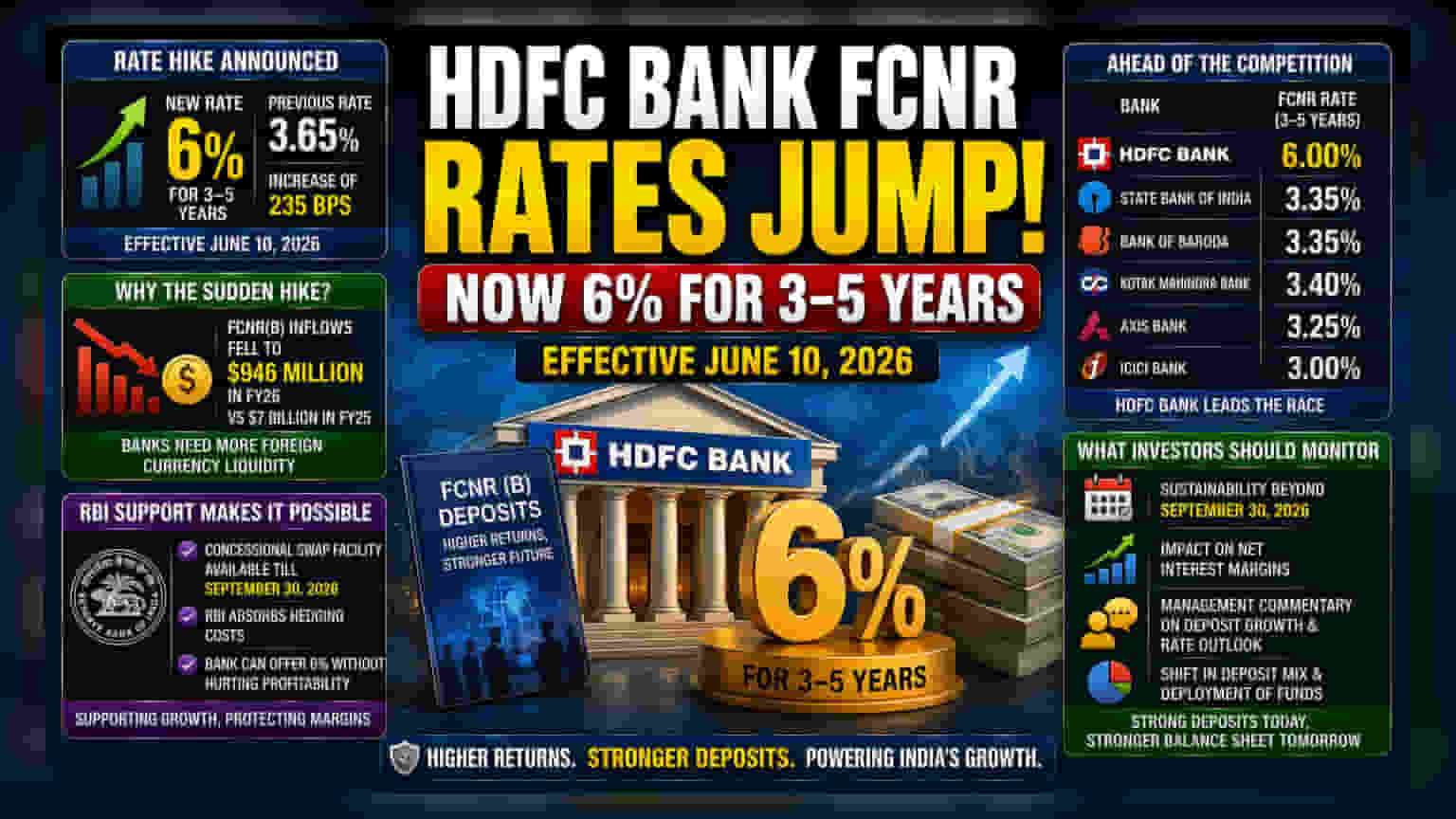


HDFC Bank has hiked interest rates on 3-5 year Foreign Currency Non-Resident (FCNR) deposits to 6%, up from 3.65%. This aggressive move aims to attract NRI capital following a sharp decline in inflows during FY26. The bank is leveraging the Reserve Bank of India's concessional swap facility to manage the costs of this shift. Investors should monitor how this move impacts the bank’s liquidity strategy and net interest margins as the regulatory swap facility nears its September 2026 deadline.
What Happened
HDFC Bank has announced a sharp increase in interest rates for its Foreign Currency Non-Resident (FCNR) deposits. For tenures ranging from three to five years, the bank is now offering an interest rate of 6%. This is a significant jump from the previous rate of 3.65%, representing an increase of 235 basis points. The new rates became effective on June 10, 2026.
Why The Sudden Rate Hike
The banking sector has been facing a cooling trend in NRI deposits. According to Reserve Bank of India (RBI) data, FCNR(B) inflows dropped to $946 million in fiscal year 2026, a substantial decline compared to the $7 billion recorded in fiscal year 2025. By offering a 6% return, HDFC Bank is attempting to aggressively reverse this trend and bring in more foreign currency liquidity into the system.
How The RBI Support Works
A key driver of this decision is the RBI’s concessional swap facility, which is available to banks until September 30, 2026. Normally, offering 6% interest on a foreign currency deposit would be extremely expensive for a bank, as it would need to manage the risk of currency fluctuations, known as hedging costs. The RBI’s facility essentially absorbs these hedging costs, making it financially viable for the bank to offer such high rates without a direct hit to its profitability. This allows the bank to aggressively chase deposits while keeping its margins protected.
Competitive Landscape
HDFC Bank’s move puts it well ahead of its major competitors in the Indian banking space. Currently, most other large private and public sector banks are offering rates closer to the 3% to 3.4% range. For instance, State Bank of India and Bank of Baroda are at 3.35%, Kotak Mahindra Bank is at 3.4%, while ICICI Bank and Axis Bank are offering 3% and 3.25%, respectively. This gap indicates that HDFC Bank is prioritizing a rapid increase in its foreign currency deposit base over maintaining competitive parity in the short term.
What Investors Should Monitor
For investors, the primary monitorable is the sustainability of this strategy beyond the September 30, 2026, deadline for the RBI’s swap facility. If the bank continues to pay higher rates once this support mechanism expires, it could place pressure on the bank's net interest margins. Investors may want to watch for management commentary in future earnings calls regarding the success of this campaign in attracting new funds and whether the bank plans to adjust these rates as market conditions change. The shift in the bank's deposit mix and its ability to deploy these funds effectively will also be key factors in the long-term impact of this decision on the bank's balance sheet.