

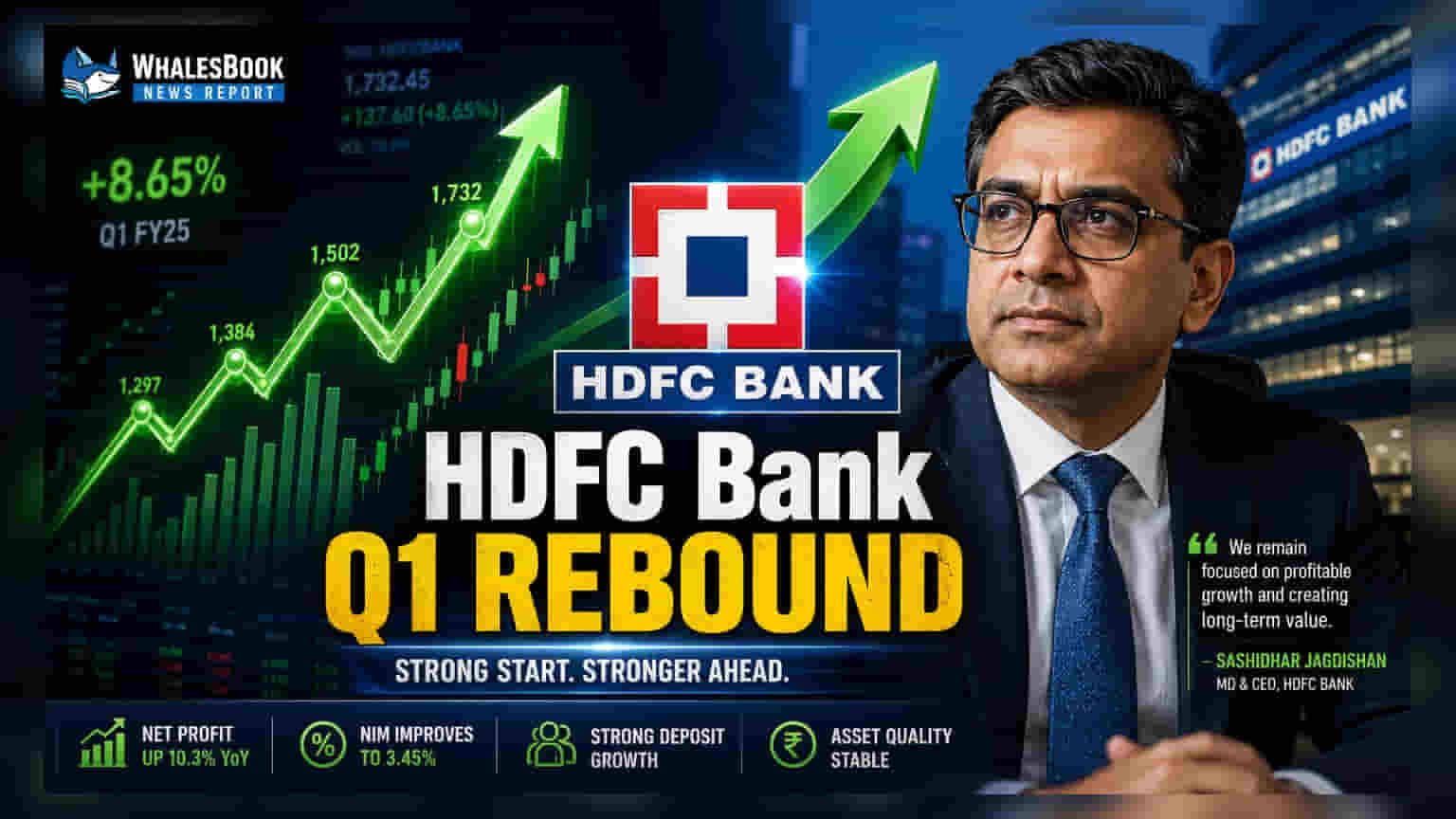
HDFC Bank reported a 12.4% year-on-year rise in credit growth for the June 2026 quarter, significantly higher than the 6.7% recorded in the same period last year. Deposit growth of 14.7% has helped the bank improve its lending capacity following post-merger adjustments. This performance suggests a recovery in credit expansion as the bank stabilizes its balance sheet.
What Happened
HDFC Bank, India’s largest private sector lender, has released its provisional business updates for the first quarter of the 2026-27 financial year. The bank reported a 12.4% year-on-year increase in gross advances, with the loan book reaching ₹31.27 lakh crore as of June 30, 2026. This performance marks a notable acceleration compared to the 6.7% growth reported in the same quarter last year. Alongside lending, customer deposits grew by 14.7% to ₹31.7 lakh crore, driven largely by a 17.4% rise in time deposits.
Lending Capacity and Balance Sheet Health
The surge in deposit mobilization is a critical metric for investors, as it supports the bank’s ability to lend without relying heavily on expensive market borrowings. With these inflows, the bank’s credit-to-deposit ratio—a measure of how much of every rupee deposited is being lent out—stood at approximately 98.6% for the quarter. Following the merger with its parent company, HDFC Ltd, the bank had faced a stretched ratio of 104.4% in March 2024, which had forced management to adopt a more cautious approach to loan disbursement. Bringing this ratio down remains a key operational goal for the bank, as it balances aggressive growth with liquidity management.
Context of the Post-Merger Journey
Since the merger took effect in July 2023, HDFC Bank has been navigating integration challenges, including managing a larger balance sheet and aligning different business models. Historically, the banking sector operates with a credit-to-deposit ratio between 75% and 80%, though large private lenders often operate higher. The recent provisional data indicates the bank is moving past the initial post-merger slowdown period. While the bank is growing its loan book faster than last year, the sustainability of this growth will depend on demand across its retail, small business, and corporate portfolios.
Leadership and Governance Updates
Beyond operational numbers, HDFC Bank has taken steps to address governance questions that had previously concerned investors. The bank recently conducted an independent review through external law firms regarding past allegations concerning former part-time chairman Atanu Chakraborty, with the findings showing no merit to those claims. Additionally, the bank has initiated the process for the appointment of Rajiv Kumar as its new part-time chairman for a three-year term, pending approval from the Reserve Bank of India. Stability in top management and the resolution of governance-related inquiries are important for long-term shareholder sentiment.
What Investors Should Track
The primary monitorable for investors will be the upcoming detailed quarterly results, which will provide clarity on net interest margins, asset quality, and the cost of funds. Investors may also track management commentary on how the bank plans to further optimize the credit-to-deposit ratio in the coming quarters. Comparing the bank's return on assets (RoA), which stood at 1.94% in March 2026, against sector peers like Kotak Mahindra Bank will help assess whether the bank can maintain profitability while scaling its loan book.