

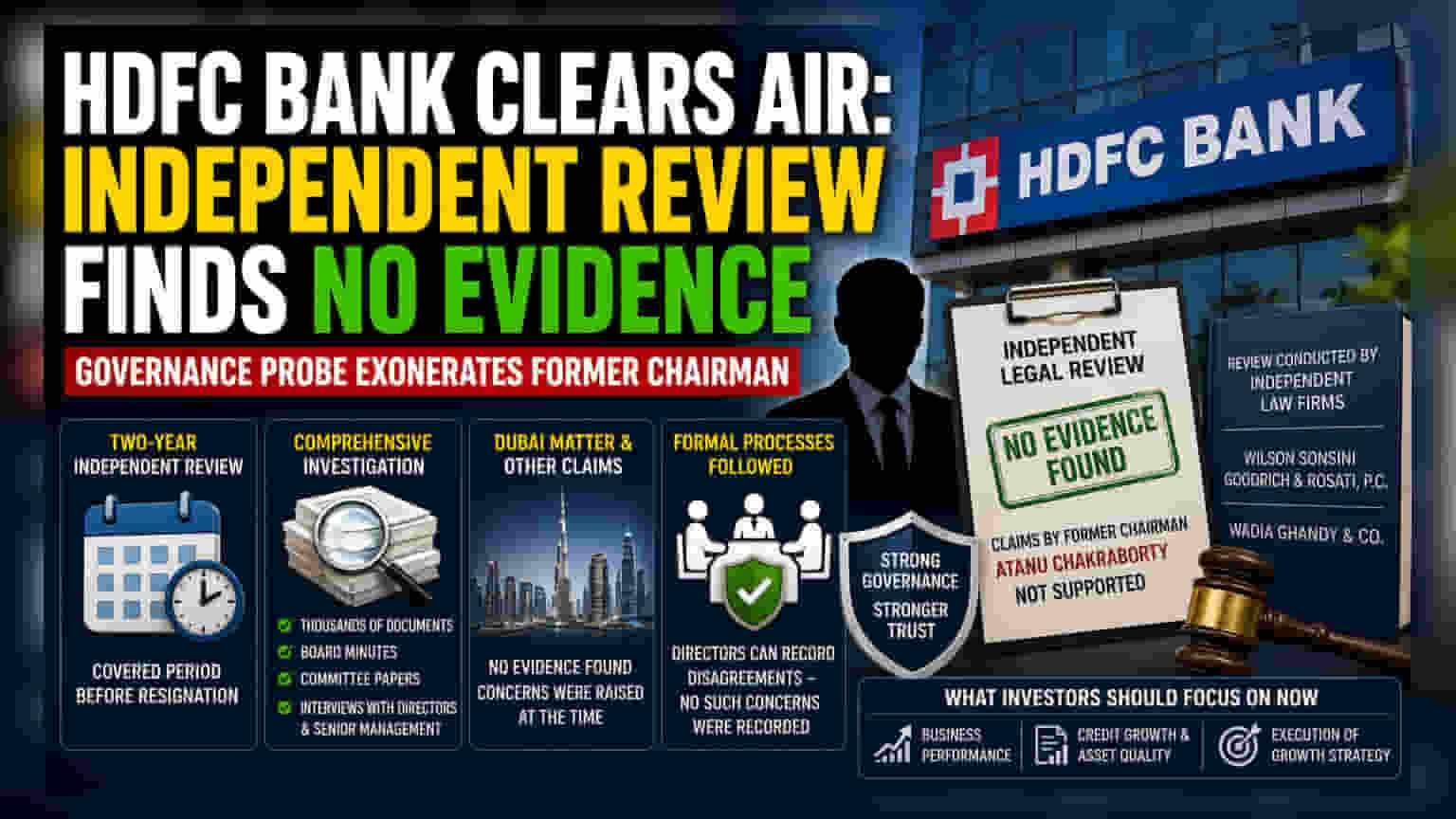
HDFC Bank has concluded an extensive two-year legal review into concerns raised by former Chairman Atanu Chakraborty, finding no evidence to support his statements. The independent investigation scrutinized board minutes and executive interviews to verify the bank’s governance. This resolution brings clarity to a period of uncertainty for investors regarding the bank’s board decision-making process.
What Happened
HDFC Bank has finalized an independent legal review concerning statements previously made by its former Chairman, Atanu Chakraborty. The investigation, which spanned two years, aimed to verify claims regarding the bank’s internal processes and governance. The bank engaged two independent law firms—Wilson Sonsini Goodrich & Rosati, P.C. and Wadia Ghandy & Co.—to conduct the probe. The final submission to the board concluded that there was no evidence to support the claims made by the former chairman. The review included an examination of thousands of documents, including board minutes and committee papers, alongside interviews with directors and senior management.
Why Governance Matters For Investors
For shareholders and institutional investors, governance is a pillar of trust, especially in the banking sector. When a former high-ranking official raises concerns about ethics or board decisions, it can create unnecessary uncertainty about the company’s internal controls. The bank’s decision to commission an independent, external review demonstrates a move toward transparency. By proving that the official record—such as meeting minutes—did not reflect the concerns described, the bank aims to reinforce the integrity of its existing decision-making framework. For investors, this resolution is helpful as it removes a potential overhang of doubt regarding how the bank’s leadership operates.
The Review Process
The review was comprehensive in scope. It covered the two-year period leading up to Mr. Chakraborty’s resignation. The investigators sought to verify his claims by cross-referencing them with actual board and committee discussions. A specific point of focus was the so-called "Dubai matter," which had been referenced by the former chairman in public statements. The investigators found no evidence that he had flagged concerns about ethics or values regarding this or other board decisions at the time they occurred. The report noted that the bank’s standard process allows directors to formally record any disagreements or concerns, a path that the investigators found was not utilized in the manner suggested by the former chairman. Mr. Chakraborty did not participate in the interview process conducted by the law firms.
What To Watch Next
While the internal probe has reached a conclusion, investors generally continue to monitor the long-term stability of the bank's leadership and governance. The focus now shifts to business performance and management's execution of its growth strategy. The resolution of this matter puts a formal end to the public questions surrounding these specific claims, which allows the market to focus on the bank's quarterly financial results, credit growth, and asset quality, rather than internal board disputes.