

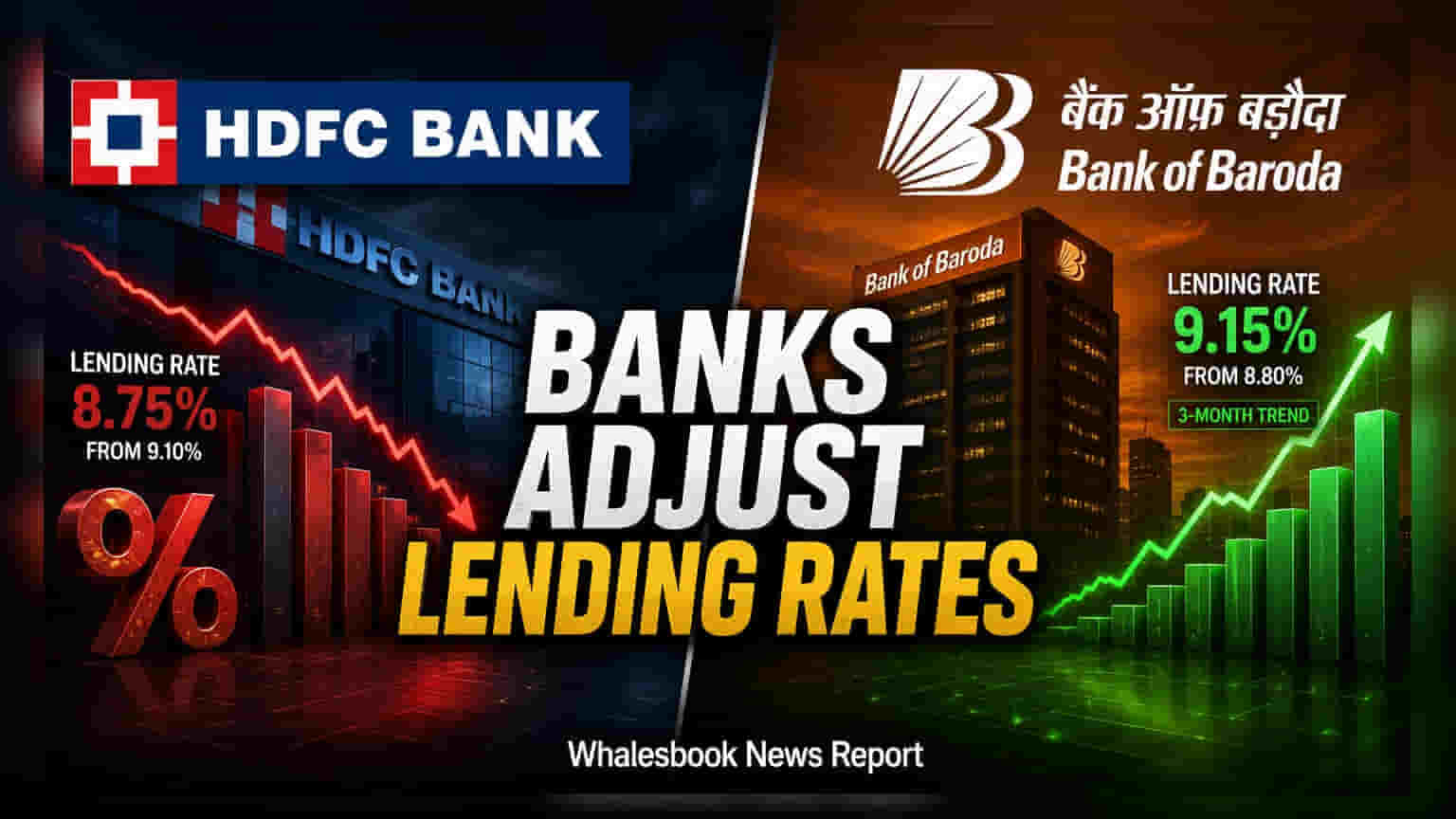
HDFC Bank has reduced its benchmark lending rates by 5 basis points across most tenures, while Bank of Baroda is raising its three-month rate by 10 basis points. These opposing moves reflect different funding and growth strategies as the RBI keeps the repo rate at 5.25%. Investors should watch how these rate shifts influence future profit margins and loan demand for each lender.
HDFC Bank and Bank of Baroda have adopted different paths regarding their benchmark lending rates, known as the Marginal Cost of Funds based Lending Rate (MCLR). HDFC Bank has reduced its MCLR by 5 basis points across most tenures, effective from August 7, 2026. Conversely, Bank of Baroda has decided to increase its three-month MCLR by 10 basis points, effective from August 12, 2026. These adjustments are independent decisions made by the banks to manage their own funding costs and loan portfolios.
Following the reduction, HDFC Bank's rates for most tenures now range from 8.00% to 8.65%. The bank has kept its two-year MCLR steady at 8.55%. By lowering these rates, the bank may be aiming to make its loan products more competitive for new borrowers or to support loan growth in specific segments. In contrast, Bank of Baroda’s decision to hike its three-month rate to 8.30% suggests a different approach, potentially focusing on improving margins on short-term loans or managing liquidity requirements.
It is important for borrowers and investors to understand that these changes do not impact all loans equally. MCLR is a benchmark that banks use to price loans. However, many new loans, particularly retail and personal loans, are now linked to the External Benchmark Lending Rate (EBLR), which is directly tied to the Reserve Bank of India's (RBI) repo rate, currently set at 5.25%. Borrowers with older loans or specific product contracts linked to MCLR will only see changes to their interest rates on their specific contract reset dates.
For investors, these rate movements provide insight into the banks' current priorities. A bank lowering its rates might be looking to gain market share by offering cheaper credit, which can put pressure on profit margins if deposit costs remain high. A bank raising its rates, like Bank of Baroda, often aims to protect its interest margins, ensuring that the cost of gathering funds is balanced by the income earned from lending.
Profitability in banking is largely determined by the Net Interest Margin (NIM), which is the difference between the interest earned on loans and the interest paid on deposits. If banks cannot balance their lending rates with the costs of attracting customer deposits, their margins may come under pressure. Investors should track future quarterly earnings reports to see if these rate changes help or hinder the banks' overall profitability. Other key monitorables include deposit growth, loan book quality, and whether either bank makes further adjustments in response to broader liquidity conditions in the banking system.