

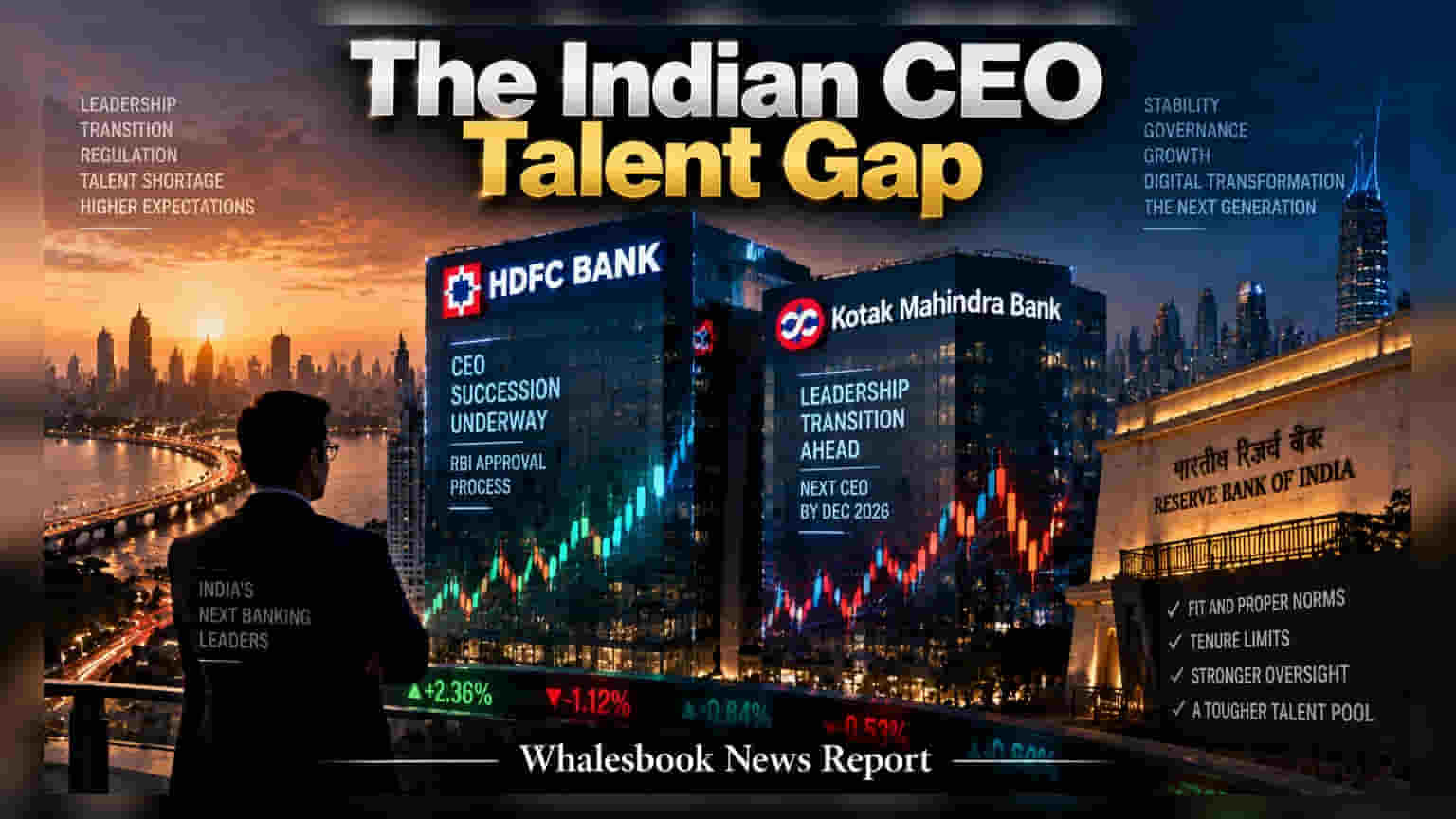
India’s private banking sector is facing a critical leadership transition as HDFC Bank submits succession names to the RBI for CEO Sashidhar Jagdishan, whose term ends in October 2026. Simultaneously, Kotak Mahindra Bank is preparing for leadership changes with Ashok Vaswani’s departure in December 2026. These developments are being closely watched by investors seeking stability in strategy and governance.
India’s private banking sector is entering a period of significant leadership transition, with two of the country's largest lenders, HDFC Bank and Kotak Mahindra Bank, actively moving to identify successors for their top roles. This process comes at a time when the sector is dealing with tighter oversight from the Reserve Bank of India (RBI) and a challenging environment for executive recruitment.
HDFC Bank has formally initiated its CEO succession process by submitting two candidate names to the RBI for approval. This follows the decision by current CEO Sashidhar Jagdishan not to seek reappointment after his term concludes in October 2026. This announcement provided some clarity to the market, triggering a relief rally in HDFC Bank’s shares, which rose over 2-3% in mid-September 2026. Investors often react positively to succession clarity, as it reduces the "key-person risk"—the danger that an organization’s performance or strategy could falter due to the sudden or uncertain departure of a central leader.
Simultaneously, Kotak Mahindra Bank is navigating its own leadership change, with CEO Ashok Vaswani set to depart in December 2026. The simultaneous leadership search at these banking heavyweights highlights a broader industry challenge: the scarcity of candidates who meet both internal criteria and the RBI’s stringent "fit and proper" standards.
Regulatory Hurdles and Talent Scarcity
The central bank’s role has become increasingly prominent in these transitions. The RBI enforces strict tenure limits—a 15-year ceiling for Managing Directors, CEOs, and Whole-Time Directors—and imposes rigorous governance expectations. This creates a regulatory bottleneck that effectively narrows the pool of viable candidates. Because the regulatory vetting process is thorough, banks are finding it more difficult to simply promote from within without extensive preparation, leading to a reliance on a limited group of seasoned banking professionals.
For investors, the primary concern remains continuity. Private lenders have historically relied on long-serving leaders to build their franchises. As institutions move toward these new leadership regimes, the market is monitoring whether the incoming CEOs will maintain the established strategies, particularly regarding digital expansion, asset quality management, and post-merger integration for banks like HDFC.
What Investors Should Monitor
The transition period brings both risks and potential for renewal. An overly long or uncertain succession process can lead to stock price volatility and internal organizational friction. Conversely, a smooth transition can strengthen institutional stability. Investors should track upcoming regulatory approvals for CEO candidates, as these will be the first major signal of continuity. Additionally, management commentary regarding long-term business strategy under new leadership will be a key factor to watch during upcoming quarterly earnings calls and annual general meetings. The focus for shareholders will be on whether the new leadership can maintain profit margins and credit discipline in an increasingly competitive and regulated financial landscape.