

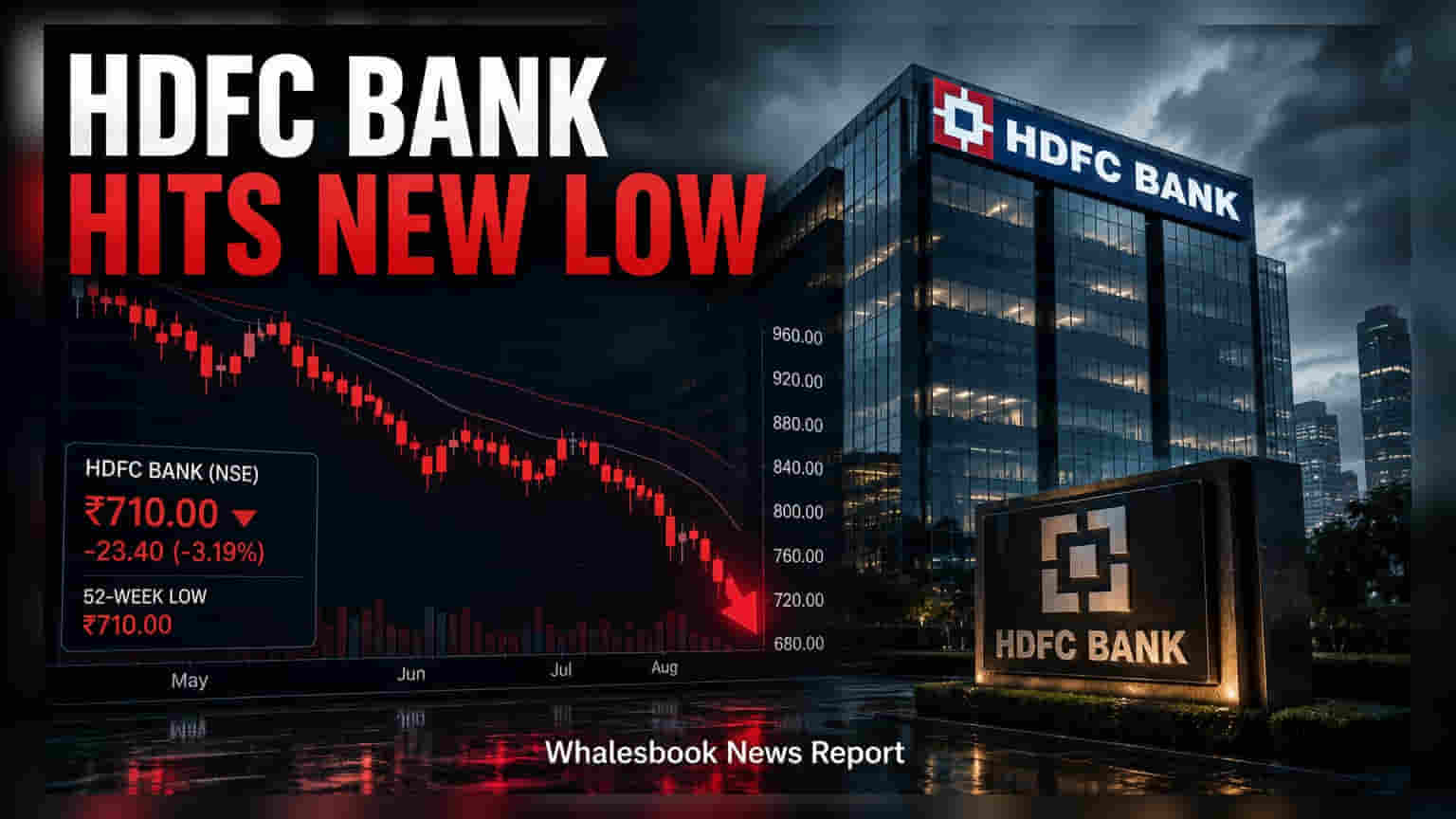
HDFC Bank shares touched a 52-week low of ₹710 on Friday as investors reacted to multiple concerns, including a U.S. class-action lawsuit, a contentious debt resolution, and uncertainty over the CEO's upcoming term end. The bank has dismissed the legal allegations as meritless, but market sentiment remains under pressure.
HDFC Bank shares faced significant selling pressure in Friday's trading, touching a new 52-week low of ₹710. The stock has been under persistent downward pressure as a combination of legal challenges and uncertainty surrounding the bank's leadership continues to weigh on investor sentiment.
Legal Battles and Debt Resolution
The bank is currently addressing a U.S. securities class-action lawsuit filed on August 13, 2026, in the Southern District of New York. The lawsuit alleges that the bank made misleading statements and failed to properly disclose payments involving unauthorized deposit inducements to the Maharashtra State Road Development Corporation (MSRDC). HDFC Bank has publicly stated that these allegations are without merit and that it intends to defend itself against the claims.
In addition to the U.S. litigation, the bank is involved in a high-profile domestic debt resolution case. It is currently weighing an appeal at the National Company Law Appellate Tribunal (NCLAT) regarding a debt resolution plan for Essel Group founder Subhash Chandra. The current resolution plan, approved by the National Company Law Tribunal (NCLT), results in a recovery of only about 0.03 percent of the bank's admitted claims, effectively amounting to a 99.97 percent loss. The bank has indicated it is reviewing its legal options to challenge this outcome, as it believes the recovery is insufficient.
Leadership Succession Concerns
Beyond these legal issues, the market is closely watching for updates on the bank's executive leadership. The tenure of the current CEO, Sashidhar Jagdishan, is set to conclude on October 26, 2026. With only a few months remaining until this date, the lack of a formal announcement regarding an extension of his term or a succession plan has created ambiguity for shareholders.
This leadership uncertainty, combined with the accumulation of legal matters, has led to increased volatility in the stock price. While the bank's operational performance remains a key focus, investors are currently prioritizing the resolution of these external risks. The market will likely continue to monitor the progress of the NCLAT appeal, any official communications regarding the CEO's tenure, and updates from the U.S. court proceedings to gauge the impact on the bank's future stability.