 Whalesbook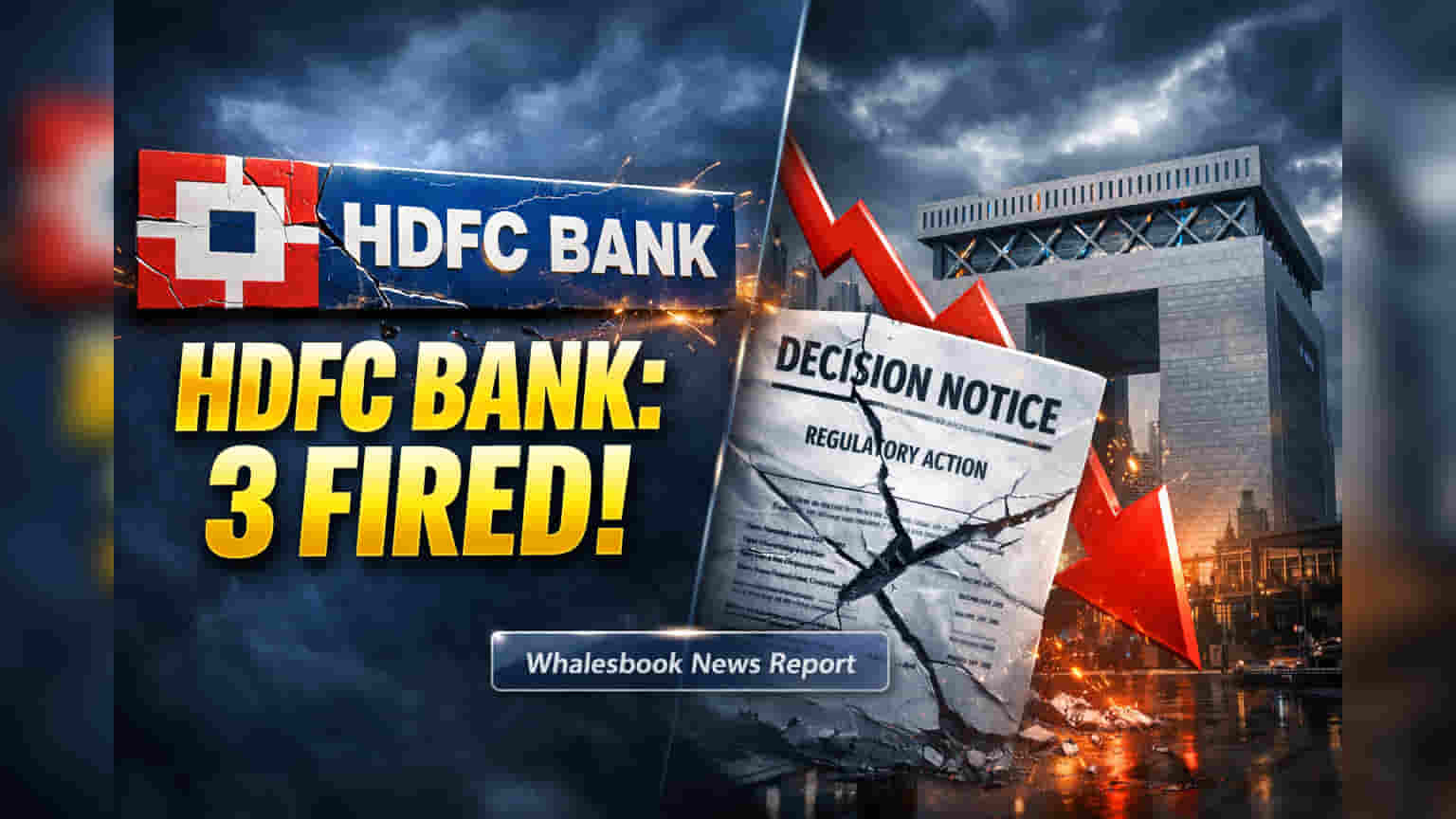
Governance Concerns Intensify
The termination of three senior HDFC Bank executives, following an internal investigation into alleged mis-selling of Credit Suisse AT-1 bonds, heightens existing governance concerns. This comes shortly after Chairman Atanu Chakraborty resigned, citing ethical differences. While HDFC Bank stated these personnel changes are not material, the market reaction and analyst sentiment suggest investors are taking a closer look.
Bond Mis-selling at Dubai Branch
HDFC Bank confirmed the dismissal of Sampath Kumar (Group Head of Branch Banking), Harsh Gupta (Executive Vice President), and Payal Mandhyan (Senior Vice President) on March 23, 2026. The firings are linked to an internal probe prompted by a September 26, 2025, notice from the Dubai Financial Services Authority (DFSA). The DFSA flagged alleged mis-selling of Credit Suisse's Additional Tier-1 (AT-1) bonds through the bank's Dubai branch. Investors, mainly Non-Resident Indians (NRIs), reported being misled into converting foreign currency deposits into these high-risk, perpetual bonds, which were later written down to zero during the Credit Suisse rescue.
Stock Price Drops Amid Scrutiny
HDFC Bank shares fell sharply on March 23, 2026, closing at ₹743.75 and hitting a new 52-week low, down 4.70%. This occurred despite the bank's statement that the dismissed individuals were not senior management and the event had no material impact. The market's negative reaction indicates investors are factoring in potential reputational damage and future regulatory issues. The DFSA had previously restricted HDFC Bank's Dubai branch from taking on new clients in September 2025 due to similar allegations.
Valuation and Sector Comparison
As of March 2026, HDFC Bank's Price-to-Earnings (P/E) ratio was around 15.33-17.63. This range is comparable to ICICI Bank (16.02-19.38) but higher than Axis Bank (12.59-14.65). HDFC Bank has historically traded at a premium valuation, often attributed to its strong governance. However, its current P/E is below its 10-year median, signaling a potential shift in investor perception.
The broader Indian banking sector shows resilience with strong credit demand. However, a liquidity deficit appeared around March 23, 2026, due to tax outflows and RBI currency interventions. The stock's significant drop in recent weeks, especially after Chairman Atanu Chakraborty's resignation on March 19, 2026, highlights how sensitive the market is to governance news.
Investor Skepticism Remains
The recent events suggest ongoing governance challenges at HDFC Bank. Chairman Atanu Chakraborty's resignation, citing a divergence in "values and ethics" over observed "happenings and practices," combined with the AT-1 bond mis-selling scandal and the prior DFSA action, raises concerns. While the RBI has affirmed the bank's sound financials and management, market skepticism persists. This is reflected in the stock's sharp fall and some analysts lowering valuation multiples due to governance uncertainty. The market appears to be applying a discount to HDFC Bank's shares, reducing its traditional valuation premium, as investors await clearer evidence of the bank's commitment to integrity. The bank's ability to manage these pressures will be crucial to regaining its premium market standing.
The Path Ahead
Analyst views on HDFC Bank are divided. Some maintain 'buy' ratings based on long-term fundamentals and attractive valuations, while others are cautious about near-term performance due to governance issues. The ongoing 'HDFC 2.0' integration initiative faces added complexity from these developments. To restore investor confidence and its valuation premium, HDFC Bank must demonstrate transparency, strengthen compliance, and uphold ethical practices.