

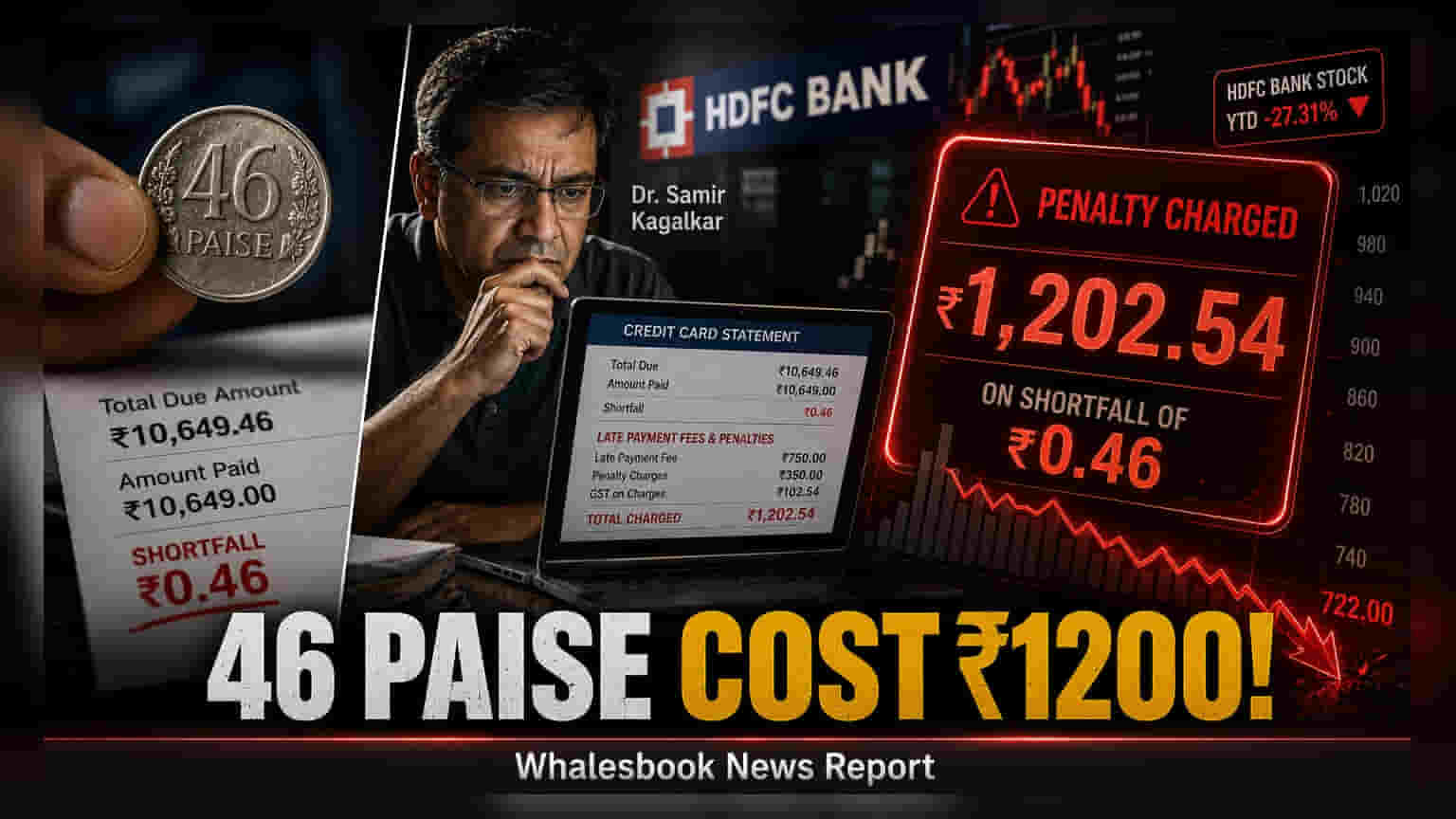
HDFC Bank is under scrutiny after a credit card customer was charged over Rs 1,200 in late fees for a 46-paise bill shortfall. For investors, this billing incident adds to ongoing challenges, as the stock deals with a 27% year-to-date decline, governance concerns, and pressure on profit margins.
HDFC Bank has come under public attention following reports that a credit card customer was charged over ₹1,200 in late payment fees and penalties due to a shortfall of only 46 paise on a bill payment. The customer reported paying ₹10,649 against a total due amount of ₹10,649.46. The incident, which triggered a wave of social media complaints, has raised questions regarding the bank's automated billing logic and the precision of its penalty systems.
Regulatory Norms and Billing Logic
This incident highlights the Reserve Bank of India's (RBI) existing guidelines for financial institutions. The regulator mandates that transactions should generally be rounded off to the nearest rupee, with amounts below 50 paise rounded down. In a scenario with a bill of ₹10,649.46, this would theoretically round the amount to ₹10,649. Furthermore, RBI directions state that late payment charges should only be applied to the outstanding amount after the due date, rather than the total bill amount. The application of these rules remains a critical point of operational focus for the banking sector, as any gap between regulatory intent and system execution can lead to customer dissatisfaction and increased compliance monitoring.
Market Sentiment and Governance Context
The timing of this customer service issue is notable given the broader environment surrounding HDFC Bank throughout 2026. The lender's stock has faced significant headwinds, recording a decline of over 27% year-to-date. Investor sentiment has been tested by a combination of factors, including the stock touching a 52-week low of ₹722 on August 12, 2026.
Beyond market performance, shareholders have been closely tracking developments related to the bank's governance and operational transparency. In July 2026, reports surfaced regarding internal investigations into business practices, specifically concerning deposit arrangements linked to the Maharashtra State Road Development Corporation (MSRDC), which resulted in regulatory penalties for senior management. These events have contributed to a cautious outlook among market participants, who remain sensitive to any sign of operational friction.
Profitability and Operational Focus
Investors are also evaluating the bank's core financial performance. Recent quarterly results for the period ending in June 2026 indicated pressure on Net Interest Margins, which represent the profit margins on the bank's lending activities. Maintaining these margins is essential for the bank's valuation and long-term earnings growth. While a single billing complaint is an isolated service issue, investors often monitor how banks handle such friction points, as consistent issues in customer operations can sometimes reflect deeper pressures on internal systems and processes. The key monitorable for the coming months will be the bank's ability to demonstrate stability in its lending margins and clear resolution of internal governance and operational matters.