

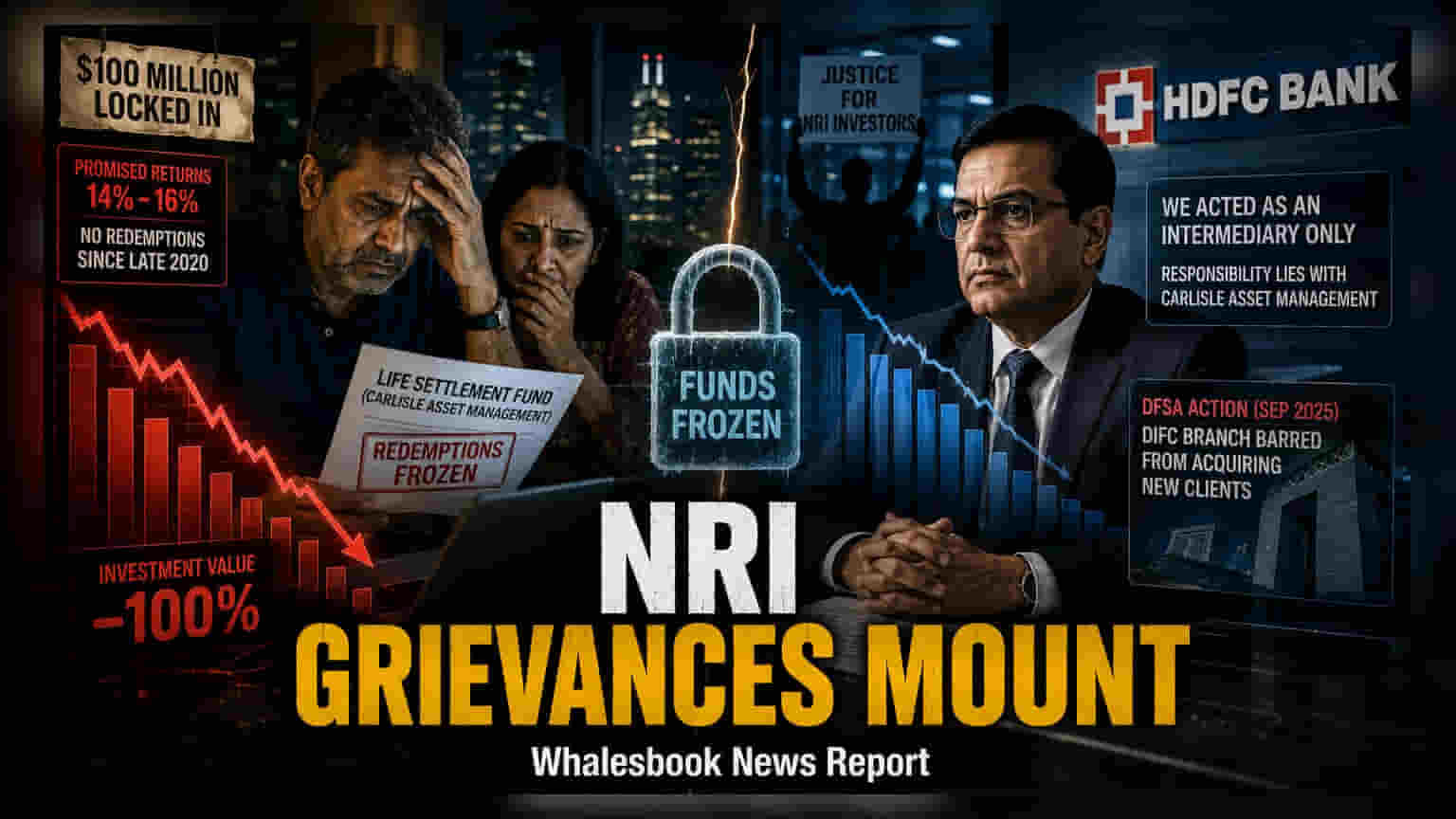
HDFC Bank is facing a wave of complaints from around 70 NRI investors who invested in a Carlisle Asset Management fund that halted redemptions in 2020. The bank denies mis-selling claims, stating it acted only as a distributor. Investors are monitoring the situation for potential regulatory or legal fallout, given the bank's previous scrutiny in the West Asia region.
HDFC Bank is dealing with growing concerns from a group of Non-Resident Indian (NRI) investors regarding a life settlement fund managed by Carlisle Asset Management. Approximately 70 investors have raised complaints against the lender, alleging that they were mis-sold the product between 2017 and 2019. The fund, which was marketed with promises of annual returns between 14% and 16%, ceased all redemption payments in late 2020, effectively locking in an estimated $100 million of investor capital.
Dispute Over Marketing and Fund Performance
The core of the conflict lies in the difference between investor expectations and the current status of the investment. Many investors feel the product was marketed as a stable, high-yield opportunity with lower risk than the market average. Following the 2020 freeze, these investors have been unable to access their funds, leading to financial distress for several clients. In response, HDFC Bank has maintained a firm stance that it acted solely as an intermediary and not the fund manager. A spokesperson for the bank stated that it did not mis-sell the product and that the responsibility for the fund's performance, liquidity, and eventual redemption lies with the fund house, Carlisle Asset Management. The bank noted that the fund was registered in a reputable jurisdiction at the time of sale and met all compliance standards.
Regulatory History and Regional Focus
This incident is gaining attention because it follows a pattern of customer grievances involving the bank’s operations in West Asia. In September 2025, the Dubai Financial Services Authority (DFSA) took action against the bank’s branch in the Dubai International Financial Centre (DIFC), barring it from acquiring new clients due to concerns over its business practices. Following that event, the bank took internal disciplinary actions against several employees, including terminations. For investors, this history of regional scrutiny is a key monitorable. It suggests that the bank’s due diligence and compliance processes for overseas financial products are under the microscope, which could lead to further regulatory oversight.
Additional complexity arises from investigations into the fund house itself. A report by Morpheus Research previously raised questions regarding the background of Carlisle’s leadership. However, Abacus Global Management, which acquired Carlisle in late 2024, has strongly refuted these allegations, labeling them as misleading.
Investors may look to track how the bank manages the ongoing investor grievances and whether these events lead to any material legal or regulatory consequences. The ability of the bank to maintain the trust of its high-net-worth NRI client base remains an important factor, as the region has historically been a significant source of deposits and business for the lender. Any further regulatory updates regarding the fund's status or the bank’s marketing practices in the region will be essential for shareholders to monitor.