

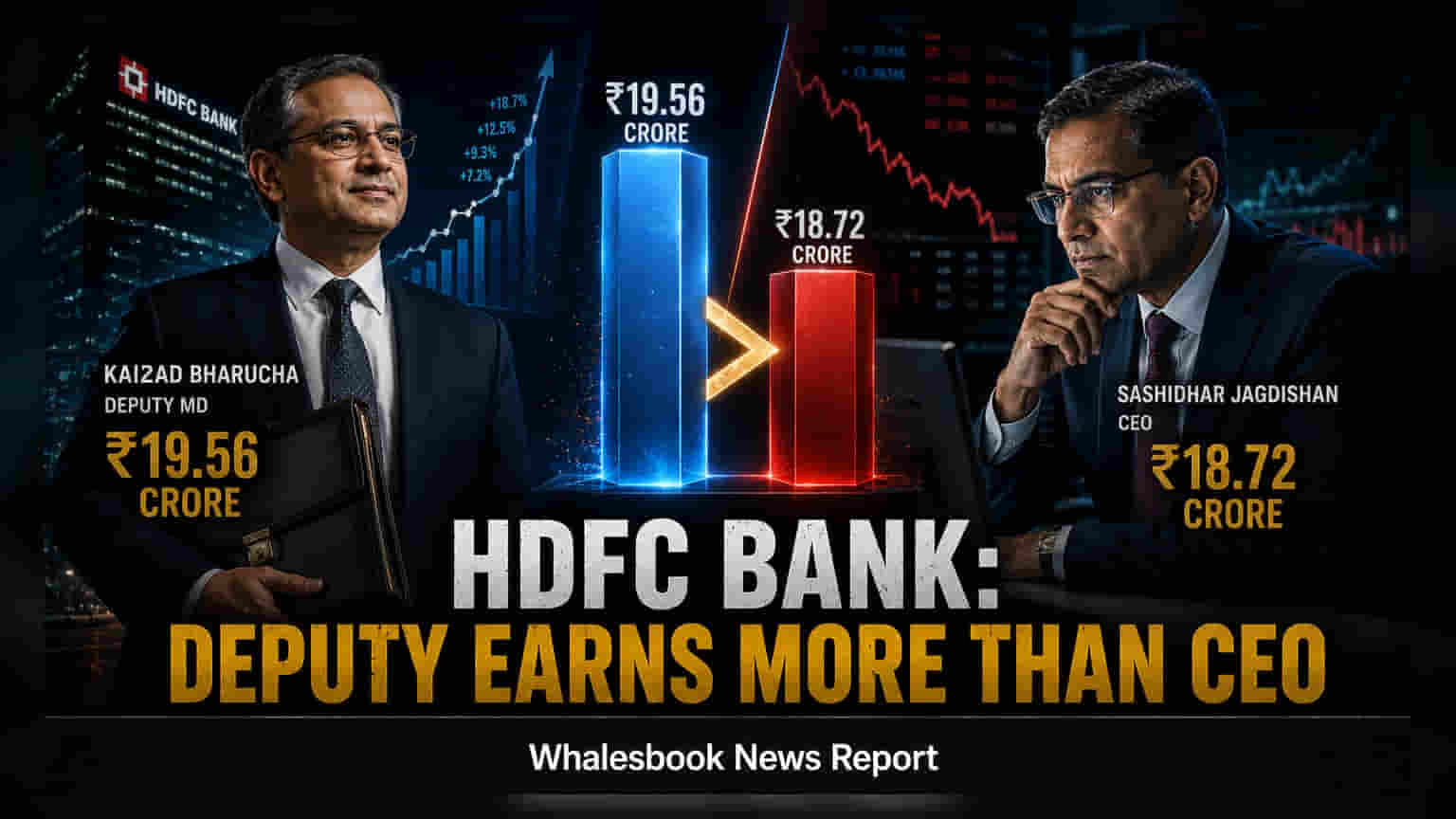
HDFC Bank's FY26 annual report reveals Deputy MD Kaizad Bharucha earned more than CEO Sashidhar Jagdishan, driven by a higher performance-linked bonus and stock options. Investors may view this as part of the bank's talent retention strategy while monitoring executive compensation costs.
HDFC Bank’s annual report for the fiscal year 2025-2026 has brought executive compensation into focus, showing that Deputy Managing Director Kaizad Bharucha received a higher total pay package than Managing Director and CEO Sashidhar Jagdishan. While executive pay structures often vary based on role-specific responsibilities, tenure, and performance targets, the disclosure provides a clear picture of how compensation is distributed among the bank’s top leadership.
Breakdown of Executive Pay
Kaizad Bharucha’s total earnings for FY26 were primarily boosted by an ₹8.57 crore performance-linked bonus, a key variable component in executive contracts. Additionally, he received a basic salary of ₹3.60 crore, ₹4 crore in allowances and perquisites, and substantial retirement benefits. Beyond cash compensation, Bharucha was granted 6,23,651 stock options, which represents the highest allocation among the bank's whole-time directors for the year. This large allocation of stock options suggests a focus on aligning long-term leadership incentives with the bank's share price performance.
In comparison, CEO Sashidhar Jagdishan received a total package that included a basic salary of ₹3.31 crore, ₹3.63 crore in allowances and perquisites, and a performance bonus of ₹7.29 crore. Jagdishan was also granted 4,28,405 stock options. The differences in pay reflect the specific performance metrics and individual contributions set by the board for different leadership roles.
Compensation for Other Leadership
The report also detailed the remuneration of Executive Director V. Srinivasa Rangan, who received a basic salary of ₹4.03 crore, allowances of ₹2.98 crore, and a performance bonus of ₹3.18 crore. Rangan was granted 2,93,538 stock options. Meanwhile, the bank also disclosed the final compensation for former chairman Atanu Chakraborty, who resigned in March 2026. His total remuneration for the final year stood at ₹1.07 crore, representing a 3.53% increase from the previous year. This payment was approved by the Reserve Bank of India and reflected a proportionate amount for his time served before his departure on March 18, 2026.
For investors, executive compensation data serves as a monitorable for corporate governance and cost management. While pay packages for top-tier banking executives are significant, they are often evaluated against the bank's overall profitability, scale, and the complexity of managing a large financial institution. The use of performance-linked bonuses and stock-based compensation is intended to link executive rewards to the bank's operational health. Investors may continue to track future disclosures to see how these compensation trends align with the bank's long-term financial performance and management stability.