 Whalesbook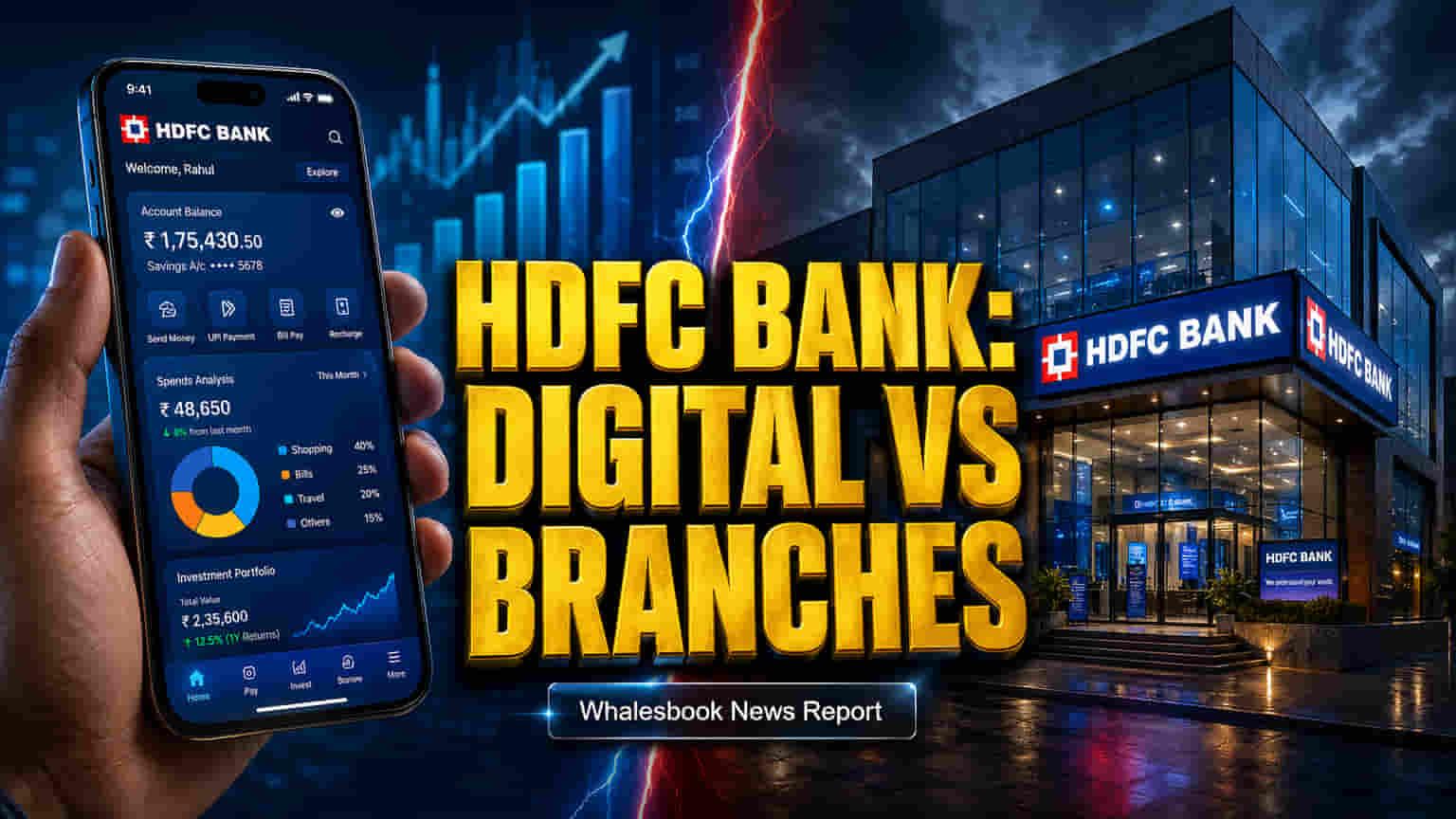


Digital Efficiency Meets Branch Strength
HDFC Bank is employing a hybrid strategy that merges high digital transaction volumes with a large physical branch network to meet all customer financial needs. This model avoids a simple digital-versus-physical choice, instead using both channels to attract customers, build loyalty, and ensure long-term profits. The bank reports that 97% of payments and service requests are handled digitally, with 92% of new customer acquisition journeys starting online. However, its nearly 10,000 branches remain crucial for future growth.
Growth Engines: Deposits, MSMEs, and Mortgages
This blend of digital strength and branch reach is designed to maximize customer value over time. Digital channels efficiently manage everyday transactions for over 60 million mobile app users. Meanwhile, branches are key for growing deposits, handling large salary accounts, supporting mortgage lending, and serving the unique needs of Micro, Small, and Medium Enterprises (MSME). With over 100 million customers and adding 6-8 million annually, this dual approach enables the bank to cross-sell more profitable products like loans and investment services. HDFC Bank's P/E ratio, ranging between approximately 15.8 and 17.4 in April 2026, shows investor confidence and places it among competitors such as ICICI Bank (P/E ~16.5-18.4) and Axis Bank (P/E ~14.3-16.2). State Bank of India trades at a lower multiple of about 11.4-12.85.
Navigating India's Evolving Banking Landscape
The hybrid strategy is tailored for India's changing banking environment. Digital payments, like UPI transactions exceeding 100 billion in FY23-24, are rapidly growing, yet traditional banking needs remain, especially across different regions and demographics. New regulations expected in 2026, covering digital banking and payment security, signal an evolving operational landscape. Unlike banks solely focused on digital, HDFC Bank's hybrid model helps avoid excluding customers and builds trust, crucial for adoption in semi-urban and rural areas. While ICICI Bank shows stronger recent market sentiment, HDFC Bank's valuation is considered attractive by some, leading to 'very attractive' ratings from analysts. The bank's recent results, with 12% credit growth and 14.4% deposit growth in FY26, show it can balance expansion with financial stability.
Potential Headwinds and Risks
Despite strong operational figures, HDFC Bank faces potential challenges. Some recent reports point to mixed technical signals and short-term stock price pressure, leading to underperformance against its sector and the wider Sensex on certain days. Past governance concerns, though not leading to major regulatory action, have affected market perception. Competition in Indian banking is intense, with ICICI Bank and State Bank of India also pursuing aggressive growth, though SBI trades at a much lower P/E multiple. Evolving regulations on digital payment security and data privacy require ongoing investment to avoid compliance issues and penalties. While the bank plans to expand branches into rural areas, successfully turning these into significant deposit-gathering hubs presents an execution challenge.
Future Prospects and Analyst Views
HDFC Bank management expects that combining technology investments, the expanded branch network, and the merger with HDFC Ltd. will drive significant operating leverage in the coming years. Analyst sentiment for HDFC Bank is largely positive, with most rating it a 'Strong Buy' and an average 12-month price target of around ₹1,048.84, indicating potential upside. Projections for Net Interest Margins (NIMs) show stabilization in Q4 FY26 and a recovery anticipated by Q1 FY27. This outlook suggests HDFC Bank's strategy is geared towards not just stability, but also sustained market share growth and higher profits in India's lively financial sector.