

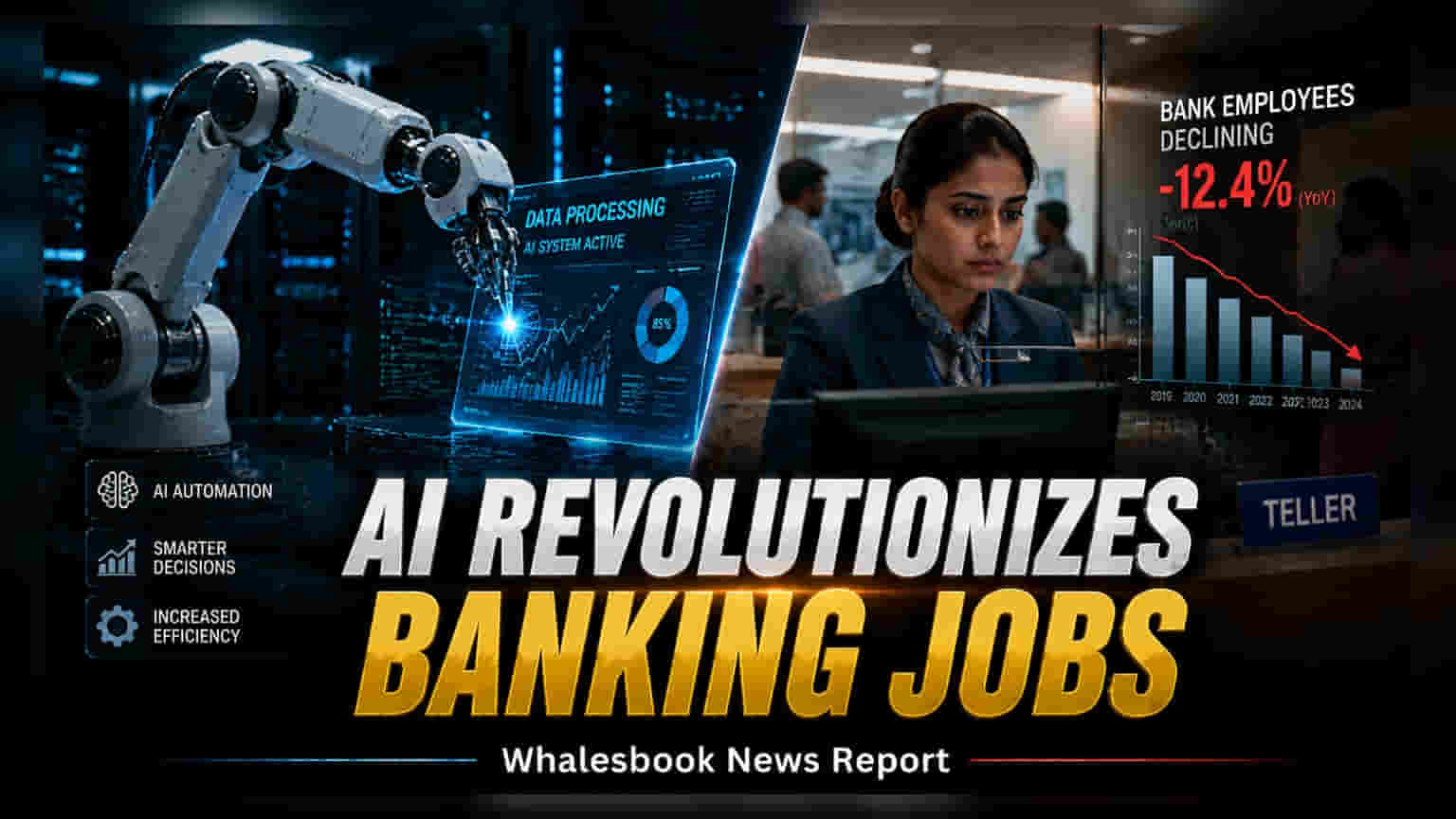
India's top private banks including HDFC Bank, Axis Bank, and Kotak Mahindra Bank reduced staff levels in fiscal year 2026. These lenders are increasingly using artificial intelligence and digital tools to automate backend operations and improve overall efficiency. Investors may watch how these technology-driven changes impact operating costs and profit margins in future quarterly results.
India’s major private sector banks are undergoing a significant structural shift in their workforce management as they accelerate the adoption of artificial intelligence and digital automation. Annual filings for fiscal year 2026 indicate that HDFC Bank, Axis Bank, and Kotak Mahindra Bank have each reduced their total employee numbers, signaling a move toward technology-heavy operational models aimed at enhancing long-term productivity.
HDFC Bank experienced the most significant adjustment in its workforce, reporting a reduction of approximately 2.11 lakh employees during the fiscal year. This decrease was concentrated in non-supervisory and backend roles. The bank’s management has indicated a strategy to pivot human resources toward customer-facing functions, where human interaction remains critical, while using AI to handle routine processing tasks that previously required large manual teams.
Axis Bank and Kotak Mahindra Bank Adjust Staffing
Axis Bank reported its headcount declined by 3,000 employees to 1.01 lakh by the end of fiscal 2026, despite a simultaneous expansion of its physical branch network. The bank is integrating AI across its software development and call center operations, with plans to cover nearly half of its core processes within the next 18 months. By automating software delivery cycles and customer service interactions, the bank aims to achieve faster service turnaround times while containing its employee costs.
Kotak Mahindra Bank has now seen two consecutive years of staff reduction, with its workforce moving from 75,323 in fiscal 2025 to 74,054 in fiscal 2026. While the bank reported higher attrition in junior management roles, it also noted a shift in the composition of its workforce with an increase in mid-management levels. Like its peers, Kotak is embedding digital tools directly into employee workflows to streamline daily tasks.
Financial Context for Investors
The move toward AI-led efficiency is generally aimed at improving operating margins. By reducing the number of employees in backend roles, banks look to lower their cost-to-income ratios—a key metric for banking profitability. However, these transitions involve initial investments in technology infrastructure and training. Investors may track whether the savings from lower headcount and increased automation lead to sustained improvements in profit margins or if they are offset by rising technology spending and the need for a more specialized, higher-paid workforce in mid-management roles. The ability of these banks to maintain service quality while scaling back human involvement remains a critical factor for the sector's outlook.