

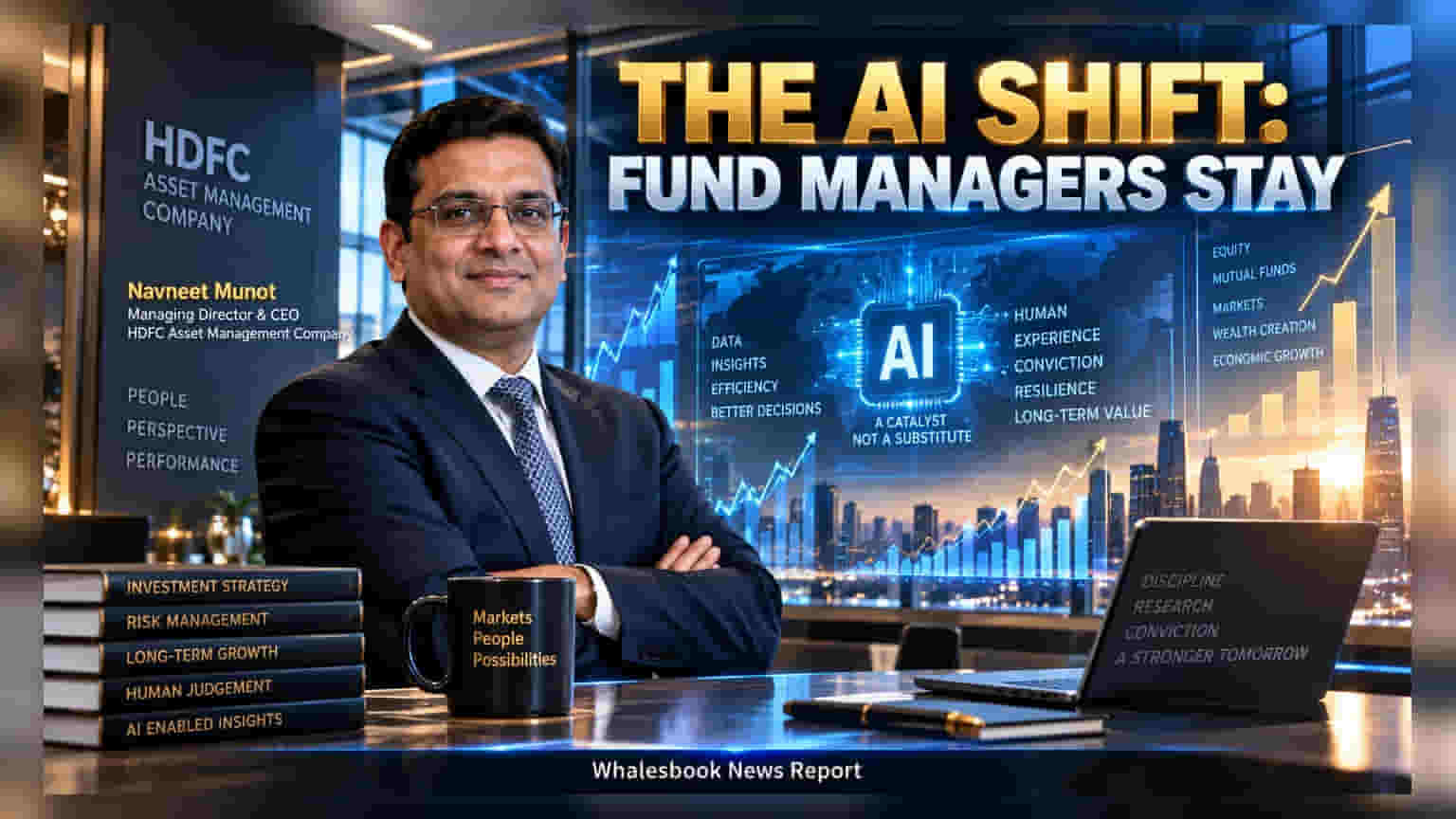
Navneet Munot, MD and CEO of HDFC Asset Management Company, states that while AI improves speed, human judgment remains essential for long-term investing. He stresses that mentorship and human conviction are vital for navigating market volatility. Investors should watch how traditional asset managers balance rising tech investments with the need to justify active management fees against growing passive fund competition.
Navneet Munot, the Managing Director and CEO of HDFC Asset Management Company, has stated that artificial intelligence acts as a catalyst for investment processes rather than a substitute for fund managers. In his view, the rapid rise of AI is a transformative shift for the asset management industry, but it cannot replicate the human ability to handle extreme market volatility or exercise long-term conviction.
Why the Human Edge Matters in Active Funds
For investors, the debate over AI is tied to the business model of active management. Traditional mutual funds, like those managed by HDFC AMC, charge fees based on the premise that a manager can outperform the broader market through research and decision-making. As low-cost passive funds, such as index funds and ETFs, continue to gain popularity in India, the burden of proof for active managers to justify their fees has increased. Munot argues that while AI can process data faster, it lacks the emotional resilience required during market crises. The ability to distinguish between noise and genuine opportunity, especially during periods of panic, is a human trait that remains central to the value proposition of active mutual funds.
The Cost of Talent and Technology
Munot also cautioned the industry against the trend of reducing headcount among junior analysts in favor of automation. He argued that the development of a fund manager takes decades of mentorship and on-the-job experience. If firms cut these entry-level roles to save costs or because they believe AI can perform the work, they risk creating a leadership deficit in the long run. For HDFC AMC and its peers, balancing the heavy spending required for technology upgrades while maintaining a deep talent pool is a key operational challenge. High-quality talent is often the primary driver of consistent fund performance, which in turn attracts and retains assets under management.
Sector Context for Investors
The Indian asset management sector is currently witnessing a transition. While AI tools are helping managers analyze larger data sets more efficiently, the sector faces margin pressure from fee compression in the passive investment space. Investors monitoring companies like HDFC AMC should observe two key areas in future quarterly updates. First, whether the company can maintain its operating margins while spending on digital transformation. Second, whether the performance of their active equity schemes continues to attract inflows, as this validates the strategy of relying on human managers supported by technology, rather than replacing them.