 Whalesbook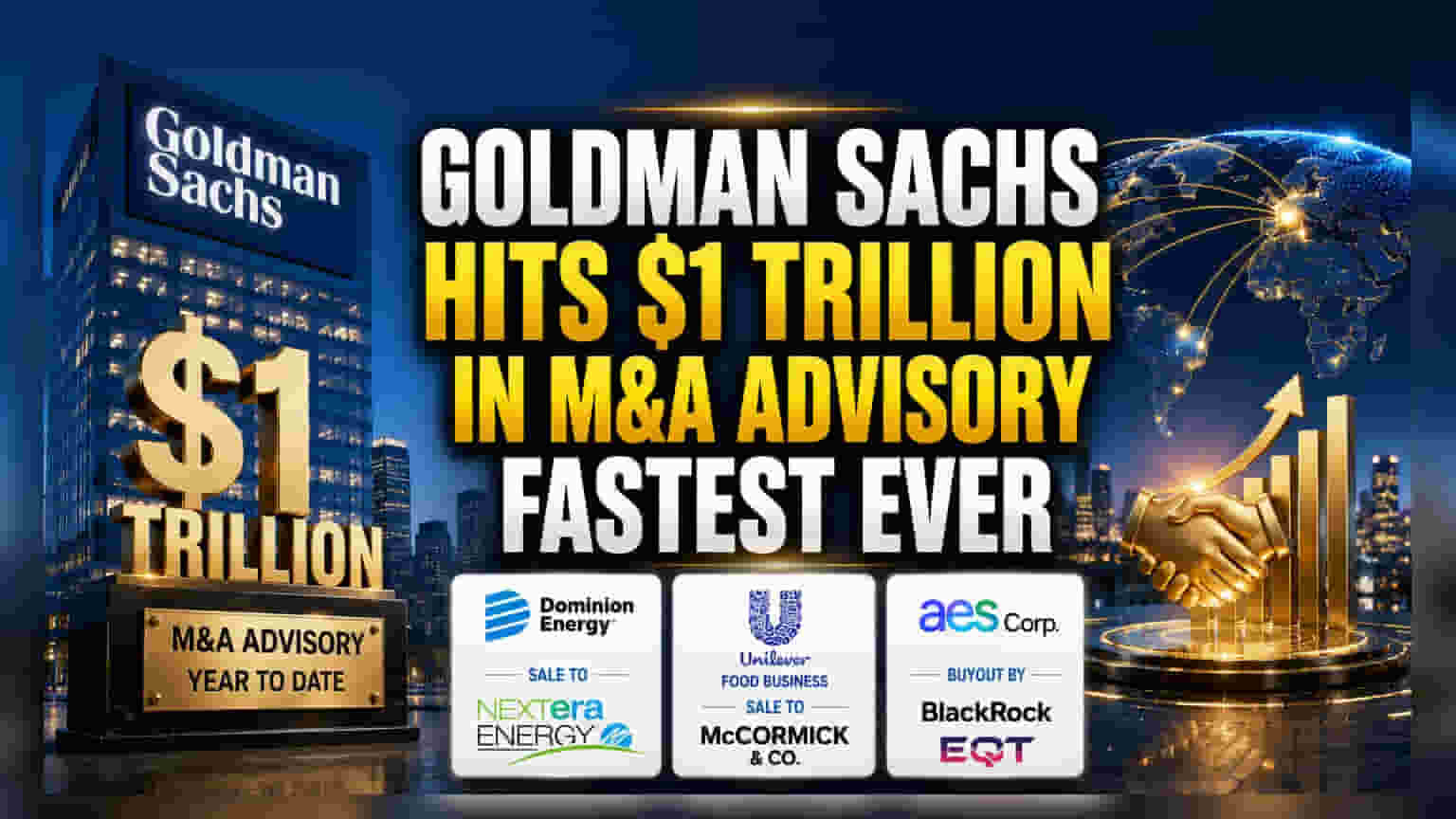


Goldman Sachs has advised on over $1 trillion in mergers and acquisitions (M&A) this year, reaching the milestone faster than ever before. Driven by a surge in corporate-led deals and AI-focused infrastructure investments, the firm's advisory business is outperforming competitors. Investors are watching whether this momentum is sustainable amid global regulatory and economic pressures.
What Happened
Goldman Sachs has achieved a significant milestone in its investment banking operations, advising on over $1 trillion in mergers and acquisitions (M&A) deals in the year to date. This performance marks the fastest the firm has ever reached such a volume, according to recent data. The bank has acted as a key advisor in several high-profile transactions, including the sale of Dominion Energy assets to NextEra Energy, the sale of Unilever’s food business to McCormick & Co., and the AES Corp. buyout involving BlackRock and EQT.
Why This Matters for Investors
For investors, M&A advisory volume is a critical bellwether for a bank’s financial health. Investment banking fees, which are often tied to the number and size of deals successfully closed, form a major revenue stream for Goldman Sachs. Reaching this milestone so early in the year underscores the firm’s competitive strength and its ability to secure mandates on the market’s largest and most complex transactions. It suggests that despite broader economic uncertainties, the demand for corporate dealmaking remains robust, which can positively impact the bank's fee-based income.
The Corporate-Led Shift
Unlike the previous decade, where private equity firms often dominated the deal landscape, the current market is being driven largely by corporates. Companies are actively seeking to build scale, integrate artificial intelligence, and upgrade infrastructure to remain competitive. This shift toward "corporate-led" M&A is significant because it suggests that companies are confident in their long-term growth and are willing to deploy capital to secure market share or new technologies. The drive for scale in sectors like energy and technology is a major catalyst for this increased activity.
Risks to Watch
While the current deal flow is strong, investors should remain aware of potential headwinds. First, M&A activity is highly cyclical; it tends to boom when business confidence is high but can dry up quickly if economic growth slows or interest rates remain elevated for longer than expected. Second, the regulatory environment is increasingly challenging. Global regulators, particularly in the US and Europe, are scrutinizing large-scale deals more closely for antitrust and competition concerns. This increased regulatory oversight can lead to deal delays, higher compliance costs, or even the cancellation of major transactions, which would directly impact the advisory fees that banks like Goldman Sachs earn.
How Investors May Read This
The market often views strong M&A performance as a sign of confidence from corporate CEOs. When large corporations are aggressive in their acquisition strategies, it often signals that they are positioning for future growth rather than just defensive consolidation. However, investors should be cautious about attributing this solely to a permanent market expansion. Instead, it is important to monitor the sustainability of these mega-deals. If regulatory friction increases or if corporations become more conservative due to economic pressures, the pace of dealmaking could moderate.
What Investors Should Track
Looking ahead, the key monitorables include the bank’s quarterly fee revenue, which will confirm how much of this advisory success is translating into profit. Investors should also track the "closing rate" of these deals—meaning how many of the announced transactions successfully clear regulatory hurdles and reach completion. Management commentary on the M&A pipeline and the impact of the regulatory environment on deal timelines will be crucial for assessing whether this "year of the big deal" continues through the end of 2026.