
Global Markets React to Geopolitical Fears
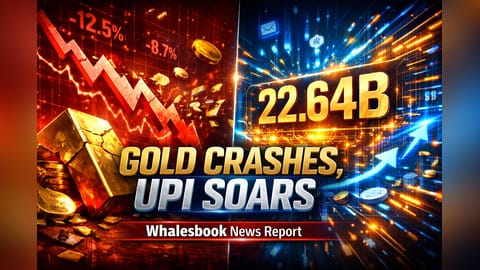
Financial markets showed a sharp division as escalating geopolitical talk from US President Donald Trump about the conflict in Iran and Israel did not offer a clear path to de-escalation. Instead, threats of more military action over the next two to three weeks increased global uncertainty. This led to increased risk aversion, with Wall Street futures declining sharply. At the same time, commodity markets experienced a significant drop. COMEX gold prices fell 2.21% to $4,677 per ounce, and silver dropped 4.22% to $72.87 per ounce. This downturn in precious metals reflects a mix of strong demand for the dollar, which typically moves opposite to gold, and broader geopolitical worries. The US Dollar Index (DXY) rose, showing a move towards safety, a pattern often seen in past Middle East conflicts, though a strong dollar can sometimes temper gold's usual safe-haven appeal.
India's Digital Payments Hit New Record
In contrast to the global retreat in commodities, India's domestic digital payment system showed strong growth. The National Payments Corporation of India (NPCI) announced a record 22.64 billion transactions on the Unified Payments Interface (UPI) in March 2026, valued at ₹29.53 lakh crore. This marks the highest monthly volume and value since UPI began, showing widespread use of real-time payments in daily Indian life and fast digital progress. This follows a slight dip in February, with the March figures indicating a strong comeback and steady year-on-year increase.
Indian Banks Steady, Gold Imports Tightened
India's banking sector also showed steady performance. Mid-sized lenders reported strong business growth in the March quarter, with both loans and deposits increasing by double digits year-on-year. Analysts expect Indian banks to maintain stable credit metrics through fiscal year 2026. Mid-sized private banks may see modest profit margin increases, despite some overall earnings pressure. Alongside this domestic economic strength, India's Directorate General of Foreign Trade (DGFT) moved to tighten import rules for gold and gold jewellery from ASEAN countries. These items were previously on a free import list but now require a license. This move aims to stop gold from being imported from other countries to get lower tariffs under trade deals. This policy change, showing a more controlled approach to gold imports, happened even as global gold prices were falling sharply. The DGFT also continued efforts to speed up Export Obligation Discharge Certificates (EODCs) and extended export periods for certain plans due to global supply chain issues.
Risks Remain Despite India's Strengths
Despite India's domestic economic strengths, several risks remain. Ongoing geopolitical tensions in the Middle East could cause continued market swings, potentially keeping demand for safe assets like the US dollar high and pressure on commodities. While India's digital payment system is booming, the broader startup sector faces significant challenges. Data from March 2026 showed a sharp 56% year-on-year decrease in startup funding, with capital and exits still concentrated in major hubs like Bengaluru, Mumbai, and the NCR. This uneven growth suggests that while entrepreneurship is common, securing large funding remains limited to established hubs. The restrictions on gold imports, while intended for domestic reasons, could also affect trade flows and potentially impact domestic supply or prices if not handled carefully, especially with falling global prices.
Looking Ahead
Geopolitical events, US monetary policy expectations, and commodity supply will shape global market sentiment. The strength of the US dollar is expected to be a key factor for currency and commodity markets in the second quarter of 2026, although historical April trends suggest the dollar might weaken. India's economic path, driven by its digital adoption and steady banking sector, appears set to continue its growth, though broader global economic conditions and policy changes like the gold import rules need to be watched.