

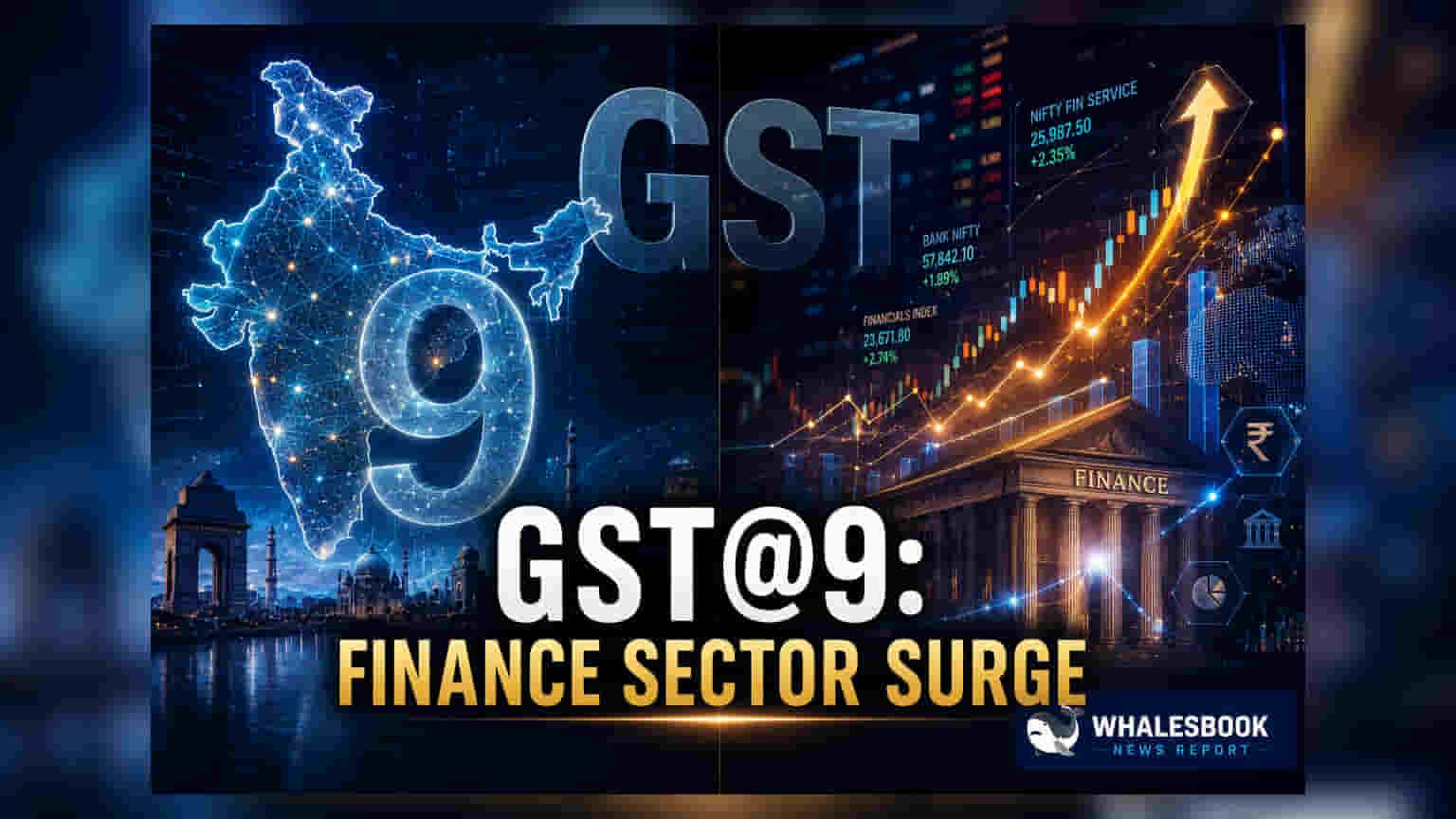
As the Goods and Services Tax (GST) completes nine years, reforms including the removal of taxes on life and health insurance are set to improve affordability. The shift toward digital compliance and the setup of the GSTAT tribunal are enhancing operational clarity for financial institutions. Investors may track how these changes influence insurance penetration and working capital efficiency in the sector.
Nine years after the introduction of the Goods and Services Tax (GST), the Indian financial services sector is undergoing a significant transformation driven by policy updates and digital integration. A recent industry survey by Deloitte India indicates that sector sentiment has improved, with 84% of participants reporting a positive outlook for 2026, compared to 59% in 2022. This shift reflects growing comfort with the digital compliance framework provided by the GSTN portal.
Impact on Insurance Affordability
A major change for the sector is the rationalization of GST rates, specifically the removal of taxes on life and health insurance products. Historically, the standard 18% GST rate on these premiums was viewed as a hurdle that increased costs for policyholders. By removing this tax, the government aims to lower the cost of coverage, which is expected to support deeper insurance penetration across the country. For insurance companies, this could act as a growth driver by making products more attractive to a wider consumer base.
Regulatory and Operational Shifts
Operational efficiency remains a focus, with 69% of survey respondents highlighting digital compliance as a primary benefit. However, the regulatory environment is becoming more stringent. The conversion rate of audits into tax demands has increased to 28% in 2026, up from 14% in 2024, suggesting that financial entities must maintain high standards of record-keeping to avoid tax disputes.
To address long-standing concerns regarding litigation, the establishment of the Goods and Services Tax Appellate Tribunal (GSTAT) provides a dedicated forum for dispute resolution. This move is intended to reduce the burden on higher courts and provide more certainty for multi-state corporate entities. Additionally, the government has moved toward making the Input Service Distributor (ISD) mechanism mandatory for shared third-party invoices, which forces a more standardized approach to managing tax credits across different states.
Future Expectations and Next Steps
Looking ahead, the sector is pushing for a "GST 2.0" roadmap that emphasizes data-driven decision-making. Approximately 89% of industry participants are advocating for the use of artificial intelligence in data processing and reconciliation to minimize manual errors. Furthermore, there is a strong demand for reforms that would allow companies to unlock working capital, such as facilitating refunds of unutilized input tax credits and enabling the transfer of central tax credits. For investors, the next phase of this evolution will be characterized by how effectively companies adapt to these new digital compliance standards and whether the removal of insurance taxes leads to a sustainable rise in premium volume across the insurance industry.