

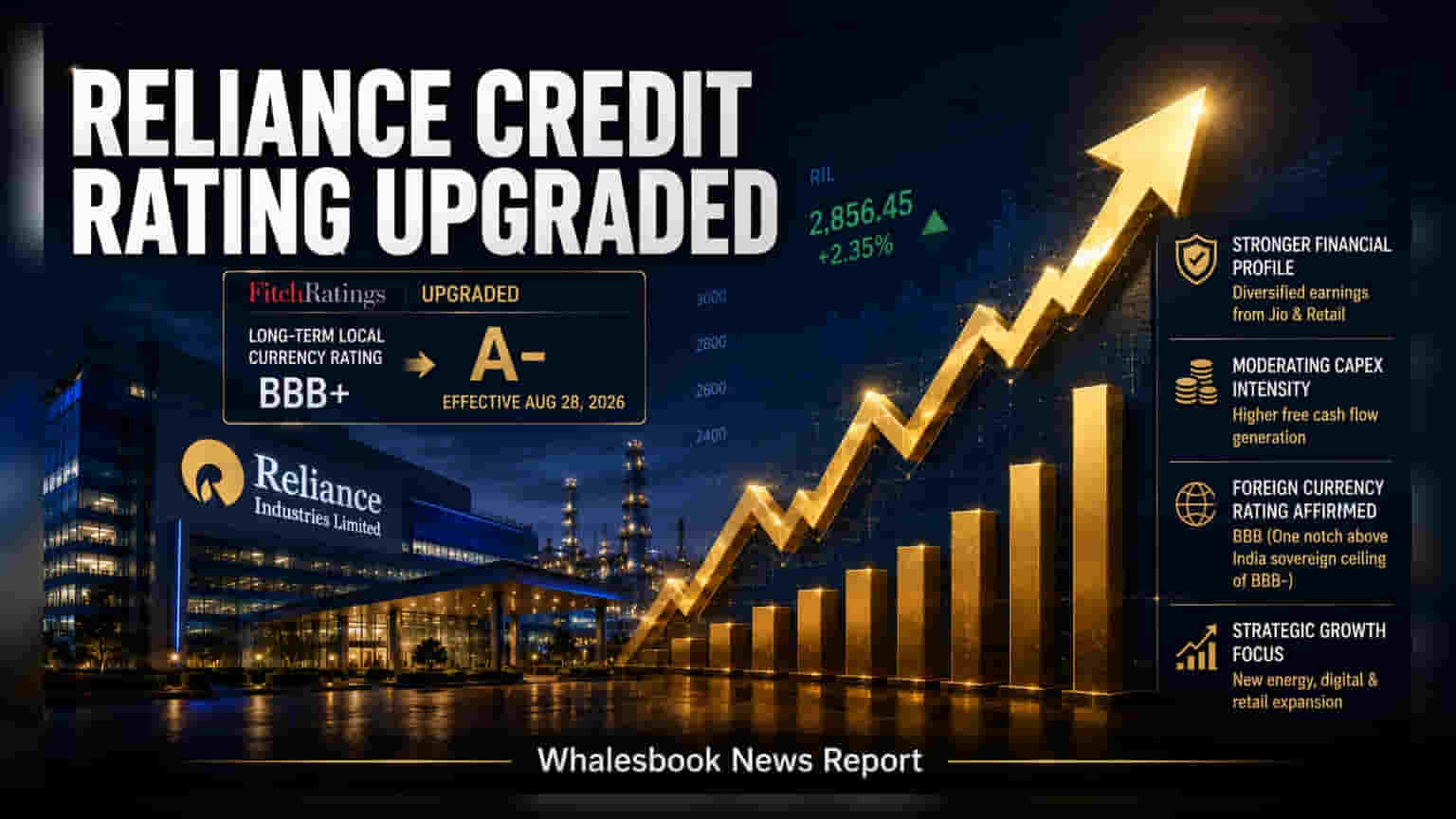
Fitch Ratings has upgraded Reliance Industries' long-term local-currency issuer default rating to 'A-' from 'BBB+', citing improved free cash flow and a stronger business profile. This upgrade reflects the company's growing EBITDA contribution from stable consumer-facing businesses like retail and digital services. While the foreign-currency rating remains at 'BBB', the move highlights Reliance's enhanced financial flexibility and reduced reliance on heavy capital spending.
Fitch Ratings has raised the long-term local-currency issuer default rating for Reliance Industries Limited (RIL) to 'A-' from 'BBB+', effective August 28, 2026. A credit rating upgrade like this serves as an independent assessment that the company’s ability to pay its debts has improved, which can often help a corporation secure financing on better terms.
The rating agency noted that this upgrade is driven by RIL’s strengthened financial position. For years, Reliance was known primarily for its massive oil-to-chemicals (O2C) business, which is highly cyclical and sensitive to global crude oil prices. However, Fitch highlighted a clear shift in the company's operating profile. A larger share of the company's earnings now comes from its consumer-focused businesses—Jio and Reliance Retail—which provide a more predictable and stable cash flow. This diversification acts as a buffer, helping the company manage volatility better than it did in the past.
Another key factor behind the rating improvement is a change in the company's spending habits. Fitch pointed out that the intensity of the company's capital spending (the money it spends on building infrastructure, factories, and new assets) has started to moderate. By spending less on heavy assets compared to previous years while maintaining strong operational performance, the company is generating more free cash—cash left over after all necessary business expenses—which improves its overall credit health.
Foreign Currency Rating and Sovereign Ceiling
While the local-currency rating was upgraded, Fitch affirmed RIL’s long-term foreign-currency issuer default rating at 'BBB'. Notably, this rating sits one notch above India’s sovereign country ceiling of 'BBB-'. This means RIL is rated higher than the Indian government's own foreign-currency credit rating. This positioning is possible because RIL generates significant hard-currency income through its large-scale exports of refined oil and petrochemicals. The company also maintains substantial offshore liquidity, which gives credit agencies confidence in its ability to meet foreign debt obligations even if the broader domestic economic environment faces challenges.
Risks and Monitorables
While the upgrade reflects a positive trend, investors should remain aware of the inherent risks that keep the company's profile complex. Even with a pivot toward consumer services, Reliance remains a major energy player. The O2C segment is still subject to global commodity price fluctuations, which can impact profit margins unexpectedly.
Furthermore, the company is in a phase of aggressive expansion in new energy and ongoing scaling of its digital and retail arms. These large-scale projects come with execution risks, meaning there is always the possibility of delays or cost overruns as the company tries to scale new technologies. Market participants will likely track whether the company can maintain its current financial stability while balancing these significant growth plans in the future. The next major monitorable will be the company's continued ability to maintain its debt-service ratio and demonstrate consistent EBITDA margins across its varied business segments.