 Whalesbook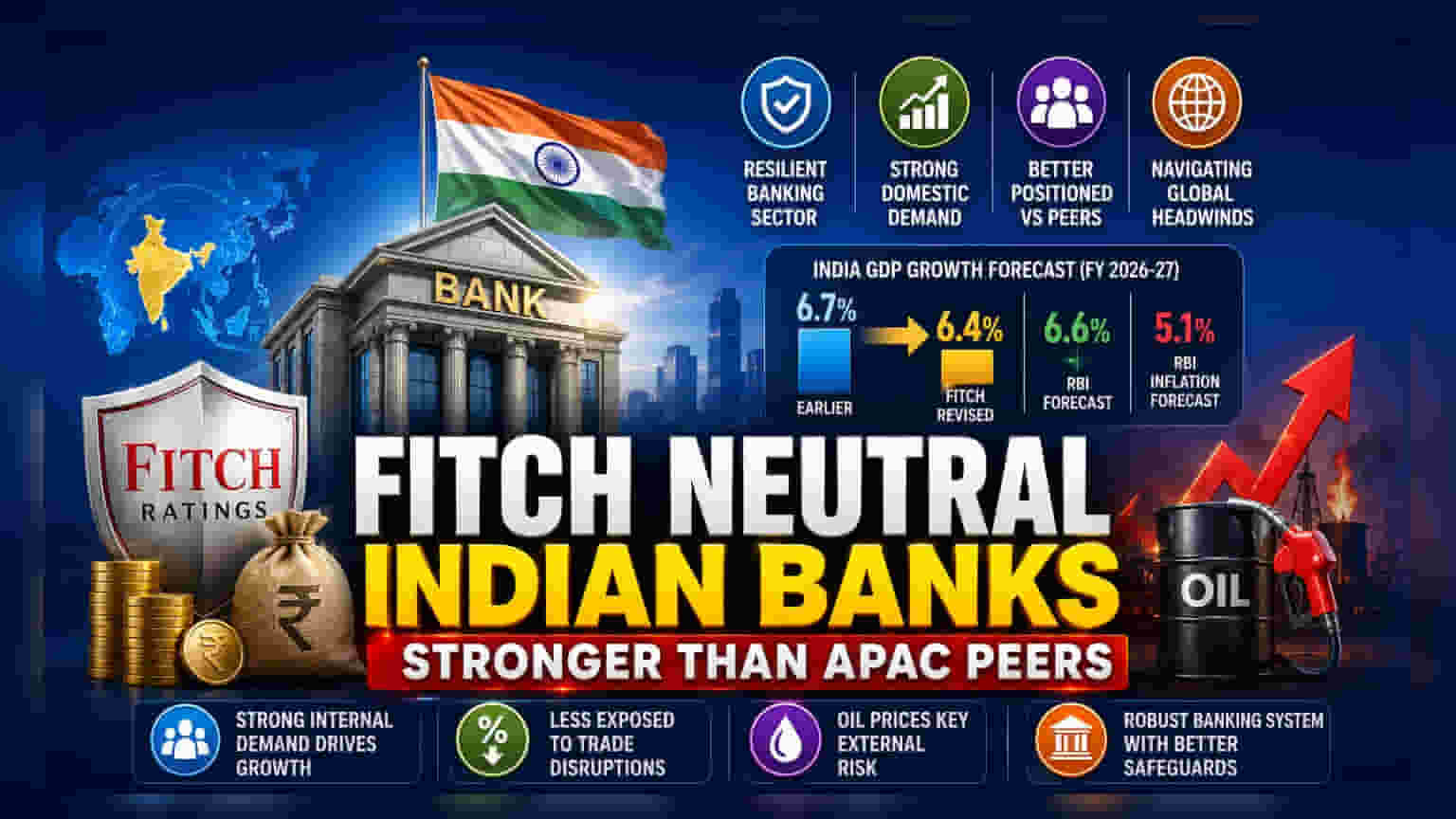


What Happened
Fitch Ratings has issued a new assessment on the Indian banking sector, keeping a neutral outlook. Despite the ongoing conflict in West Asia, the agency believes that Indian banks are better positioned to handle economic shocks compared to many of their peers in the Asia-Pacific (APAC) region. While banks in some other countries have faced downgrades due to growth concerns and rising costs, India, along with South Korea and Indonesia, remains in a more stable position according to the rating agency.
The Economic Landscape
While the outlook for banks remains steady, the broader economic picture shows some cooling. Fitch has revised its gross domestic product (GDP) growth forecast for India for the 2026-27 fiscal year to 6.4%, down from an earlier estimate of 6.7%. For comparison, the Reserve Bank of India (RBI) has also adjusted its expectations, setting a growth projection of 6.6% for the same period. The central bank has also increased its inflation projection to 5.1%. The agency notes that the full impact of this economic slowdown is likely to be felt during the second and third quarters of the current financial year.
Why This Matters For Investors
For investors, this assessment highlights the strength of the domestic market. The Indian economy is supported by strong local demand, which serves as a shield against external problems. Because the economy relies less on exports and more on domestic consumption, Indian banks are not as immediately exposed to the trade disruptions caused by international conflicts as banks in more export-dependent nations. This internal demand is expected to remain the primary driver for growth, even as global conditions remain difficult.
Risks To Watch
Despite the resilient outlook, there are specific risks that the sector must navigate. The biggest concern is the price of oil. India is a major importer of crude oil, and prolonged conflict in West Asia can keep fuel costs high. When fuel costs rise, inflation follows, which lowers the real income of everyday consumers. This puts pressure on household budgets, making it harder for small borrowers to repay their loans. If inflation stays high for too long, it could lead to higher stress in the retail and small-business loan portfolios of banks.
Peer And Sector Context
The contrast with the wider Asia-Pacific region is key. Fitch has actually lowered its outlook for banking sectors in countries like the Philippines and Sri Lanka, citing higher pressure from fuel costs and slower growth. This confirms that the challenges in the region are real and significant. By maintaining a neutral outlook for India, the agency is signaling that while India is not immune to these global pressures, its banking system has better internal safeguards to manage them compared to these specific regional peers.
What Investors Should Track
The primary focus for the coming months will be how consumption patterns change in response to inflation. Investors may want to track RBI commentary regarding interest rates and inflation management, as these policies will directly affect bank margins and borrower health. Additionally, monitoring the trend in oil prices will be crucial, as this remains the most significant external risk that could dampen the domestic demand that currently supports the banking sector.