 Whalesbook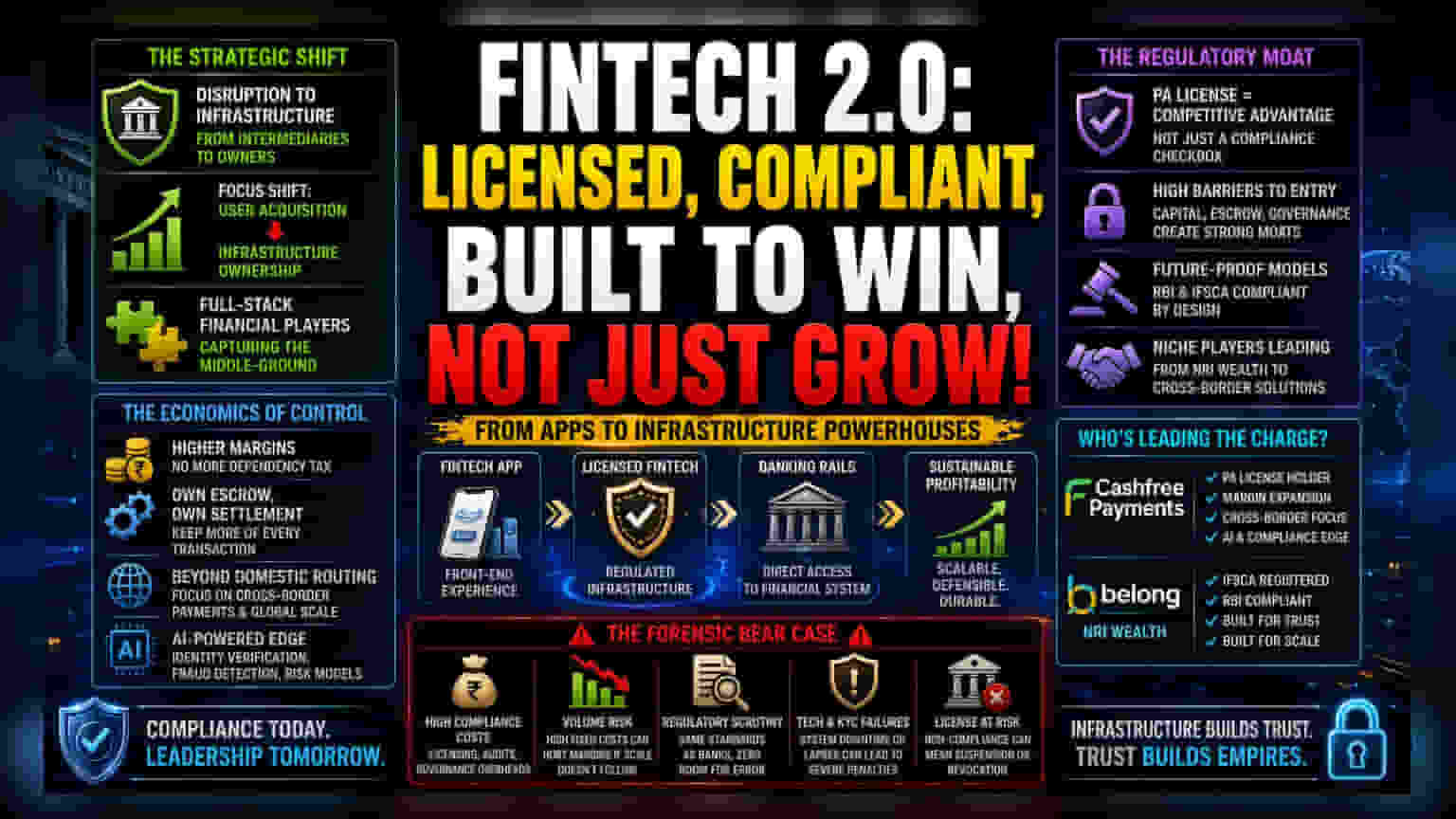


The Shift from Disruption to Infrastructure
The era of growth at any cost in the fintech sector has definitively ended. As of mid-2026, the industry is witnessing a strategic re-bundling, where the focus has migrated from mere user acquisition to the ownership of critical financial infrastructure. By securing direct regulatory licenses—such as Payment Aggregator (PA) authorizations—fintechs are shedding their role as temporary technology layers and evolving into full-stack financial service providers. This move is less about immediate expansion and more about capturing the high-margin middle ground previously monopolized by incumbent banks.
The Economics of Direct Control
For many firms, the primary motivation for seeking direct licensure is margin protection. Under previous banking-as-a-service (BaaS) models, fintechs were essentially subsidized by partner banks, sacrificing substantial portions of their transaction fees to maintain speed to market. Today, the arithmetic of the sector has shifted. Companies that maintain their own escrow and settlement infrastructure, as mandated by recent regulatory frameworks, avoid the 'dependency tax' associated with third-party banking partnerships. For platforms like Cashfree Payments, this pivot has coincided with a notable climb toward profitability, as they redirect their efforts toward high-margin cross-border transactions and AI-powered identity verification, rather than commoditized, low-margin domestic payment routing.
The Regulatory Moat
While critics once viewed regulatory oversight as a hurdle, successful fintechs now leverage compliance as a competitive advantage. The stringent capital and governance requirements for a Payment Aggregator license, including minimum net worth mandates and mandatory escrow maintenance, create a significant barrier to entry for smaller, less disciplined competitors. This structural rigidity forces a separation between casual software providers and durable financial infrastructure firms. By investing in robust compliance frameworks early—a strategy recently adopted by niche players like Belong in the NRI wealth management space—startups are effectively future-proofing their business models against the tightening oversight of bodies like the RBI and IFSCA.
The Forensic Bear Case
Despite the clear benefits of a license-heavy strategy, there are latent risks. The costs of maintaining these licenses are non-trivial, involving permanent increases in operational headcount, mandatory recurring audits, and complex data-localization expenses. For firms with narrow revenue bases, the overhead required to maintain status as a regulated entity can cannibalize profitability if transaction volumes do not scale proportionally. Furthermore, direct regulatory status places these companies under the same level of scrutiny as universal banks, meaning that any technological failure or lapse in KYC standards now carries systemic consequences. Should these firms fail to maintain their compliance infrastructure, they face not only reputational damage but potential revocation of the very licenses that underpin their valuation.