

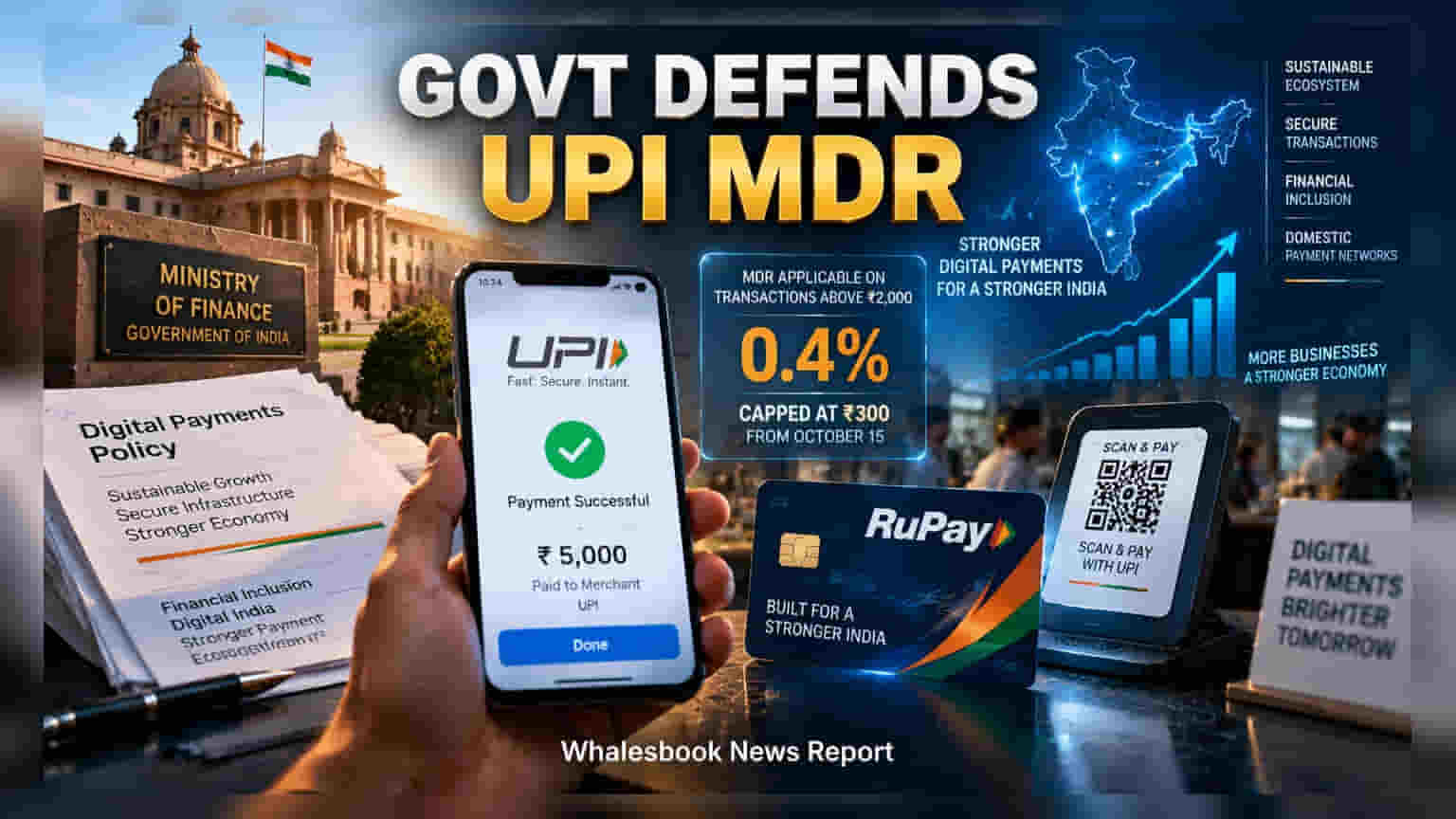
The Finance Ministry has clarified that the new 0.4% Merchant Discount Rate (MDR) for large UPI transactions is a domestic decision, not the result of external pressure. Effective October 15, the fee applies only to specific merchant payments exceeding ₹2,000. This move marks a pivot toward a sustainable revenue model for India's digital payment ecosystem, crucial for the long-term profitability of banks and payment aggregators.
The Finance Ministry has formally dismissed reports alleging that the new Merchant Discount Rate (MDR) framework for UPI was adopted due to pressure from the United States. The ministry clarified that the decision to introduce a 0.4% charge on specific merchant transactions exceeding ₹2,000, which takes effect on October 15, is a domestic policy measure aimed at strengthening the financial health of the digital payments infrastructure.
Sustainability of Digital Payments
For years, the rapid growth of the Unified Payments Interface (UPI) was largely driven by a zero-MDR policy. While this strategy successfully accelerated user adoption and digitized millions of small businesses, it placed a significant financial burden on banks and payment service providers, who bear the cost of system maintenance, security, and infrastructure. The introduction of a fee on larger transactions represents a strategic shift toward a sustainable revenue model. This allows financial institutions and payment processors to recover operational costs and continue investing in system reliability and security without relying solely on cross-subsidies from other banking activities.
Scope and Impact
The new MDR framework is targeted and limited. According to government data, only about 4% of total UPI transaction volume is expected to fall under the purview of this charge. The fee is capped at ₹300 for payments of ₹75,000 or more, and it is intended to be paid by merchants rather than consumers. Because the policy applies only to transactions above ₹2,000, the vast majority of routine, small-value payments will remain free for both users and merchants. The government has stated that it does not expect this change to trigger a significant shift back to cash payments or create inflationary pressure.
Clarification on RuPay Integration
Addressing concerns regarding international competition, the ministry emphasized that RuPay credit cards remain the only credit instruments eligible for UPI transactions. This clarification serves to counter allegations that the policy was designed to favor foreign payment networks over domestic ones. By maintaining RuPay’s unique integration with UPI, the government maintains a clear regulatory stance on prioritizing and protecting domestic payment systems.
Monitoring Merchant Behavior
As the October 15 implementation date approaches, investors will likely track how payment aggregators and merchants adapt to these new charges. The government is currently engaging with payment aggregators to ensure that merchants do not pass these costs on to consumers, which could potentially stifle adoption. The primary monitorable for the market will be the successful execution of this policy and whether it helps banks and payment companies improve their take-rates on digital transactions without dampening the overall growth trajectory of the UPI ecosystem.