

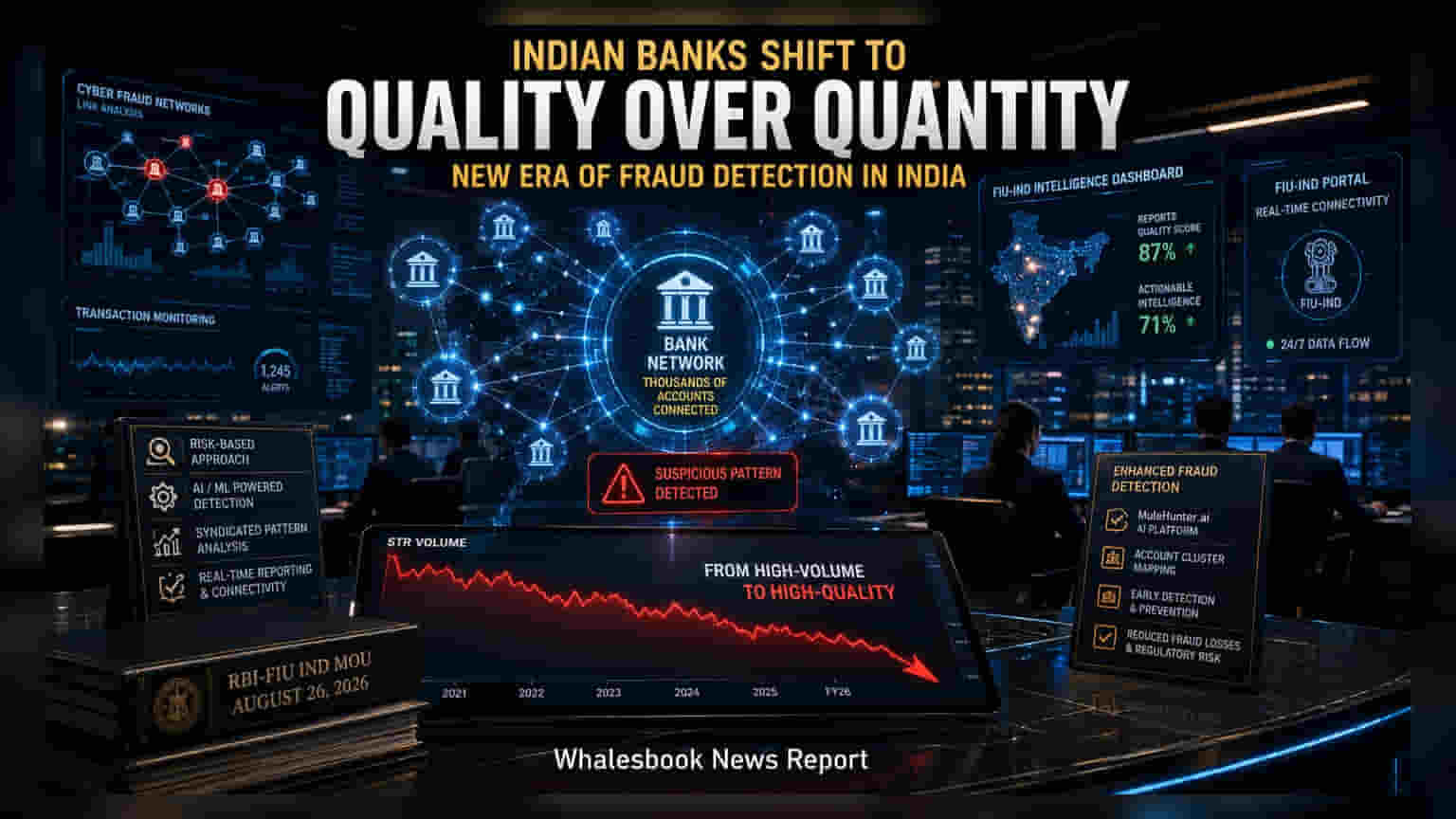
Banks and the Financial Intelligence Unit are shifting to a high-quality, AI-driven approach for reporting suspicious transactions. This transition, backed by an August 2026 MoU, aims to dismantle complex money mule networks by replacing high-volume, reactive filings with actionable intelligence. The strategy seeks to lower long-term regulatory and reputational risk for lenders while strengthening digital banking security.
Indian commercial banks, in coordination with the Financial Intelligence Unit-India (FIU-IND), are undergoing a major shift in how they identify and report financial fraud. Following a Memorandum of Understanding signed between the Reserve Bank of India (RBI) and the FIU-IND on August 26, 2026, the banking sector is transitioning from a high-volume filing system to a quality-focused, risk-based model.
For years, lenders were required to file a Suspicious Transaction Report (STR) for almost any activity flagged as unusual. This approach often led to a flood of data, creating backlogs that hampered law enforcement's ability to act quickly. Under the new framework, the focus is shifting toward identifying syndicated patterns using advanced technology rather than simply reporting individual transactions.
Technology is at the heart of this transition. Banks are deploying artificial intelligence and machine learning tools, such as the ‘MuleHunter.ai’ platform, to map connections between various accounts. By analyzing how money moves across clusters of accounts, these tools help identify and block networks involved in cyber fraud before they can move large sums of money. This intelligence-led approach is designed to replace the previous 'quantity over quality' reporting culture, which regulators believe often obscured the true scale of illicit activity within the financial system.
The regulatory pressure for this change is significant. The government and parliamentary committees have frequently criticized the ease with which illicit funds pass through the formal banking sector. To combat this, authorities are pushing for automated, round-the-clock connectivity between bank systems and national reporting portals. For banks, this is an operational challenge that requires consistent investment in technology and cybersecurity infrastructure.
From an investor perspective, this overhaul carries both costs and long-term benefits. On the cost side, banks must spend on upgrading their transaction monitoring systems, training staff, and maintaining robust IT security to meet these tighter regulatory expectations. However, there is a clear benefit to this capital spending. By adopting more effective fraud-detection mechanisms, banks can reduce their exposure to regulatory penalties, litigation, and the massive reputational damage that often follows high-profile cyber fraud incidents.
Despite these improvements, the banking sector faces ongoing risks. Cybercriminals are constantly evolving their methods, meaning that even advanced AI systems require continuous updates to stay ahead. There is also an implementation risk, as banks must successfully integrate these complex technical layers into their existing core banking software without disrupting legitimate customer transactions.
Investors should monitor the impact of these compliance investments on bank operating margins over the coming quarters. The next important updates to track will include management commentary regarding technology-related capital expenditure and any feedback from the RBI on the effectiveness of these new anti-money laundering protocols in preventing fraudulent outflows.