

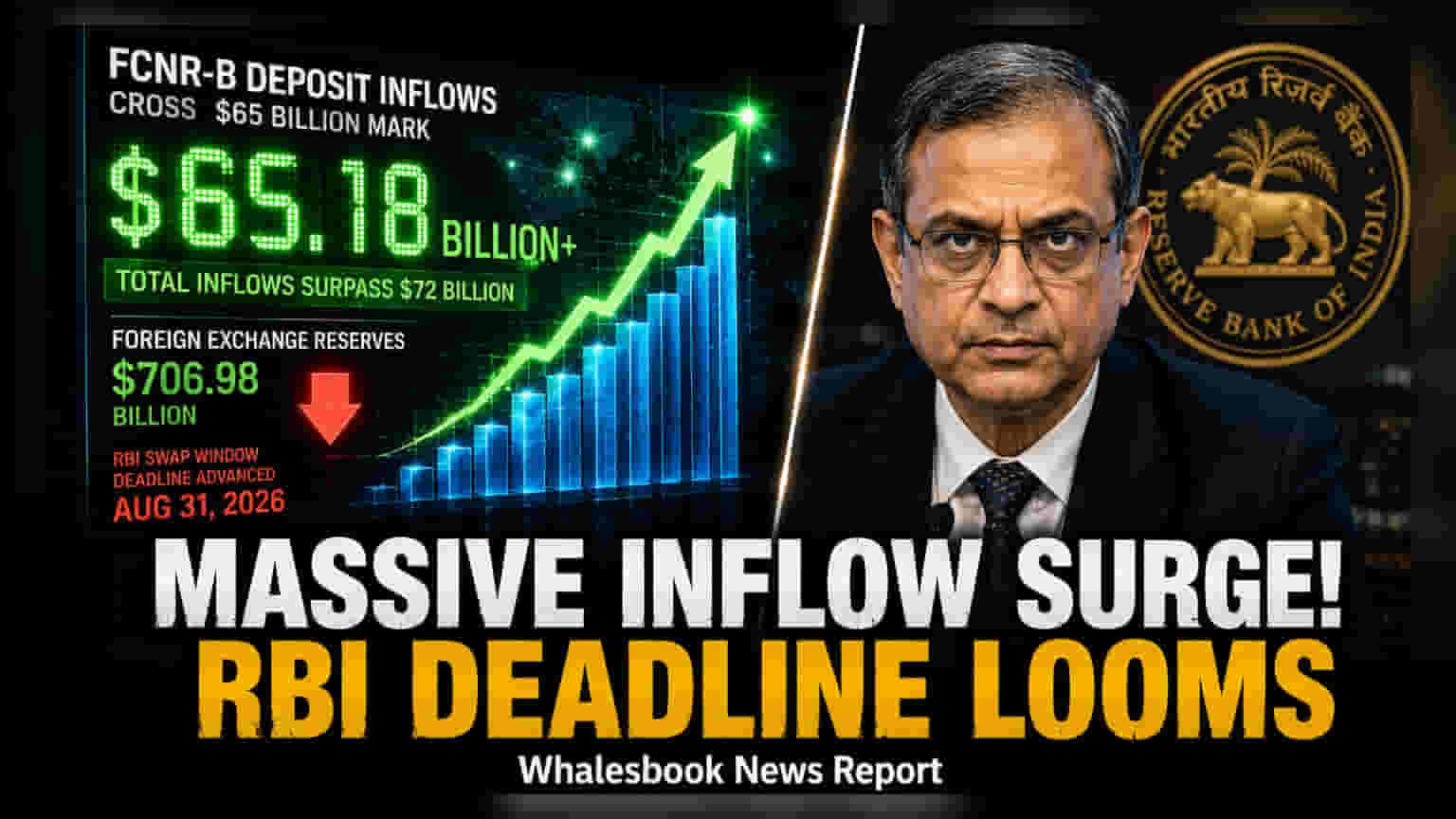
Inflows into FCNR-B deposits have crossed $65 billion as the Reserve Bank of India advances the closure of its special swap window to August 31, 2026. This policy shift, reflecting a successful buildup of foreign exchange reserves, is causing market participants to watch for potential pressure on bank net interest margins as high-cost funding dynamics adjust.
The Reserve Bank of India’s special swap facility for Foreign Currency Non-Resident (FCNR-B) deposits is witnessing heavy activity as the program nears its end. Recent data shows that FCNR-B deposit inflows have surpassed the $65 billion mark, part of a broader mobilization of over $72 billion that includes external commercial borrowings and overseas foreign currency borrowings. Following the success of these measures in bolstering India's foreign exchange reserves, which have climbed toward $707 billion, the central bank has advanced the deadline for its concessional swap window to August 31, 2026.
Impact on Bank Margins
For investors, the closure of this swap window is a critical development. When the RBI introduced this facility in June 2026, it provided banks with a low-cost hedging mechanism, effectively reducing the cost of raising dollar deposits. This encouraged banks to aggressively mobilize NRI funds. With the special swap window closing, banks will no longer have this subsidized hedge. Analysts suggest this change in funding dynamics could put pressure on the Net Interest Margins (NIMs) of major lenders. Estimates indicate a potential margin contraction of 3 to 15 basis points as banks navigate the transition back to standard market-based hedging costs.
Market Reaction and Funding Dynamics
Banking stocks, including HDFC Bank, ICICI Bank, Kotak Mahindra Bank, and State Bank of India, experienced downward price pressure earlier in the week following the announcement of the earlier-than-expected closure. The aggressive mobilization strategies used by banks, which included offering high leverage on these deposits to attract inflows, may now face a rethink. As the concessional support disappears, banks will likely need to recalibrate their deposit interest rates and product offerings to maintain profitability without the RBI’s support.
What Investors Should Monitor
While FCNR-B products themselves are not being discontinued, the removal of the RBI’s specific swap support marks a normalization of banking operations. Investors should track upcoming quarterly results and management commentary regarding deposit costs and NIM guidance. The key monitorable will be how effectively banks pass on these funding cost increases to borrowers or adjust their liability mix to protect profitability. Furthermore, the market will watch for any signs of interest rate volatility in NRI deposit offerings as banks adjust their strategies in the absence of the central bank's concessional hedging facility.