

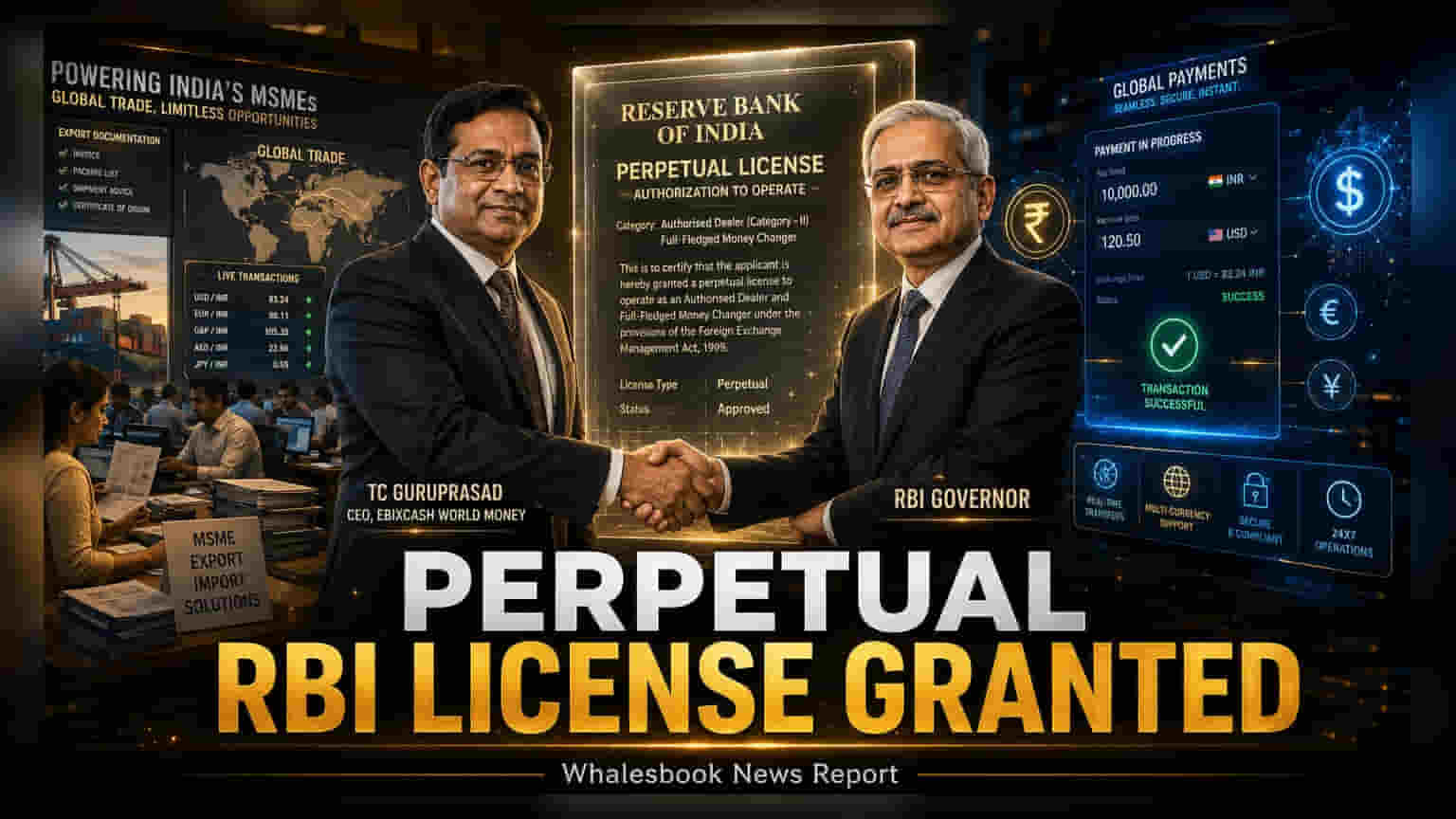
EbixCash World Money has become India’s first Authorised Dealer Category-II entity to receive a perpetual RBI license. This regulatory upgrade allows the company to process trade remittances of up to ₹25 lakh, a service previously reserved for banks. The shift aims to provide MSMEs with faster, more accessible cross-border payment options by leveraging the company's extensive physical and digital network.
EbixCash World Money Limited has received a perpetual license from the Reserve Bank of India, marking a regulatory milestone in the country's foreign exchange sector. As an Authorised Dealer Category-II entity, the company is now empowered to facilitate trade-related remittances of up to ₹25 lakh per transaction. This expansion of services follows a May 2026 update to the Foreign Exchange Management Act, which relaxed restrictions on the types of financial activities non-bank entities can perform.
Impact on MSME Cross-Border Payments
For years, Micro, Small, and Medium Enterprises have relied heavily on commercial banks to process international payments for imports and exports. This reliance often meant navigating complex banking documentation and longer settlement times. By entering this space, EbixCash aims to simplify the process for smaller businesses. Because the company maintains a 'phygital' presence—a mix of over 100 physical branches across 70 cities and digital platforms—it may offer a more localized and responsive service than traditional large-scale banking institutions. The ability to handle family maintenance remittances further diversifies the company’s revenue potential beyond standard currency exchange services.
Infrastructure and Operational Capacity
EbixCash World Money distinguishes itself from many other payment service providers through its regulatory permissions, such as the approval to maintain Nostro accounts. These accounts, held in foreign currencies, are essential for the direct settlement of cross-border transactions without needing to route payments through intermediary banks. This capability, combined with their principal memberships with global payment networks like Visa and Mastercard, allows the company to issue multi-currency prepaid cards and manage international payment flows independently.
Governance and Regulatory Context
While the expansion offers new growth avenues, the financial services sector remains subject to stringent oversight. The perpetual nature of the license is a significant regulatory endorsement of the company’s compliance and governance frameworks developed since its inception in 1999. However, as the company enters the trade remittance segment, it will face increased regulatory monitoring regarding Anti-Money Laundering (AML) protocols and Know Your Customer (KYC) requirements, similar to the standards applied to commercial banks. Investors tracking the company’s progress will likely monitor how effectively it manages the increased compliance costs associated with these higher-value trade transactions. The firm's ability to maintain high processing speeds while ensuring strict adherence to these elevated regulatory benchmarks will be a key factor in its long-term success in the competitive cross-border payment market.